 뒤로
CH 15 Chromosomal Basis of Inheritance: Sex Linkage, Gene Linkage, Genetic Maps, and Chromosome Alterations
스터디 가이드 - 스마트 노트
 자료에 맞춘 맞춤형 노트, 핵심 정의, 예시, 맥락을 확장해 제공합니다.
Chromosomal Basis of Inheritance
Sex Chromosomes and Sex-Linked Genes
The chromosomal basis of inheritance explains how genes are distributed via chromosomes during cell division, affecting traits and disorders. Sex chromosomes (X and Y) determine biological sex and carry genes that can lead to sex-linked traits.
Autosome: Any chromosome that is not a sex chromosome; humans have 22 pairs.
Sex chromosome: X or Y; XX is female, XY is male in mammals.
Sex-linked trait: Trait controlled by a gene located on a sex chromosome.
X-linked trait: Trait controlled by a gene on the X chromosome; most sex-linked genes are X-linked.
Hemizygous: Having only one copy of a gene; XY males are hemizygous for X-linked genes.
Dosage compensation: Mechanism that equalizes expression of X-linked genes between XX females and XY males.
Barr body: The inactivated, condensed X chromosome in female mammalian cells.
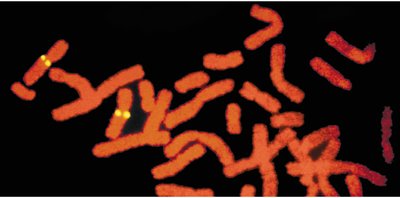
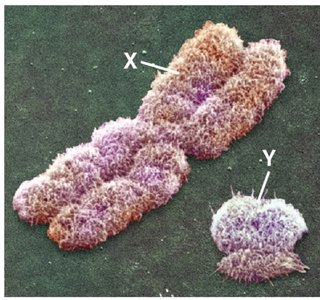
Sex Linkage: Morgan's White-Eyed Fly Experiment
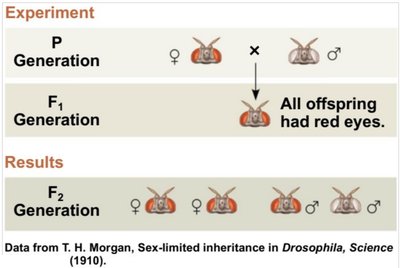
Thomas Hunt Morgan's experiments with fruit flies provided the first evidence that specific genes are located on specific chromosomes. He observed that the white-eye mutation was inherited in a pattern tied to sex, leading to the discovery of X-linked inheritance.
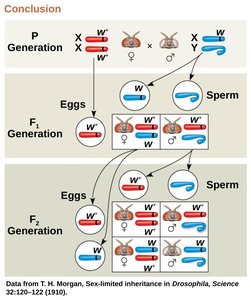
Experiment: Crossed wild-type red-eyed females with mutant white-eyed males.
Results: All F1 offspring had red eyes; in F2, only males had white eyes.
Conclusion: The eye-color gene is located on the X chromosome. Males (XY) are hemizygous, so one recessive allele is enough to express the trait.
X-Linked vs. Y-Linked Inheritance
X-linked genes can be dominant or recessive and are more commonly expressed in males due to their hemizygosity. Y-linked genes are few and mostly involved in sex determination.
X-linked: Many genes, most unrelated to sex; recessive disorders are more common in males.
Y-linked: Few genes, passed from father to son, never to daughters.
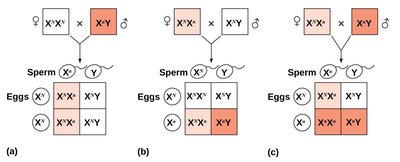
Expressing X-Linked Recessive Traits
Females must inherit two copies of a recessive X-linked allele to express the trait, while males need only one.
Female: XnXn (homozygous)
Male: XnY (hemizygous)
Human X-Linked Recessive Disorders
Several human disorders are caused by recessive alleles on the X chromosome:
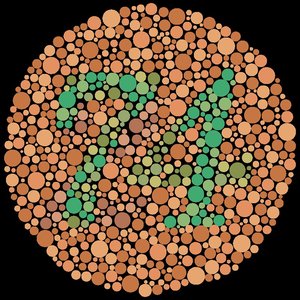
Color blindness: Difficulty distinguishing certain colors.
Hemophilia: Impaired blood clotting.
Duchenne muscular dystrophy: Progressive muscle weakness.
X Inactivation, Barr Bodies, and Mosaicism
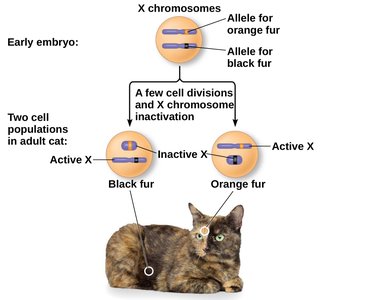
In female mammals, one X chromosome is randomly inactivated in each cell, forming a Barr body. This leads to mosaic expression of X-linked genes, as seen in tortoiseshell cats.
Dosage compensation: Ensures equal expression of X-linked genes.
Mosaicism: Heterozygous females have patches expressing different alleles.
Gene Linkage
Linked Genes and Inheritance
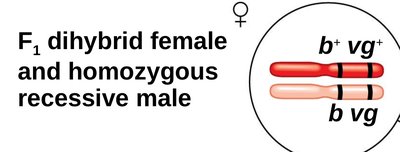
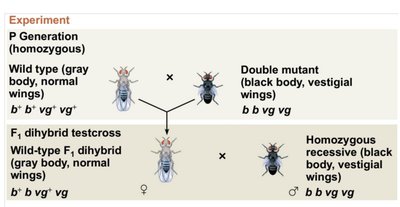
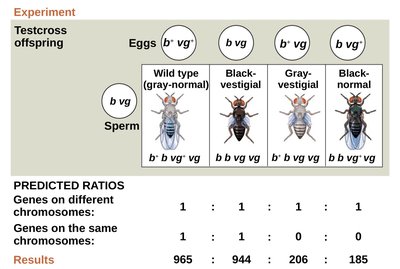
Genes located on the same chromosome tend to be inherited together, violating Mendel's law of independent assortment unless they are far apart.
Linked genes: Genes on the same chromosome that do not assort independently.
Parental (non-recombinant) phenotypes: Offspring with allele combinations matching the parents.
Recombinant phenotypes: Offspring with new combinations of traits due to crossing over.
Crossing Over and Recombinant Chromosomes
During prophase I of meiosis, crossing over between homologous chromosomes can produce recombinant chromosomes, leading to new allele combinations in offspring.
Crossing over: Exchange of genetic material between nonsister chromatids.
Recombinant offspring: Result from crossing over between linked genes.
Recombination Frequency and Genetic Maps
Calculating Recombination Frequency
Recombination frequency measures how often linked genes are separated by crossing over. It is used to estimate the distance between genes on a chromosome.
Formula:
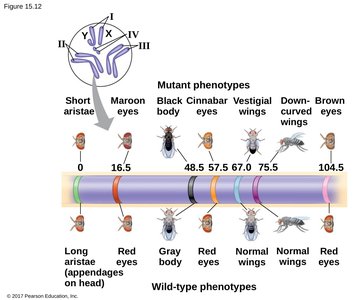
Map unit (centimorgan, cM): 1% recombination frequency equals 1 map unit.
Maximum frequency: Genes far apart recombine about 50% of the time and appear unlinked.
Genetic Maps and Gene Order
Genetic maps use recombination frequencies to order genes along a chromosome. The farther apart two genes are, the more likely a crossover will occur between them.
Gene order: Determined by comparing recombination frequencies between pairs of genes.
Double crossovers: Can obscure true recombination frequencies over long distances.
Alterations of Chromosome Structure
Types of Chromosome Alterations
Chromosome structure can be altered in four main ways, each affecting gene content or order:
Deletion: Loss of a chromosome segment and its genes.
Duplication: Repetition of a chromosome segment.
Inversion: Reversal of a segment within a chromosome.
Translocation: Movement of a segment to a nonhomologous chromosome.
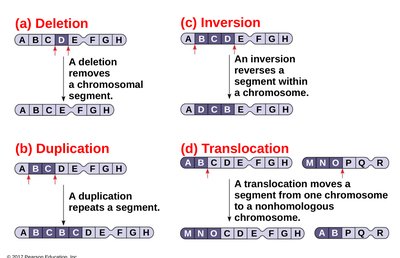
Effects of Chromosome Alterations
Each alteration can have distinct effects on gene function and organism health:
Deletion: Can cause syndromes like Cri du chat.
Duplication: May result from a deleted fragment joining its homolog.
Inversion: Changes gene order, potentially disrupting genes at break points.
Translocation: Can cause disorders like chronic myelogenous leukemia.
Abnormal Chromosome Number
Nondisjunction and Aneuploidy
Nondisjunction during meiosis leads to gametes with abnormal chromosome numbers, resulting in aneuploidy after fertilization.
Nondisjunction: Failure of homologs or sister chromatids to separate.
Aneuploidy: Abnormal number of one particular chromosome (2n ± 1).
Monosomic: Only one copy of a chromosome (2n − 1).
Trisomic: Three copies of a chromosome (2n + 1).
Polyploidy: More than two complete sets of chromosomes (3n, 4n, etc.).
Haploid: One complete set (n).
Diploid: Two complete sets (2n).
Triploid: Three complete sets (3n).
Tetraploid: Four complete sets (4n).
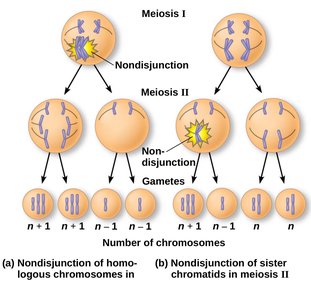
Aneuploidy in Humans: Down Syndrome and Sex Chromosome Disorders
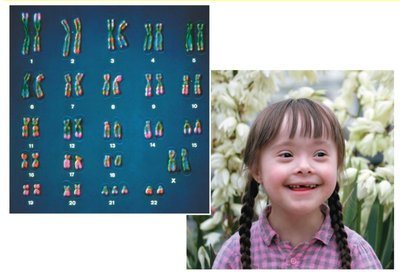
Down syndrome is caused by trisomy 21 (three copies of chromosome 21). Aneuploidy of sex chromosomes can result in syndromes such as Klinefelter (XXY) and Turner (X0).
Down syndrome: Trisomy 21; 47 chromosomes.
Klinefelter syndrome: XXY male; trisomic for sex chromosomes.
Turner syndrome: X0 female; monosomic for sex chromosomes.
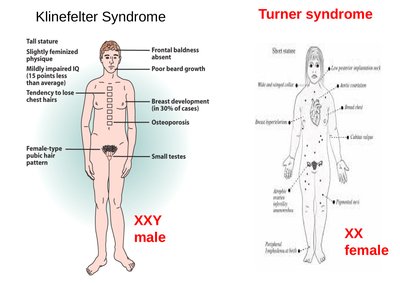
Summary Table: Chromosome Alterations
Alteration | Definition | Example/Effect |
|---|---|---|
Deletion | Loss of a chromosome segment | Cri du chat syndrome |
Duplication | Repetition of a segment | Extra gene copies |
Inversion | Reversal of a segment | Disrupted gene function |
Translocation | Segment moves to another chromosome | Chronic myelogenous leukemia |
Summary Table: Chromosome Number Terms
Term | Meaning | Notation | Human Cell |
|---|---|---|---|
Haploid | One complete set | n | 23 |
Diploid | Two complete sets | 2n | 46 |
Aneuploidy | Abnormal number of one chromosome | 2n ± 1 | — |
Monosomic | One copy of a chromosome | 2n − 1 | 45 |
Trisomic | Three copies of a chromosome | 2n + 1 | 47 |
Polyploidy | More than two sets | 3n, 4n | — |
Triploid | Three sets | 3n | 69 |
Tetraploid | Four sets | 4n | 92 |
Additional info: These notes expand on the original content by providing definitions, examples, and context for each key term and concept, ensuring a comprehensive and self-contained study guide for exam preparation.
