 뒤로
Deuterostomes: Structure, Function, and Diversity
스터디 가이드 - 스마트 노트
 자료에 맞춘 맞춤형 노트, 핵심 정의, 예시, 맥락을 확장해 제공합니다.
Deuterostomes: Overview and Phylogeny
Introduction to Deuterostomes
Deuterostomes are a major lineage within the animal kingdom, characterized by their embryonic development and unique anatomical features. They include three main phyla: Echinodermata, Hemichordata, and Chordata. Understanding their evolutionary relationships and distinguishing features is essential for studying animal diversity.
Bilaterians: All deuterostomes are bilaterally symmetrical at some stage and possess three tissue layers (triploblasty).
Coelomate Ancestor: All bilaterians descend from a coelomate ancestor, though some groups have lost or reduced the coelom.
Main Phyla: Echinodermata, Hemichordata, and Chordata.
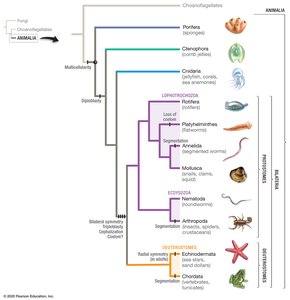
Protostomes vs. Deuterostomes
The distinction between protostomes and deuterostomes is based on embryonic development, specifically the fate of the blastopore and cleavage patterns.
Protostomes: The blastopore becomes the mouth; spiral cleavage during early development.
Deuterostomes: The blastopore becomes the anus; radial cleavage during early development.
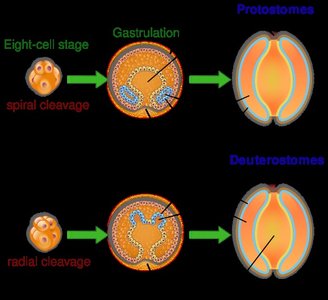
Triploblasty and Coelom Formation
Three Tissue Layers
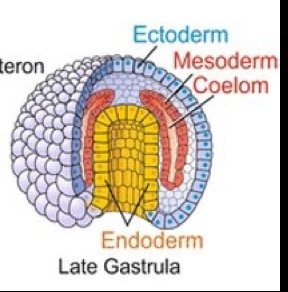
Triploblasty refers to the presence of three primary germ layers in animal embryos: ectoderm, mesoderm, and endoderm. These layers give rise to various tissues and organs.
Ectoderm: Forms the outer layer (skin, exoskeleton).
Mesoderm: Forms muscles, blood cells, and organs.
Endoderm: Forms the inner lining of the digestive tract and associated organs.
Coelom Types
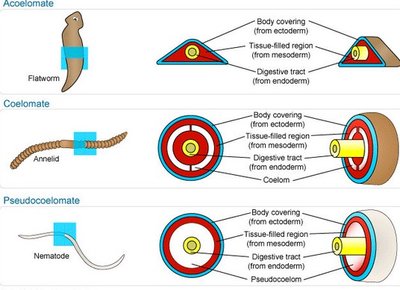
The coelom is a fluid-filled body cavity derived from the mesoderm. Animals are classified based on the presence and type of coelom.
Acoelomate: No coelom (e.g., flatworms).
Coelomate: True coelom surrounded by mesoderm (e.g., annelids).
Pseudocoelomate: Coelom not fully lined by mesoderm (e.g., nematodes).
Major Deuterostome Phyla
Echinodermata
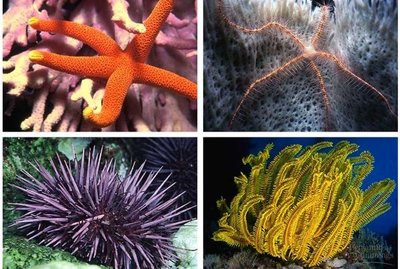
Echinoderms are exclusively marine invertebrates with unique anatomical and physiological features.
Endoskeleton: Composed of calcium carbonate ossicles.
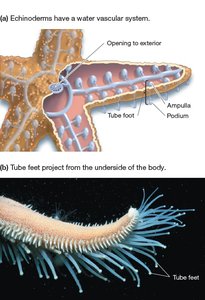
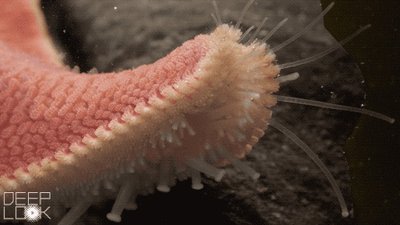
Water Vascular System: Used for locomotion, feeding, and nutrient circulation; includes tube feet.
Radial Symmetry: Adults exhibit pentaradial symmetry, while larvae are bilaterally symmetrical.
Reproduction: Both sexual (external fertilization) and asexual (fragmentation).
Ecological Roles: Sea stars are carnivores; sea urchins are herbivores.
Key Synapomorphies of Echinodermata
Radial symmetry (in adults)
Endoskeleton of calcium carbonate
Water vascular system and tube feet
Major Lineages of Echinodermata
Asteroidea: Sea stars
Echinoidea: Sand dollars, sea urchins
Crinoidea: Feather stars
Ophiuroidea: Brittle stars
Holothuroidea: Sea cucumbers
Hemichordata
Hemichordates are marine organisms, including acorn worms and pterobranchs.
Body Plan: Divided into proboscis, collar, and trunk.
Pharyngeal Slits: Used for filter feeding.
Larval Development: Tornaria larva similar to echinoderm larvae.
Feeding: Heterotrophic; detritus feeders or filter feeders.
Chordata
Chordates are defined by four key features present at some stage in their life cycle.
Dorsal Hollow Nerve Cord: Develops into the brain and spinal cord.
Notochord: Flexible, supportive rod beneath the nerve cord.
Pharyngeal Slits: Openings in the throat region; function as gills in aquatic species or are modified in terrestrial species.
Post-anal Tail: Extension of the body past the anal opening.
Chordata: Subphyla and Characteristics
Cephalochordata (Lancelets)
Lancelets retain all chordate features throughout their life.
Notochord: Functions as a stiff endoskeleton.
Movement: Fish-like locomotion via muscle contractions.
Feeding: Suspension feeders through pharyngeal slits.
Habitat: Adults burrow in sand on the ocean floor.
Reproduction: External fertilization.
Urochordata (Tunicates)
Tunicates are marine suspension feeders with distinct larval and adult forms.
Feeding: Capture food particles using pharyngeal slits inside the siphon.
Body Covering: External coat of polysaccharide (tunic).
Reproduction: External fertilization.
Mobility: Adults are sessile; larvae are mobile.
Body Form: Sac-like adult body; tadpole larva.
Vertebrates
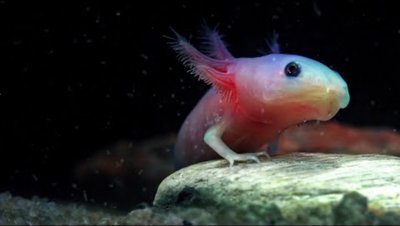
Vertebrates are chordates with a backbone and complex organ systems.
Vertebral Column: Replaces the embryonic notochord; protects the spinal cord.
Skull: Encloses and protects the brain; supports complex sense organs.
Endoskeleton: Internal skeleton made of cartilage and/or bone; grows and repairs itself.
Cephalization: High degree of development of the head region.
Summary Table: Deuterostome Phyla and Key Features
Phylum | Key Features | Examples |
|---|---|---|
Echinodermata | Endoskeleton, water vascular system, pentaradial symmetry (adults) | Sea stars, sea urchins, feather stars |
Hemichordata | Proboscis, collar, trunk; pharyngeal slits; tornaria larva | Acorn worms, pterobranchs |
Chordata | Dorsal hollow nerve cord, notochord, pharyngeal slits, post-anal tail | Lancelets, tunicates, vertebrates |
Additional info:
Deuterostomes are essential for understanding animal evolution and diversity, as they include both invertebrate and vertebrate lineages.
Chordates are the only deuterostome phylum to include vertebrates, which are the most complex animals.
