 뒤로
DNA Replication, Transcription, and Translation: The Central Dogma of Molecular Biology
스터디 가이드 - 스마트 노트
 자료에 맞춘 맞춤형 노트, 핵심 정의, 예시, 맥락을 확장해 제공합니다.
The Central Dogma of Molecular Biology
Overview
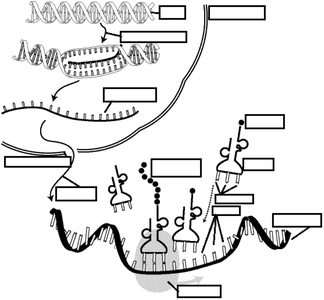
The central dogma describes the flow of genetic information within a biological system. It explains how DNA is transcribed into RNA, which is then translated into protein. This process is fundamental to all living organisms and underpins gene expression and cellular function.
DNA stores genetic information.
Transcription converts DNA information into RNA.
Translation converts RNA information into protein.
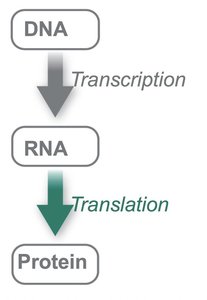
Steps of the Central Dogma
Replication: DNA is copied to produce identical DNA molecules.
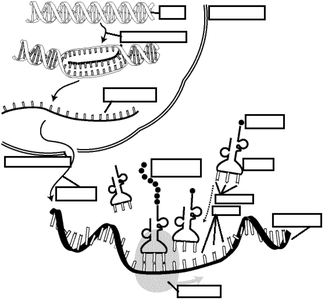
Transcription: DNA is used as a template to synthesize messenger RNA (mRNA).
Translation: mRNA is decoded by ribosomes to synthesize polypeptides (proteins).
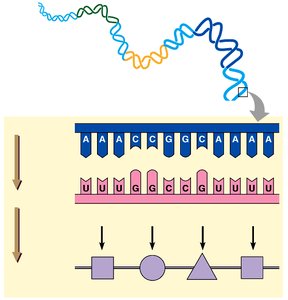
DNA Replication
Mechanism and Directionality
DNA replication is the process by which a cell copies its DNA before cell division. The process is highly regulated and ensures genetic fidelity.
Initiation: Begins at specific sequences called origins of replication.
Enzymes: DNA polymerase catalyzes the addition of nucleotides.
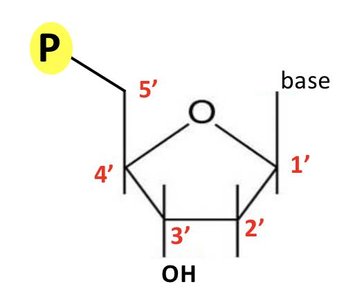
Directionality: New nucleotides are added to the 3' OH group of the sugar, so DNA is synthesized in the 5' to 3' direction.
Antiparallel Strands: The two DNA strands run in opposite directions, affecting how each is replicated.
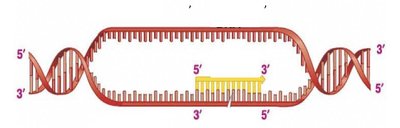
Leading vs. Lagging Strand
Leading strand: Synthesized continuously toward the replication fork.
Lagging strand: Synthesized discontinuously away from the fork in short fragments (Okazaki fragments).
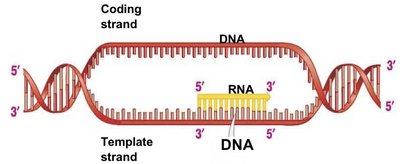
Structure of Nucleotides
Nucleotides are the building blocks of DNA and RNA. Each nucleotide consists of a sugar, a phosphate group, and a nitrogenous base.
3' OH group: The site where new nucleotides are added during synthesis.
5' phosphate group: The starting point of the nucleotide chain.
Transcription
Process and Directionality
Transcription is the synthesis of RNA from a DNA template. It occurs in the nucleus of eukaryotic cells and involves several steps.
Initiation: RNA polymerase binds to the promoter region of DNA.
Elongation: RNA polymerase synthesizes RNA in the 5' to 3' direction.
Termination: RNA polymerase stops at a terminator sequence.
Template strand: The DNA strand used to make RNA; the other strand is the coding (sense) strand.
Promoter and Initiation
Promoter: A DNA sequence that signals the start of transcription.
RNA polymerase: The enzyme that synthesizes RNA.
Translation
Mechanism and Steps
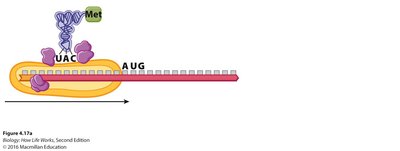
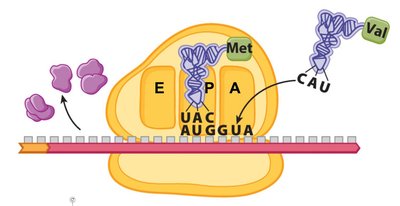
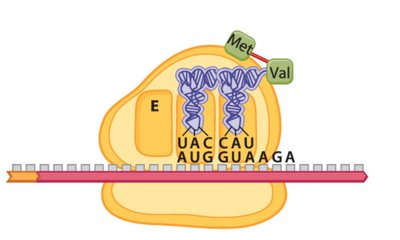
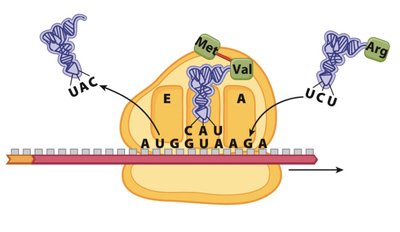
Translation is the process by which mRNA is decoded to produce a polypeptide. It occurs in the cytoplasm and involves ribosomes, tRNA, and various factors.
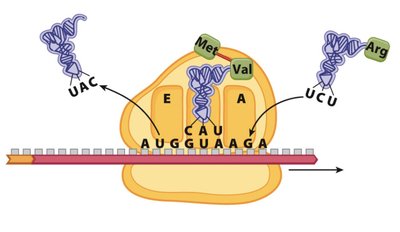
Initiation: The ribosome assembles at the 5' cap of mRNA and scans for the start codon (AUG).
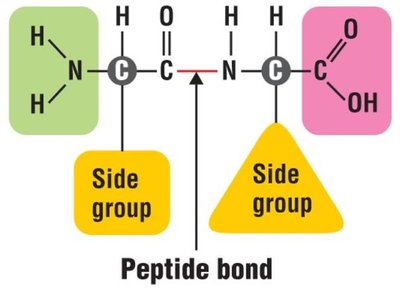
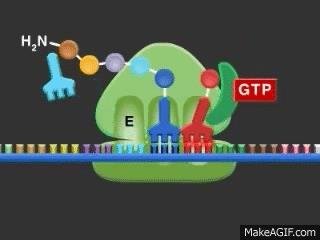
Elongation: tRNAs bring amino acids to the ribosome, matching their anticodon to the mRNA codon. Peptide bonds form between amino acids.
Termination: When a stop codon (UAA, UAG, UGA) is reached, the polypeptide is released.
Codons and the Genetic Code
Codon: A sequence of three mRNA nucleotides that codes for a specific amino acid.
Start codon: AUG (methionine) signals the beginning of translation.
Stop codons: UAA, UAG, UGA signal the end of translation.
Mutations and Their Effects
Types and Consequences
Mutations are changes in the DNA sequence. They can occur randomly and have various effects on protein function.
Silent mutations: No change in amino acid sequence.
Missense mutations: Change one amino acid, possibly altering protein function.
Nonsense mutations: Introduce a premature stop codon, truncating the protein.
Frameshift mutations: Insertions or deletions that shift the reading frame.
Examples of Mutation Effects
Sickle Cell Anemia: A single nucleotide change results in a different amino acid, altering hemoglobin function.
Cystic Fibrosis: Deletion of a single codon leads to a nonfunctional protein.
Amino Acid Properties and Peptide Bonds
Recognizing Amino Acid Properties
Amino acids have side chains with distinct properties: acidic, basic, polar, or nonpolar. These properties influence protein structure and function.
Peptide bond: The covalent bond linking amino acids in a polypeptide.
N-terminus: The start of a polypeptide (amino group).
C-terminus: The end of a polypeptide (carboxyl group).
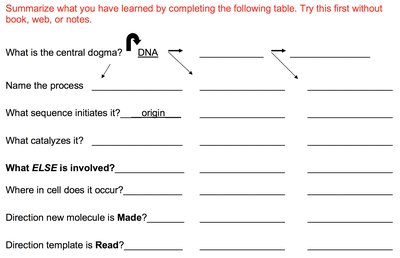
Summary Table: Central Dogma Processes
Process | Initiation Sequence | Enzyme | Location | Direction Made | Direction Read |
|---|---|---|---|---|---|
Replication | Origin | DNA Polymerase | Nucleus | 5' → 3' | 3' → 5' |
Transcription | Promoter | RNA Polymerase | Nucleus | 5' → 3' | 3' → 5' |
Translation | Start Codon (AUG) | Ribosome | Cytoplasm | N → C | 5' → 3' |
Practice and Application
Using the Codon Table
Identify the amino acid encoded by a given mRNA codon using the codon table.
Predict the effects of mutations on protein sequence and function.
Concept Map and Review
Draw and label diagrams of replication, transcription, and translation.
Practice identifying directionality and strand polarity.
Key Equations and Concepts
Directionality of synthesis:
Peptide bond formation:
Additional info:
Strand polarity is essential for understanding replication and transcription.
Mutations can have variable effects depending on their location and type.
Practice with codon tables and diagrams is crucial for mastering translation.
