 뒤로
Ecology: Community Structure, Species Interactions, and Diversity
스터디 가이드 - 스마트 노트
 자료에 맞춘 맞춤형 노트, 핵심 정의, 예시, 맥락을 확장해 제공합니다.
Levensgemeenschappen (Communities)
Ecological Communities: Definition and Structure
An ecological community is a group of populations of different species living and interacting in the same area. The structure of a community is shaped by both biotic (living) and abiotic (non-living) factors, as well as the interactions among organisms.
Biotic factors: Interactions between organisms, such as competition, predation, and symbiosis.
Abiotic factors: Physical environment, including climate, soil, water, and light.
Population: All individuals of a species in a given area.
Community: All populations of different species in a given area.
Biome: Large ecological areas with similar climate and communities.
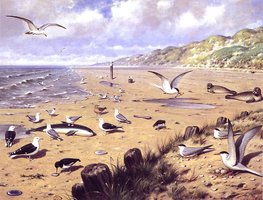
Example: A coastal dune community includes plants, birds, insects, and other organisms interacting with each other and their environment.
Habitat and Niche
Definitions and Examples
The habitat is the physical location where an organism lives (its 'address'), while the ecological niche is the role an organism plays in its environment, including all biotic and abiotic requirements (its 'profession').
Habitat: The actual place where an organism is found.
Niche: The sum of all environmental factors and interactions required for an organism's survival and reproduction.
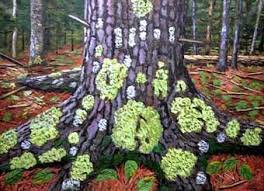
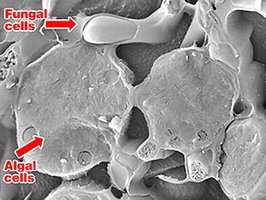
Example: Tree algae live on tree bark (habitat) and provide organic substances to fungi in exchange for protection (niche).
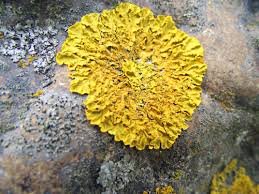
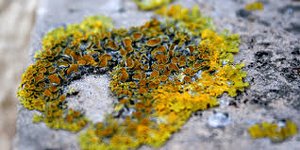
Symbiosis: Lichens are a symbiotic relationship between algae and fungi, where both partners benefit.
Interspecific Interactions
Types of Long-Term Interactions
Species interact in various ways within a community, shaping its structure and dynamics. These interactions include competition, predation, and symbiosis.
Competition ([-/-]): Occurs when species compete for limited resources. Strong competition can lead to competitive exclusion.
Predation ([+/-]): One species (predator) kills and eats another (prey).
Symbiosis: Long-term interactions between species, including parasitism, mutualism, and commensalism.
Symbiosis: Parasitism, Mutualism, and Commensalism
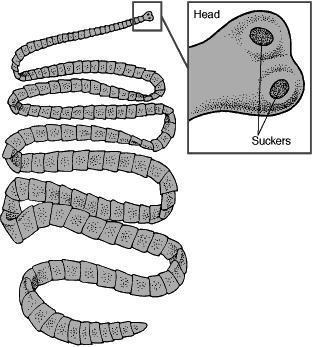
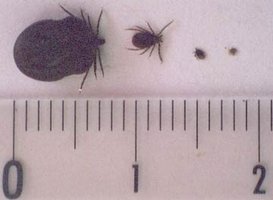
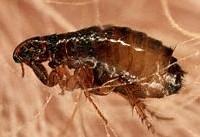
Parasitism ([+/-]): One organism benefits at the expense of another. Includes endoparasites (inside host) and ectoparasites (outside host).
Mutualism ([+/+]): Both organisms benefit. Example: Lichens, gut flora in cows.
Commensalism ([+/0]): One organism benefits, the other is unaffected. Example: Barnacles on whales, birds nesting in trees.
Examples of Parasitism:

Examples of Mutualism:
Hermit crab and sea anemone: Crab gets protection, anemone gets food.
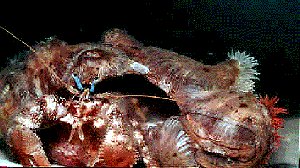
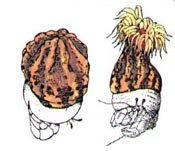
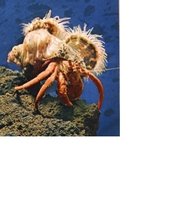
Facilitation
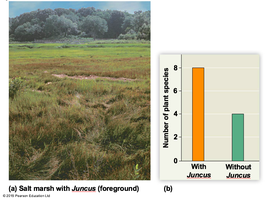
Facilitation is an interaction where one species has a positive effect on another without direct contact. For example, grazing geese promote growth of certain grass species, and the plant Juncus roemerianus improves soil for other plants, increasing diversity.
Commensalism
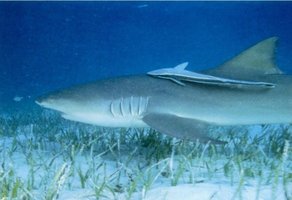
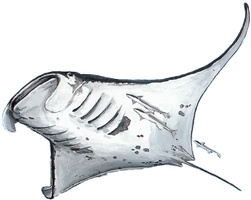
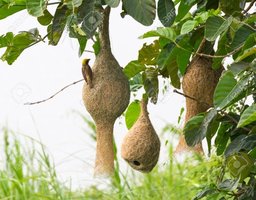
Examples include remora fish traveling with sharks, and birds building nests in trees without affecting the tree.
Predation
Predator-Prey Interactions
Predation is an interaction where a predator kills and eats its prey. Predators use adaptations such as claws, teeth, venom, or intelligence to capture prey.
Adaptations: Physical traits like claws and teeth, or behavioral strategies.


Species Diversity
Components of Diversity
Species diversity refers to the variety of species in a community. It is measured by species richness (number of species) and relative abundance (proportion of each species).
Species richness: Total number of different species.
Relative abundance: Proportion of individuals of each species.
Example: Two communities may have the same species but different relative abundances, affecting overall diversity.
Community | A | B | C | D |
|---|---|---|---|---|
1 | 25% | 25% | 25% | 25% |
2 | 80% | 5% | 5% | 10% |
Diversiteitsindex: Measures how evenly individuals are distributed among species. Communities with equal abundances are more diverse.
Simpson's Diversity Index (D): Used to quantify diversity:
where is the proportion of individuals in species , and is the total number of species.
Evenness (E): Measures how evenly individuals are distributed:
where is the maximum possible diversity for the community.
Trophic Structure
Food Chains and Food Webs
Trophic structure describes the feeding relationships among species in a community, showing the flow of energy and nutrients.
Food chain: Linear sequence of organisms, each feeding on the previous.
Food web: Complex network of interconnected food chains.
Trophic levels: Primary producers, primary consumers (herbivores), secondary consumers (carnivores), tertiary consumers, apex predators.
Energy transfer: Only about 10% of energy is transferred from one trophic level to the next, limiting the number of levels.
Energetic hypothesis: Food chain length is limited by energy transfer inefficiency.
Dynamical stability hypothesis: Longer food chains are less stable due to population fluctuations.
Species with Strong Influence
Dominant, Keystone, and Fundamental Species
Dominant species: Most abundant or highest biomass; strongly affect other species.
Keystone species: Have a disproportionately large effect on community structure, often through their ecological role.
Fundamental species: Change the environment, affecting community structure and survival of other species.
Example: Wolves in Yellowstone affect river structure by controlling herbivore populations.
Bottom-Up and Top-Down Control
Community Regulation Models
Bottom-up control: Lower trophic levels (e.g., nutrients, producers) regulate higher levels.
Top-down control: Predators regulate populations of herbivores and producers.
Disturbances and Diversity
Effects of Disturbances
Disturbances such as floods, fires, storms, and human activities can alter community structure and diversity. The intermediate disturbance hypothesis suggests that moderate disturbances increase diversity by preventing dominance of a few species.
Low disturbance: Dominance by a few species, low diversity.
High disturbance: Few species survive, low diversity.
Intermediate disturbance: Highest diversity.
Examples: Land slides, floods, wildfires, hurricanes, and cultural landscapes.
Summary of Learning Goals
Describe how community diversity is structured by species composition and relative abundance.
Draw trophic structures in food chains and webs.
Identify roles and effects of dominant, keystone, and fundamental species.
Explain at least two disturbances and their effects on community diversity.
