 뒤로
뒤로Energy, Metabolism, and Enzyme Function in Cells
스터디 가이드 - 스마트 노트
 자료에 맞춘 맞춤형 노트, 핵심 정의, 예시, 맥락을 확장해 제공합니다.
Energy and Metabolism
Overview of Metabolism
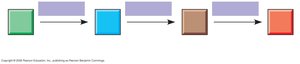
Metabolism encompasses all chemical reactions within an organism, allowing it to transform matter and energy. These reactions are organized into metabolic pathways, where each step is catalyzed by a specific enzyme.
Catabolic pathways: Break down complex molecules into simpler ones, releasing energy (e.g., hydrolysis).
Anabolic pathways: Build complex molecules from simpler ones, consuming energy (e.g., dehydration synthesis).
Forms of Energy
Energy exists in various forms and can be converted from one form to another:
Kinetic energy: Energy of motion.
Thermal energy: Kinetic energy associated with random movement of atoms or molecules.
Potential energy: Stored energy due to position or structure.
Chemical energy: Potential energy available for release in chemical reactions.
Thermodynamics in Biology
Thermodynamics is the study of energy transformations. Biological systems are open, exchanging energy and matter with their surroundings.
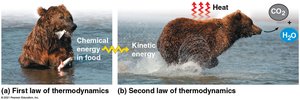
First Law of Thermodynamics: Energy cannot be created or destroyed, only transformed or transferred.
Second Law of Thermodynamics: Every energy transfer increases the entropy (disorder) of the universe; some energy is lost as heat.
Energy Conversion and Entropy
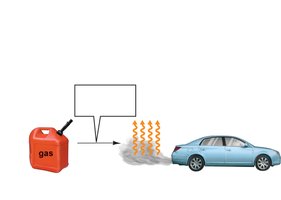
Useful energy is stored in organized matter. When used, some energy is lost as heat, increasing entropy. Living organisms maintain order internally but increase disorder in their surroundings.
Free Energy and Spontaneity
Gibbs Free Energy (G)
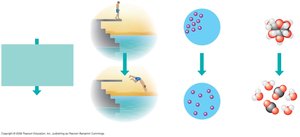
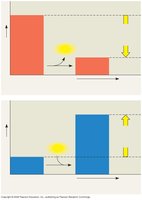
Free energy is the portion of a system's energy that can perform work at constant temperature and pressure. The change in free energy (ΔG) determines whether a process is spontaneous.
ΔG < 0: Spontaneous process (releases free energy).
ΔG > 0: Nonspontaneous process (requires input of energy).
ΔG = G_{final} - G_{initial}
Exergonic and Endergonic Reactions
Exergonic reactions: Release free energy (ΔG < 0), spontaneous.
Endergonic reactions: Absorb free energy (ΔG > 0), nonspontaneous.
Equilibrium and Metabolism
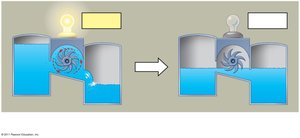
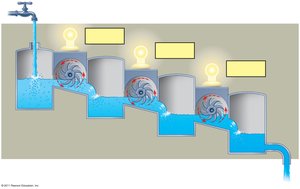
Cells are open systems and never reach equilibrium, allowing continuous metabolic work. In closed systems, reactions reach equilibrium and stop doing work.
ATP: The Energy Currency of the Cell
Structure and Function of ATP
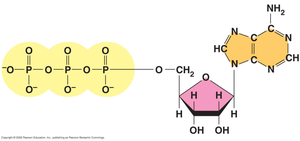
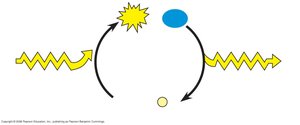
Adenosine triphosphate (ATP) stores and transfers energy for cellular work. It consists of adenine, ribose, and three phosphate groups. Hydrolysis of ATP releases energy by breaking a phosphate bond.
The ATP Cycle
ATP is regenerated by adding a phosphate group to adenosine diphosphate (ADP), using energy from catabolic reactions. This cycle couples exergonic and endergonic processes in the cell.
Enzymes and Metabolic Pathways
Role of Enzymes
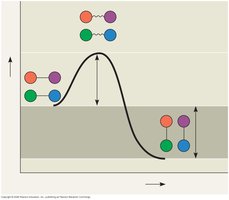
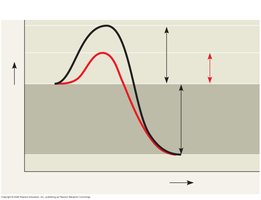
Enzymes are biological catalysts that speed up metabolic reactions by lowering the activation energy barrier, without being consumed in the process.
Activation energy (EA): The initial energy required to start a reaction.
Enzyme Specificity and Mechanism
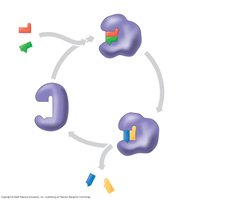
Each enzyme acts on a specific substrate, binding at the active site to form an enzyme-substrate complex. The induced fit model describes how the enzyme changes shape to facilitate the reaction.
Factors Affecting Enzyme Activity
Temperature: Each enzyme has an optimal temperature for activity.
pH: Each enzyme has an optimal pH range.
Cofactors: Nonprotein helpers (inorganic ions or organic coenzymes) required for enzyme function.
Enzyme Inhibition
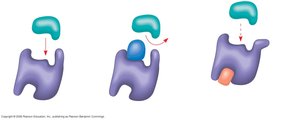
Competitive inhibitors: Bind to the active site, blocking substrate binding.
Noncompetitive inhibitors: Bind elsewhere, altering enzyme shape and reducing activity.
Allosteric Regulation and Cooperativity
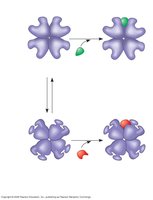
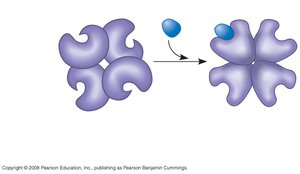
Allosteric enzymes have multiple subunits and can be regulated by activators or inhibitors binding to sites other than the active site. Cooperativity occurs when substrate binding to one active site increases activity at other sites.
Feedback Inhibition
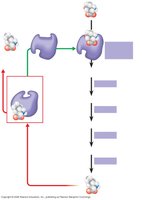
In feedback inhibition, the end product of a metabolic pathway inhibits an enzyme involved early in the pathway, preventing overproduction and conserving resources.
Summary Table: Key Concepts in Energy and Metabolism
Concept | Definition | Example |
|---|---|---|
Catabolic Pathway | Breaks down molecules, releases energy | Cellular respiration |
Anabolic Pathway | Builds molecules, consumes energy | Protein synthesis |
Exergonic Reaction | Releases free energy (ΔG < 0) | ATP hydrolysis |
Endergonic Reaction | Requires energy input (ΔG > 0) | Glucose synthesis |
Competitive Inhibition | Inhibitor binds active site | Sulfa drugs inhibiting bacterial enzymes |
Noncompetitive Inhibition | Inhibitor binds elsewhere, changes enzyme shape | Heavy metal poisoning |
