 뒤로
Energy, Metabolism, and Thermodynamics in Biological Systems
스터디 가이드 - 스마트 노트
 자료에 맞춘 맞춤형 노트, 핵심 정의, 예시, 맥락을 확장해 제공합니다.
Energy in Biological Systems
Introduction to Energy
All organisms require energy to stay alive and perform work. Cellular chemical reactions involve energy conversions, breaking and making molecules.
Energy is the capacity to perform work.
Metabolism refers to all chemical reactions that sustain life, including reactions that convert molecules and transfer energy.
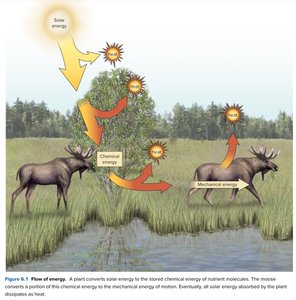
Types of Energy
Energy exists in two main forms:
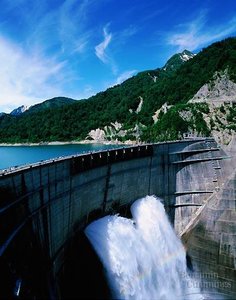
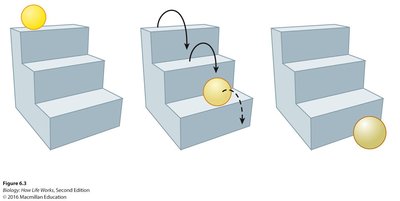
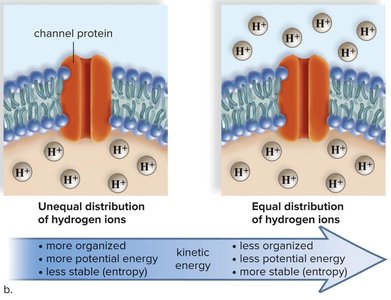
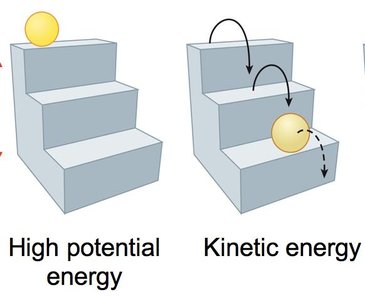
Potential energy: Stored energy, such as chemical energy in bonds or concentration gradients across membranes.
Kinetic energy: Energy of motion, including light, heat, sound, and muscle movement.
Thermodynamics in Biology
First Law of Thermodynamics
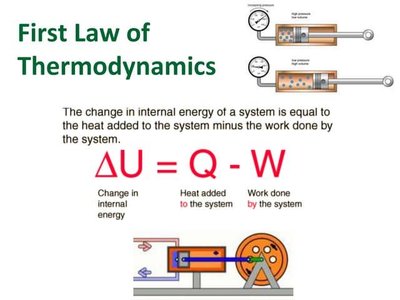
The first law states that energy can be changed from one form to another, but it cannot be created nor destroyed.
Energy is conserved in all processes.
Formula: (where is change in internal energy, is heat added, is work done by the system)
Second Law of Thermodynamics
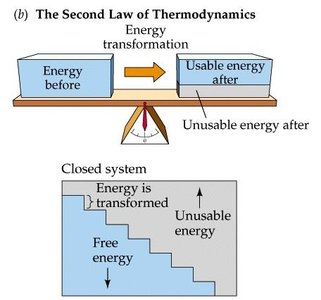
The second law states that energy changes are not 100% efficient.
Energy conversions increase disorder (entropy), and some energy is lost as heat.
Every energy transformation decreases the usable free energy of the system.
Events in the universe proceed toward maximum disorder (entropy).


Metabolism: Catabolism and Anabolism
Metabolic Pathways
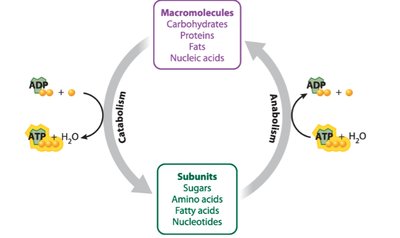
Metabolism includes both catabolic and anabolic pathways.
Catabolic pathways: Break down macromolecules, releasing energy (exergonic reactions).
Anabolic pathways: Build macromolecules, requiring energy input (endergonic reactions).
Energy Coupling
Cells couple exergonic and endergonic reactions to efficiently manage energy.
Energy released from catabolic reactions is used to drive anabolic reactions.
ATP is the key molecule for energy coupling.
Gibbs Free Energy and Reaction Directionality
Gibbs Free Energy ()
Gibbs free energy is the amount of energy available to do work.
Formula:
If is negative, the reaction releases energy (exergonic) and is spontaneous.
If is positive, the reaction requires energy input (endergonic) and is not spontaneous.

Exergonic vs. Endergonic Reactions
Exergonic reactions: Release energy, , often involve breaking down macromolecules (catabolic).
Endergonic reactions: Require energy input, , often involve building macromolecules (anabolic).
Enzymes and Catalysis
Role of Enzymes
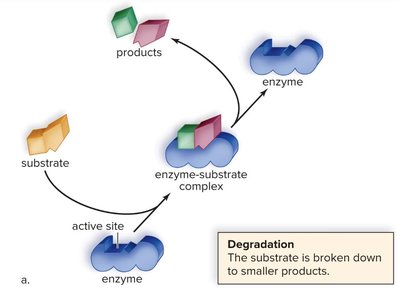
Enzymes are biological catalysts that speed up chemical reactions by lowering the activation energy barrier.
Enzymes do not change of a reaction.
They stabilize the transition state, making reactions proceed faster.
ATP: The Energy Currency of the Cell
Structure and Function of ATP
ATP (adenosine triphosphate) powers nearly all forms of cellular work.
ATP consists of adenine, ribose, and three phosphate groups.
High-energy bonds between phosphate groups are easily broken, releasing energy for cellular processes.
ATP is recycled thousands of times per day in cells.
Redox Reactions in Metabolism
Oxidation and Reduction
Oxidation: Loss of electrons, energetically favorable, releases energy ().
Reduction: Gain of electrons, energetically unfavorable, requires energy input ().
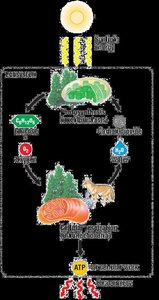
Redox reactions are central to cellular respiration and photosynthesis.
Electron Transport and Chemiosmosis
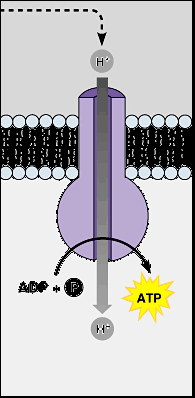
Electron transport chains in mitochondria and chloroplasts create a proton gradient.
The flow of protons (H+) back through ATP synthase powers ATP synthesis (chemiosmosis).
Summary Table: Exergonic vs. Endergonic Reactions
Type of Reaction | Energy Flow | Example | |
|---|---|---|---|
Exergonic | Negative | Energy released | Cellular respiration, catabolism |
Endergonic | Positive | Energy required | Photosynthesis, anabolism |
Key Concepts for Exam Preparation
Distinguish between exergonic and endergonic reactions, and between catabolic and anabolic pathways.
Understand the relationship between , redox reactions, and predicting chemical reaction directionality.
Describe the function of a catalyst and the role of enzymes in metabolism.
Explain the physical attributes of ATP and other dNTPs that result in large energy release during hydrolysis.
Interpret redox values to predict reaction directionality.
