 뒤로
뒤로Enzymes, Energy, and Cellular Respiration: Study Guide
스터디 가이드 - 스마트 노트
 자료에 맞춘 맞춤형 노트, 핵심 정의, 예시, 맥락을 확장해 제공합니다.
Enzymes, Energy, and Cellular Respiration
Energy in Biological Systems
Energy is fundamental to all biological processes, enabling cells to perform work, grow, and reproduce. It exists in various forms and is constantly transformed within living organisms.
Kinetic Energy: The energy of motion, such as moving molecules or muscle contractions.
Potential Energy: Stored energy due to position or configuration, such as energy in chemical bonds.
Chemical Energy: A form of potential energy stored in the bonds of molecules.
Thermal Energy: The energy of molecules moving, often released as heat.
Law of Conservation of Energy: Energy is neither created nor destroyed; it changes form.
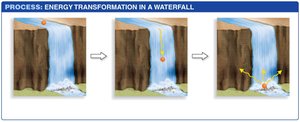
Example: Energy transformation in a waterfall: potential energy (height) converts to kinetic energy (motion) and then to thermal energy (heat).
Chemical Bonds and Energy
The potential energy of a molecule depends on the configuration and position of its shared electrons. Chemical reactions involve breaking and forming bonds, which transforms energy.
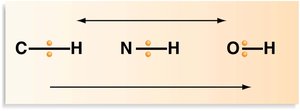
Bond Strength: Weaker bonds with equally shared electrons (nonpolar) have high potential energy; stronger bonds with unequally shared electrons (polar) have low potential energy.
Example: C-H bonds (nonpolar) have higher potential energy than O-H bonds (polar).
Enzymes: Biological Catalysts
Enzymes are proteins that catalyze chemical reactions in cells, allowing reactions to occur rapidly and efficiently. They lower the activation energy required for reactions.
Activation Energy: The minimum energy required to start a chemical reaction.
Enzyme Function: Enzymes bring reactants (substrates) together in precise orientations and facilitate bond breaking/forming.
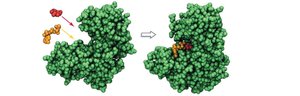
Induced Fit: When substrates bind to the active site, the enzyme changes shape to better fit the substrates.
Example: Glucokinase enzyme binds ATP and glucose, changing shape for catalysis.
Mechanism of Enzyme Action
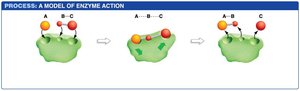
Enzyme-catalyzed reactions proceed through a series of steps:
Initiation: Substrates bind to the active site in a specific orientation, forming an enzyme-substrate complex.
Transition State Facilitation: Enzyme-substrate interactions lower the activation energy.
Termination: Products are released, and the enzyme remains unchanged.
Enzyme Regulation
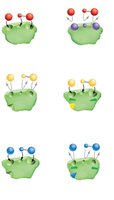
Enzyme activity is tightly regulated to ensure proper cellular function. Regulation can occur through inhibitors or activators.
Competitive Inhibition: A molecule competes with the substrate for the active site, blocking substrate binding.
Allosteric Regulation: A regulatory molecule binds to a site other than the active site, causing a conformational change that can activate or inhibit the enzyme.
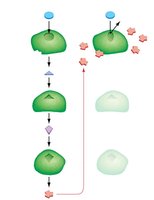
Feedback Inhibition: The end product of a metabolic pathway inhibits an enzyme earlier in the pathway, preventing overproduction.
Environmental Effects on Enzyme Activity
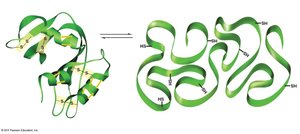
Enzyme function is sensitive to environmental conditions such as temperature and pH. Extreme conditions can denature enzymes, causing them to lose their shape and function.
Denaturation: The process by which proteins lose their structure due to heat, pH, or other factors.
Optimal Conditions: Each enzyme has an optimal temperature and pH for activity.
Example: Human enzymes typically function best at 37°C and neutral pH, while enzymes in hot springs bacteria have higher optimal temperatures.
Cellular Respiration: Overview
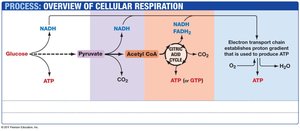
Cellular respiration is the process by which cells extract energy from food molecules, primarily glucose, to produce ATP. It consists of several stages, each with specific inputs, outputs, and regulatory mechanisms.
ATP: The energy currency of the cell, used for mechanical, transport, and chemical work.
Metabolic Pathways: Series of enzyme-catalyzed reactions that harvest energy from glucose.
Stages: Glycolysis, Pyruvate Processing, Citric Acid Cycle, Electron Transport Chain and Chemiosmosis.
Glycolysis
Glycolysis is the first step in cellular respiration, breaking down glucose into two molecules of pyruvic acid in the cytoplasm.
Energy Investment Phase: Uses two ATP molecules.
Energy Payoff Phase: Produces four ATP (net gain of two), two NADH, and two pyruvic acids.
Regulation: Feedback inhibition by ATP at the enzyme phosphofructokinase.
Pyruvate Processing
Pyruvate is transported into the mitochondria and converted to acetyl CoA, CO2, and NADH by the enzyme pyruvate dehydrogenase.
Location: Mitochondrial matrix in eukaryotes; cytosol in prokaryotes.
Regulation: Feedback inhibition by products (acetyl CoA and NADH).
Citric Acid Cycle (Krebs Cycle)
The citric acid cycle oxidizes acetyl CoA to CO2, producing NADH, FADH2, and ATP. It occurs in the mitochondrial matrix and runs twice for each glucose molecule.
Inputs: Acetyl CoA.
Outputs: CO2, NADH, FADH2, ATP.
Regulation: Feedback inhibition by NADH and ATP.
Electron Transport Chain and Chemiosmosis
The electron transport chain (ETC) is located in the inner mitochondrial membrane. It transfers electrons from NADH and FADH2 to oxygen, creating a proton gradient used by ATP synthase to produce ATP.
Final Electron Acceptor: Oxygen (O2).
Proton Motive Force: The gradient of protons across the membrane drives ATP synthesis.
ATP Synthase: Enzyme that synthesizes ATP from ADP and Pi.
Fermentation
When oxygen is unavailable, cells use fermentation to regenerate NAD+ from NADH, allowing glycolysis to continue. Fermentation produces less ATP than aerobic respiration.
Lactic Acid Fermentation: Occurs in muscle cells; pyruvate accepts electrons from NADH to form lactate.
Alcohol Fermentation: Occurs in yeast; pyruvate is converted to ethanol and CO2.
Summary Table: Cellular Respiration Pathways
Pathway | Location | Inputs | Outputs | ATP Yield |
|---|---|---|---|---|
Glycolysis | Cytoplasm | Glucose, NAD+, ADP | Pyruvate, NADH, ATP | 2 |
Pyruvate Processing | Mitochondrial Matrix | Pyruvate, NAD+, CoA | Acetyl CoA, NADH, CO2 | 0 |
Citric Acid Cycle | Mitochondrial Matrix | Acetyl CoA, NAD+, FAD, ADP | CO2, NADH, FADH2, ATP | 2 |
Electron Transport Chain | Inner Mitochondrial Membrane | NADH, FADH2, O2, ADP | ATP, H2O | ~25 |
Fermentation | Cytoplasm | Pyruvate, NADH | Lactate or Ethanol, NAD+ | 2 |
Key Terms and Concepts
Enzyme: Protein catalyst that speeds up chemical reactions.
Substrate: The reactant molecule that an enzyme acts upon.
Active Site: The region of an enzyme where substrates bind and reactions occur.
Activation Energy: The energy required to initiate a reaction.
Competitive Inhibition: Inhibitor binds to the active site, blocking substrate.
Allosteric Regulation: Inhibitor or activator binds elsewhere, changing enzyme shape.
Feedback Inhibition: End product inhibits an earlier enzyme in a pathway.
Cellular Respiration: Process of extracting energy from food to produce ATP.
Glycolysis: First step in cellular respiration, breaking down glucose.
Citric Acid Cycle: Oxidizes acetyl CoA to CO2, producing NADH and FADH2.
Electron Transport Chain: Transfers electrons to oxygen, generating ATP.
Fermentation: Anaerobic pathway to regenerate NAD+ and allow glycolysis to continue.
Additional info: This study guide expands on brief points from the original materials, providing academic context and definitions for clarity. All images included are directly relevant to the adjacent explanations, visually reinforcing key concepts in enzyme function, regulation, cellular respiration, and fermentation.
