 뒤로
뒤로Ch.29 pt2 Fungal Diversity and Life Cycles: Study Notes for General Biology
스터디 가이드 - 스마트 노트
 자료에 맞춘 맞춤형 노트, 핵심 정의, 예시, 맥락을 확장해 제공합니다.
Fungal Diversity
Overview of Fungal Phyla
The kingdom Fungi is a diverse group of eukaryotic organisms that play essential roles in ecosystems as decomposers, symbionts, and pathogens. Fungi are classified into several major phyla based on their reproductive structures and genetic relationships.
Basidiomycota: Includes mushrooms, puffballs, and shelf fungi. Characterized by the production of basidiospores on basidia.
Ascomycota: Known as sac fungi, produce ascospores in asci. Includes yeasts, molds, and morels.
Glomeromycota: Form arbuscular mycorrhizae, important for plant nutrient uptake.
Zygomycota: Includes molds like black bread mold, produce zygospores.
Chytridiomycota: Aquatic fungi with flagellated spores (zoospores), important decomposers and parasites.
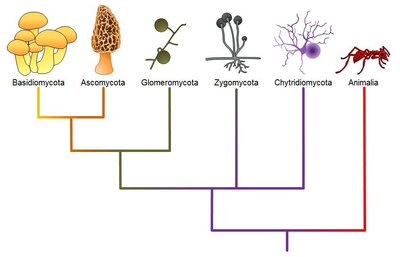
Phylogenetic relationships among fungal phyla are illustrated below:
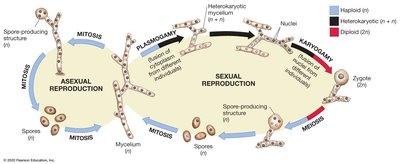
Generalized Life Cycle of Fungi
Sexual and Asexual Reproduction
Fungi exhibit both asexual and sexual reproductive cycles. The presence of a heterokaryotic stage (cells with two or more genetically distinct nuclei) is a key feature in many fungi.
Asexual reproduction: Involves mitosis to produce spores that germinate into new mycelia.
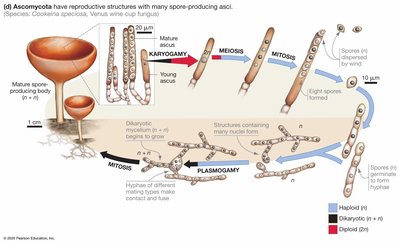
Sexual reproduction: Involves plasmogamy (fusion of cytoplasm), karyogamy (fusion of nuclei), and meiosis to produce genetically diverse spores.
Heterokaryotic stage: Occurs after plasmogamy but before karyogamy, with nuclei from different parents coexisting.
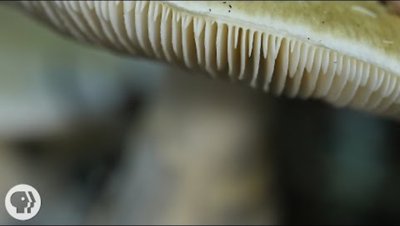
Basidiomycetes
Characteristics and Ecological Roles
Basidiomycetes are a major fungal phylum known for their fruiting bodies (mushrooms). They play crucial roles in wood decomposition, forest health, and can be edible, parasitic, or poisonous.
Produce lignin peroxidase, aiding in wood decomposition.
Form ectomycorrhizal associations with trees, enhancing nutrient uptake.
Some species are collected for food, while others are toxic.
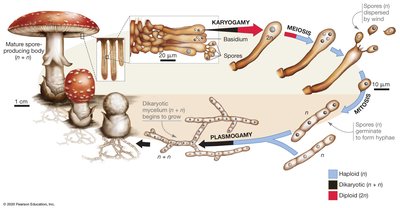
Basidiomycete Life Cycle
The life cycle of basidiomycetes involves the formation of a fruiting body for sexual reproduction, with distinct stages of plasmogamy, karyogamy, and meiosis.
Plasmogamy: Fusion of hyphae from different mating types.
Dikaryotic stage: Mycelium contains two distinct nuclei per cell.
Karyogamy: Fusion of nuclei to form a diploid zygote.
Meiosis: Produces haploid basidiospores.
Ascomycetes
Characteristics and Ecological Roles
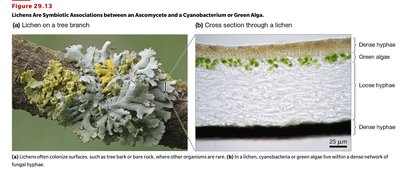
Ascomycetes are the largest fungal phylum, commonly known as sac fungi. They are named for their reproductive structure, the ascus, which contains ascospores. Many ascomycetes form mutualistic associations with cyanobacteria or green algae, resulting in lichens.
Includes unicellular yeasts and multicellular molds.
About half of ascomycete species form lichens.
Play roles in decomposition, symbiosis, and disease.
Ascomycete Life Cycle
The life cycle of ascomycetes involves both asexual and sexual reproduction, with the formation of asci containing ascospores.
Asexual reproduction: Occurs via conidiophores producing conidia.
Sexual reproduction: Involves plasmogamy, dikaryotic stage, karyogamy, and meiosis within the ascus.
Glomeromycetes
Arbuscular Mycorrhizal Fungi (AMF)
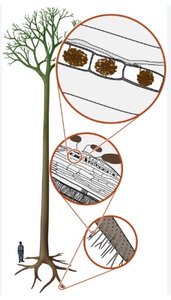
Glomeromycetes are a monophyletic group that form arbuscular mycorrhizae with plant roots, facilitating nutrient and water uptake. They reproduce primarily asexually through glomerospores.
Absorb phosphorus, nitrogen, and water for host plants.
Host plants provide sugars and organic compounds to fungi.
Sexual reproduction has not been directly confirmed.
Zygomycetes
Characteristics and Ecological Roles
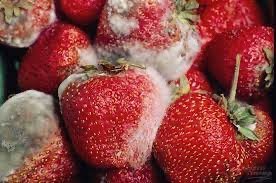
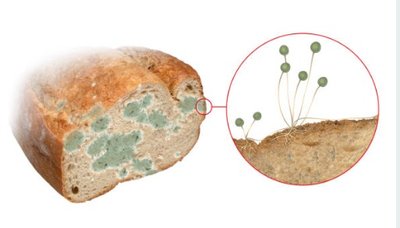
Zygomycetes are primarily soil-dwellers, including saprophytic and parasitic species responsible for rotting fruits and vegetables. They are known for their hyphae without septa and production of zygospores.
Commonly associated with black bread mold (Rhizopus stolonifer).
Can cause spoilage of food products.
Zygomycete Life Cycle
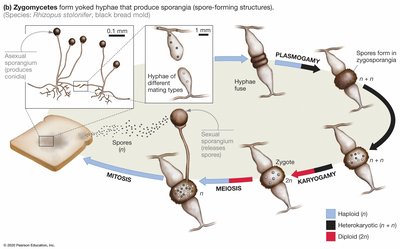
The life cycle of zygomycetes involves both asexual and sexual reproduction, with the formation of sporangia and zygospores.
Asexual reproduction: Sporangiospores are produced by mitosis.
Sexual reproduction: Fusion of hyphae leads to zygospore formation, followed by meiosis.
Chytridiomycota
Characteristics and Ecological Roles
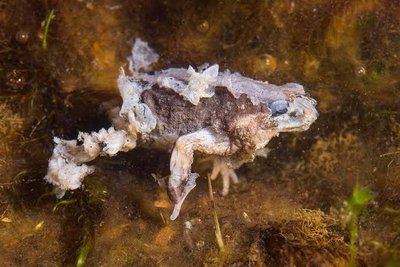
Chytridiomycota are aquatic fungi with flagellated spores (zoospores). They are important decomposers of plant material in wet environments and include parasitic species affecting amphibians.
Only fungal group with motile gametes.
Can cause decline in amphibian populations worldwide.
Chytrid Life Cycle
Chytrids exhibit alternation of generations, unique among fungi, and produce motile zoospores.
Zoospores: Asexual spores with flagella, capable of swimming in aquatic environments.
Alternation of generations: Both haploid and diploid multicellular stages.
Fungal Phyla Comparison Table
The following table summarizes the main characteristics of the major fungal phyla:
Phylum | Key Features | Reproductive Structures | Ecological Role |
|---|---|---|---|
Basidiomycota | Fruiting bodies (mushrooms), wood decomposition | Basidia, basidiospores | Decomposer, symbiont, food source |
Ascomycota | Sac fungi, largest phylum, lichen formation | Asci, ascospores, conidia | Decomposer, symbiont, pathogen |
Glomeromycota | Arbuscular mycorrhizae, asexual spores | Glomerospores | Plant symbiont |
Zygomycota | Hyphae without septa, black bread mold | Sporangia, zygospores | Decomposer, food spoilage |
Chytridiomycota | Aquatic, flagellated zoospores | Zoospores | Decomposer, parasite |
Key Terms and Concepts
Spore: A reproductive cell capable of developing into a new organism without fusion with another cell.
Zoospore: A motile, flagellated asexual spore found in chytrids.
Plasmogamy: Fusion of cytoplasm from two parent mycelia.
Karyogamy: Fusion of nuclei from two parent mycelia.
Dikaryotic: Cells containing two genetically distinct nuclei.
Mycorrhiza: Symbiotic association between fungi and plant roots.
Lichen: Symbiotic association between a fungus and a photosynthetic partner (alga or cyanobacterium).
Examples and Applications
Basidiomycetes: Mushrooms used as food, wood decomposition, forest health.
Ascomycetes: Yeasts in baking and brewing, lichens as bioindicators.
Zygomycetes: Bread mold, spoilage of fruits and vegetables.
Chytridiomycota: Decline of amphibian populations due to parasitic chytrids.
Summary
Fungi are a diverse kingdom with complex life cycles and significant ecological roles. Understanding their classification, reproductive strategies, and symbiotic relationships is essential for general biology students.
