 뒤로
Green Algae and Seedless Plant Diversity: Evolution, Life Cycles, and Adaptations
스터디 가이드 - 스마트 노트
 자료에 맞춘 맞춤형 노트, 핵심 정의, 예시, 맥락을 확장해 제공합니다.
Green Algae and Land Plant Evolution
Phylogenetic Relationships and Evolutionary Origins
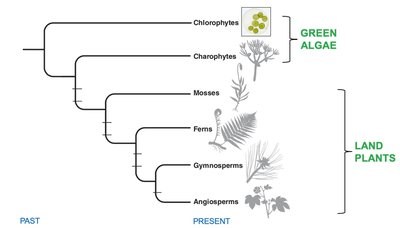
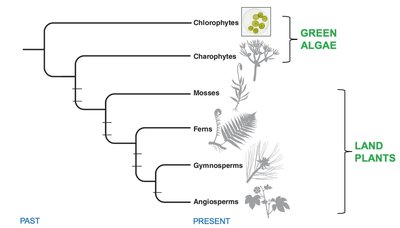
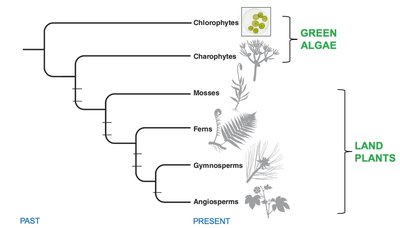
Green algae and land plants are photosynthetic eukaryotes that share a common ancestor. Land plants likely evolved from aquatic ancestors, specifically from green algae, which are aquatic protists. The evolutionary tree shows two main lineages of green algae: Chlorophytes and Charophytes. Charophytes are most closely related to land plants, sharing key adaptations such as gametangia, which protect gametes and facilitated the transition from water to land.
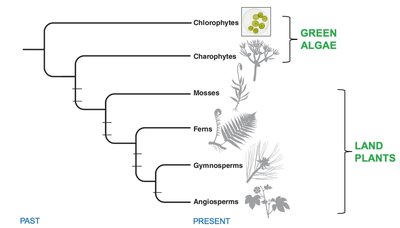
Shared Characteristics of Green Algae and Land Plants
Cell walls made of cellulose
Storage of sugars as starch
Photosynthetic pigments: Chlorophyll a and b
These features are fundamental to both groups and are evidence of their shared ancestry.
Charophytes: Spirogyra and Chara
Spirogyra: Structure and Reproduction
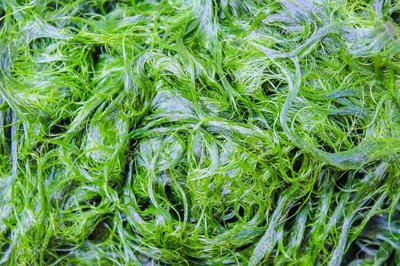
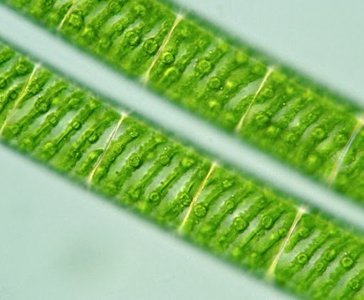
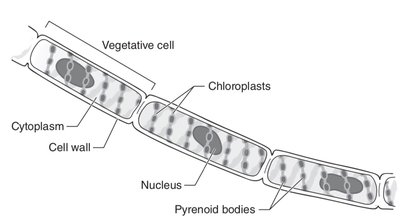
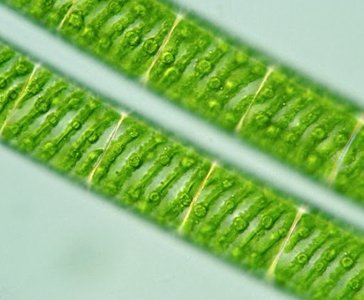
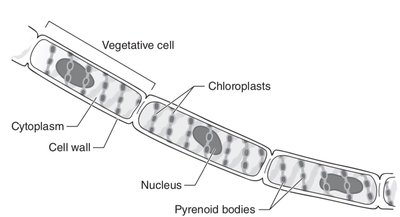
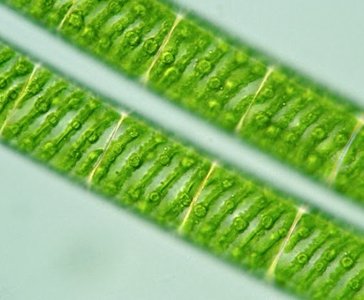
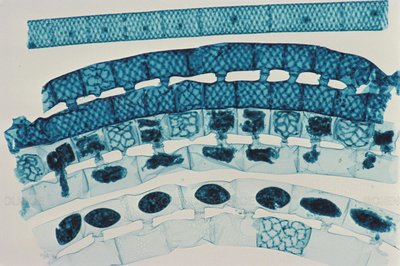
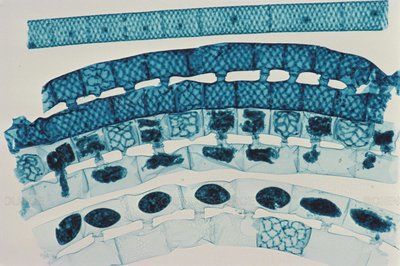
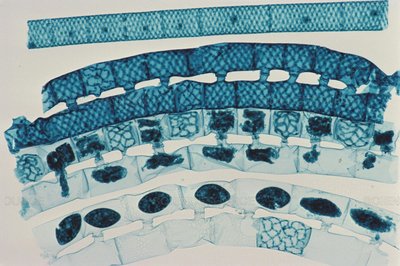
Spirogyra is a filamentous, multicellular green alga. Its cells are haploid (n) and contain ribbon-shaped chloroplasts. Spirogyra reproduces both asexually and sexually:
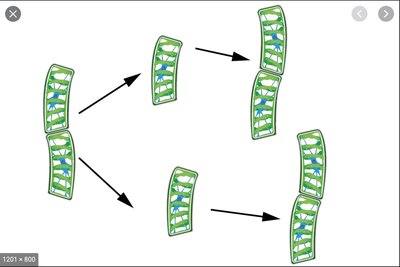
Asexual reproduction: Occurs under favorable conditions (warm temperatures, sunlight, nutrients). Cells fragment and divide by mitosis, elongating the filaments.
Sexual reproduction: Occurs under stressful conditions. Involves conjugation between filaments of different mating strains (+ and -), forming diploid (2n) zygospores with thick coats for survival. Zygospores undergo meiosis to produce haploid cells.
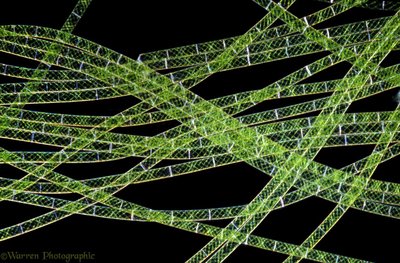
Chara: Structure and Adaptations
Chara is a multicellular charophyte with specialized reproductive structures called gametangia. These include:
Antheridia: Produce sperm
Archegonia: Produce eggs
Sterile jacket: Surrounds gametangia, protecting developing gametes—a key adaptation for terrestrial life
Chara's adaptations are similar to those found in land plants, supporting the evolutionary transition from aquatic to terrestrial environments.
Life Cycles: Alternation of Generations
Charophytes vs. Land Plants
Charophytes: Multicellular haploid (n) bodies; zygote is the only diploid (2n) stage; no alternation of generations.
Mosses and Ferns (Land Plants): Exhibit alternation of generations, with both multicellular haploid (gametophyte) and diploid (sporophyte) stages.
Alternation of Generations in Land Plants
All land plants have a life cycle with two distinct phases:
Gametophyte generation (haploid, n): Produces gametes in gametangia (antheridia for sperm, archegonia for eggs).
Sporophyte generation (diploid, 2n): Produces spores in sporangia via meiosis.
Fertilization produces a diploid zygote, which develops into the sporophyte. Spores produced by meiosis develop into gametophytes.
Life Cycle Equations
Key transitions:
Fertilization:
Meiosis:
Mitosis: or
Adaptations for Terrestrial Life
Major Adaptations
Prevention of desiccation: Waxy, waterproof covering
Support: Fibrous cells for structural support
Resource acquisition: Division into roots and shoots, vascular tissue
Gas exchange: Pores in leaves
Fertilization and gamete protection: Gametangia, pollen
Nonvascular Land Plants: Bryophytes (Mosses)
Characteristics and Life Cycle
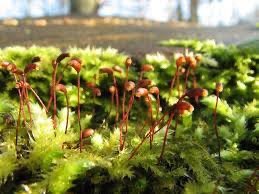
Bryophytes (including mosses, liverworts, and hornworts) lack vascular tissue, limiting their size. Mosses have a dominant gametophyte (n) stage, with a smaller, dependent sporophyte (2n) attached to the gametophyte. Mosses reproduce via gametangia (antheridia and archegonia), and the sporophyte produces spores in a capsule (sporangium).
Vascular, Seedless Land Plants: Ferns
Characteristics and Life Cycle
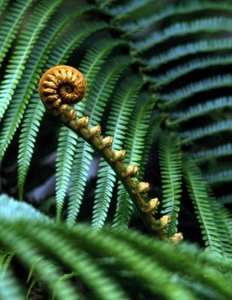
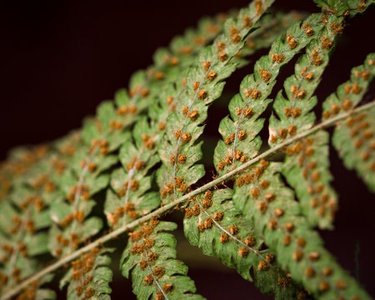
Ferns and their relatives are vascular, seedless plants. The sporophyte (2n) is the dominant generation, with vascular tissue (xylem and phloem) allowing for greater height and complexity. The gametophyte (n) is reduced in size and often free-living. Ferns produce clusters of sporangia called sori on the underside of their fronds, where meiosis generates spores.
Fern Life Cycle Table
Generation | Ploidy | Dominant Stage | Key Structures |
|---|---|---|---|
Gametophyte | n | Reduced | Antheridia, Archegonia, Rhizoids |
Sporophyte | 2n | Dominant | Fronds, Roots, Sori, Sporangia |
Summary Table: Plant Groups and Life Cycle Features
Group | Ploidy of Main Body | Dominant Stage | Vascular Tissue | Key Adaptations |
|---|---|---|---|---|
Charophytes | n | Gametophyte | No | Gametangia, Sterile Jacket |
Mosses (Bryophytes) | n | Gametophyte | No | Gametangia, Capsule |
Ferns | 2n | Sporophyte | Yes | Sori, Vascular Tissue |
Key Terms and Definitions
Gametophyte: Multicellular haploid (n) stage that produces gametes
Sporophyte: Multicellular diploid (2n) stage that produces spores
Gametangia: Structures that produce and protect gametes (antheridia for sperm, archegonia for eggs)
Sporangium: Structure where spores are produced by meiosis
Sorus: Cluster of sporangia found on fern fronds
Vascular tissue: Specialized tissue (xylem and phloem) for transport of water and nutrients
Practice and Study Tips
Draw and label the alternation of generations for mosses and ferns, including key structures and ploidy levels.
Make notecards for protists and plant terminology, including descriptions, nutrition, and ploidy.
Build comparison charts for organisms, noting ploidy levels, dominant stages, and key adaptations.
Additional info:
Phylum names: Charophytes (green algae), Bryophytes (mosses), Pteridophytes (ferns)
Alternation of generations is a defining feature of land plants, distinguishing them from their algal ancestors.
