 뒤로
How Cells Obtain Energy: Metabolism, Cellular Respiration, and Fermentation
스터디 가이드 - 스마트 노트
 자료에 맞춘 맞춤형 노트, 핵심 정의, 예시, 맥락을 확장해 제공합니다.
Energy & Metabolism
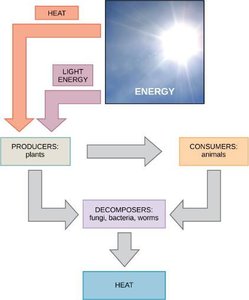
Bioenergetics and Metabolism
Bioenergetics is the study of energy flow through living systems, such as cells. Metabolism encompasses all chemical reactions within cells, including those that consume or generate energy. These reactions are essential for maintaining life and are organized into metabolic pathways.
Metabolism: The sum of all chemical reactions in a cell.
Bioenergetics: Focuses on how energy is transferred and transformed in biological systems.
Metabolic Pathways
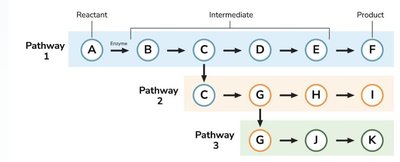
Metabolic pathways are series of chemical reactions that modify a starting molecule through intermediates to yield a final product. Pathways can be linear, branched, or cyclical.
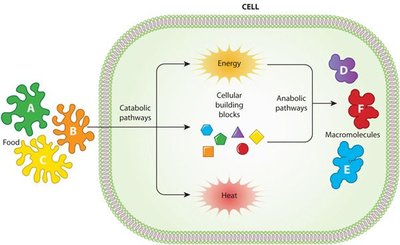
Anabolic pathways: Build polymers from monomers (e.g., photosynthesis, DNA replication).
Catabolic pathways: Break down polymers into monomers (e.g., cellular respiration, fermentation).
Each pathway is catalyzed by specific enzymes.
Comparison of Anabolic and Catabolic Pathways
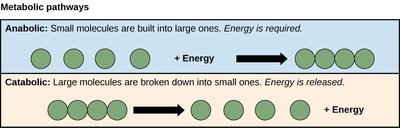
Pathway Type | Process | Energy |
|---|---|---|
Anabolic | Builds large molecules from small ones | Requires energy |
Catabolic | Breaks large molecules into small ones | Releases energy |
Energy and Thermodynamics
Forms of Energy
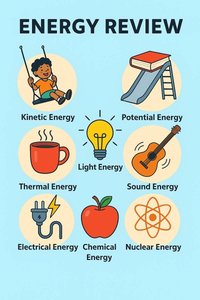
Energy is the ability to do work or cause change. It exists in various forms, including kinetic, potential, thermal, light, chemical, electrical, and nuclear energy.
Kinetic energy: Energy of motion.
Potential energy: Stored energy.
Chemical energy: Stored in chemical bonds.
Thermal energy: Associated with heat.
Light energy: Energy from electromagnetic radiation.
Thermodynamics in Biology
Thermodynamics is the study of energy and its transfer involving physical matter.
First Law of Thermodynamics: Energy cannot be created or destroyed; it is conserved.
Second Law of Thermodynamics: Energy transfer increases entropy; some energy is always lost as heat.
Enzymes: Biological Catalysts
Enzyme Structure and Function
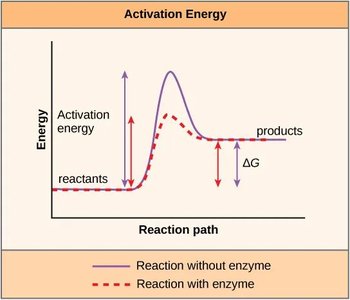
Enzymes are globular proteins that act as catalysts, lowering the activation energy required for reactions.
Substrate: The reactant that binds to the enzyme.
Active site: The region on the enzyme where the substrate binds.
Environmental factors (pH, temperature, salinity, cofactors/coenzymes) affect enzyme activity.
Cellular Respiration
Overview and Chemical Equation
Cellular respiration is a metabolic process that releases energy from food in the presence of oxygen.
Equation:
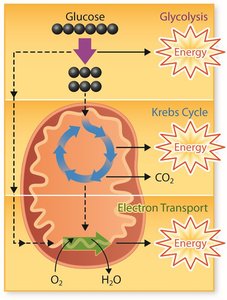
Three main stages: Glycolysis, Krebs Cycle (Citric Acid Cycle), Electron Transport Chain (ETC).
Glycolysis
Glycolysis is the breakdown of glucose into pyruvate, occurring in the cytoplasm.
Costs 2 ATP to split 1 glucose into 2 G3P.
Each G3P decays to pyruvate, producing 2 ATP and 1 NADH.
Adenosine Triphosphate (ATP)
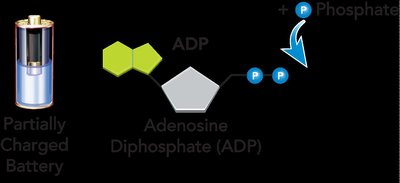
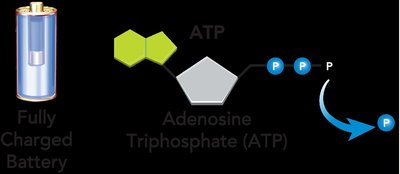
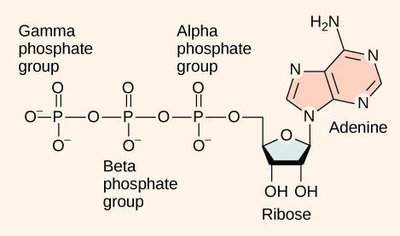
ATP is the primary energy currency of the cell. Energy is stored in the bonds between phosphate groups and released when ATP is converted to ADP.
ATP hydrolysis:
ATP synthesis:
Electron Carriers
Electron carriers, such as NAD+ and NADH, shuttle excited electrons during metabolic processes.
NAD+ reduction:
Electron carriers are essential for transferring energy in cellular respiration.
Citric Acid Cycle (Krebs Cycle)
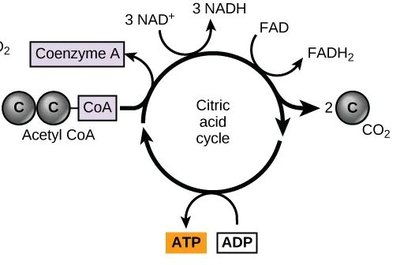
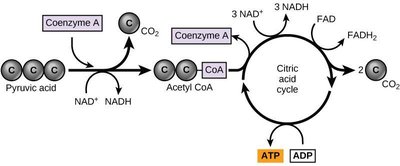
The citric acid cycle occurs in the mitochondria and completes the breakdown of pyruvate to CO2, capturing electrons and producing ATP.
Acetyl group enters the cycle, binds to a 4C molecule to form citric acid.
Two CO2 molecules are released, ATP is produced, and electrons are captured by NAD+ and FAD.
The original 4C molecule is regenerated.
Oxidative Phosphorylation
Oxidative phosphorylation is the final stage of cellular respiration, where most ATP is produced.
Electrons are passed through the electron transport chain to oxygen.
Protein complexes pump H+ ions, creating an electrochemical gradient.
ATP synthase uses the flow of H+ ions (chemiosmosis) to convert ADP to ATP.
Produces 25-30 ATP per glucose.
Fermentation (Anaerobic Pathways)
Fermentation Process
Fermentation is an anaerobic process that regenerates NAD+ when oxygen is unavailable, allowing glycolysis to continue.
Lactic acid fermentation: Converts pyruvate to lactic acid, regenerating NAD+ (common in animal cells).
Alcohol fermentation: Converts pyruvate to ethanol and CO2, regenerating NAD+ (common in yeast).
Summary Table: Cellular Respiration vs. Fermentation
Process | Oxygen Required? | ATP Yield | End Products |
|---|---|---|---|
Cellular Respiration | Yes | ~30-32 ATP | CO2, H2O |
Fermentation | No | 2 ATP | Lactic acid or ethanol + CO2 |
Key Terms and Concepts
Metabolism: All chemical reactions in a cell.
Anabolism: Building up molecules, requires energy.
Catabolism: Breaking down molecules, releases energy.
ATP: Main energy carrier in cells.
Enzyme: Protein catalyst that lowers activation energy.
Electron carrier: Molecule that transfers electrons (e.g., NAD+, FAD).
Fermentation: Anaerobic process regenerating NAD+.
Additional info: Academic context was added to clarify metabolic pathways, enzyme function, and the relationship between cellular respiration and fermentation.
