 뒤로
Inheritance and Mendelian Genetics: Study Notes for General Biology
스터디 가이드 - 스마트 노트
 자료에 맞춘 맞춤형 노트, 핵심 정의, 예시, 맥락을 확장해 제공합니다.
Inheritance and Mendelian Genetics
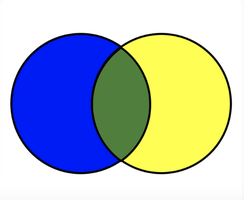
Flaws in the Blending Hypothesis
The blending hypothesis suggested that offspring are a simple mix of parental traits, like mixing colors. However, this model fails to explain the persistence of distinct traits across generations.
Key Point 1: If blending were true, all traits would eventually become uniform (e.g., all green from mixing blue and yellow).
Key Point 2: Distinct traits, such as purple and white flowers, persist and reappear in later generations, contradicting blending.
Example: Mendel observed that crossing purple and white pea plants did not result in a permanent blend, but rather distinct colors in subsequent generations.
Genes, Chromosomes, and Alleles
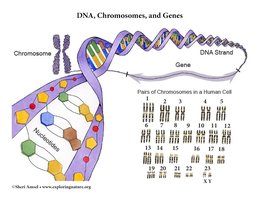
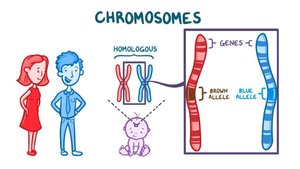
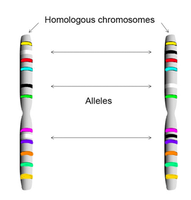
Genes are sequences of nucleotides located at specific positions (loci) on chromosomes. Each diploid organism inherits two sets of chromosomes, one from each parent, resulting in two alleles for each gene.
Key Point 1: Alleles are alternative versions of a gene that may produce different proteins.
Key Point 2: During meiosis, alleles segregate so each gamete receives only one allele per gene.
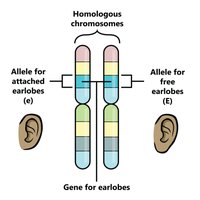
Example: The gene for earlobe attachment has two alleles: attached (e) and free (E).
Homozygous and Heterozygous Genotypes
Genotypes describe the combination of alleles an individual possesses for a particular gene.
Homozygous: Two identical alleles (e.g., EE or ee).
Heterozygous: Two different alleles (e.g., Ee).
Example: A person with EE has free earlobes, while ee results in attached earlobes.
Mutation and New Alleles
Mutations in DNA can create new alleles, leading to genetic diversity within populations.
Key Point: A mutation alters the nucleotide sequence, resulting in a new protein variant.
Example: Mutations in the gene for pigment can produce different skin colors.
Mendel’s Experiments and the Law of Segregation
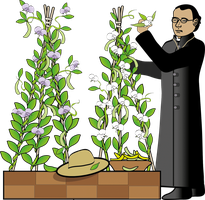
Gregor Mendel, through his work with pea plants, discovered the law of segregation, which states that alleles separate during gamete formation.
Key Point 1: Each parent contributes one allele to offspring.
Key Point 2: True-breeding plants (homozygous) produce offspring with predictable traits.
Example: Crossing purple (PP) and white (pp) pea plants yields all purple (Pp) in the F1 generation; crossing F1 siblings produces a 3:1 ratio of purple to white in F2.
Genotype and Phenotype
The genotype is the genetic makeup (allele combination), while the phenotype is the observable trait.
PP: Genotype, purple phenotype
Pp: Genotype, purple phenotype
pp: Genotype, white phenotype
Hybridization and Generational Terminology
Hybridization refers to crossing true-breeding parents. Generations are labeled as P (parental), F1 (first filial), and F2 (second filial).
Key Point: F1 generation results from crossing P generation; F2 results from crossing F1 siblings or selfing.
Patterns of Inheritance
Inheritance patterns include complete dominance, codominance, incomplete dominance, sex-linked inheritance, polygenic inheritance, and epistasis.
Complete Dominance: One allele masks the other (e.g., purple flowers).
Codominance: Both alleles are fully expressed (e.g., blood type AB).
Incomplete Dominance: Heterozygote shows intermediate phenotype (e.g., wavy hair).
Sex-linked Inheritance: Traits linked to sex chromosomes, such as color blindness.
Polygenic Inheritance: Multiple genes affect a single trait (e.g., skin color).
Epistasis: One gene affects the expression of another (e.g., coat color in labs).
Genetic Disorders and Population Genetics
Genetic disorders can be inherited as recessive or dominant traits. Population structure affects allele frequency.
Recessive Disorders: Albinism, cystic fibrosis, Tay-Sachs, sickle-cell anemia.
Dominant Disorders: Huntington’s disease.
Population Genetics: Closed populations can increase the frequency of recessive alleles.
Example: Sickle-cell heterozygotes have resistance to malaria.
Chromosomal Abnormalities
Errors in meiosis can lead to chromosomal abnormalities such as aneuploidy (monosomy, trisomy) and translocation.
Key Point: Down syndrome is caused by trisomy 21.
Environmental Impact on Phenotype
The environment can influence the expression of genetic traits, leading to variation in phenotype.
Key Point: Phenotype is a result of both genotype and environmental factors.
Summary Table: Patterns of Inheritance
Pattern | Description | Example |
|---|---|---|
Complete Dominance | One allele masks the other | Purple flowers |
Codominance | Both alleles fully expressed | Blood type AB |
Incomplete Dominance | Intermediate phenotype | Wavy hair |
Sex-linked | Linked to sex chromosomes | Color blindness |
Polygenic | Multiple genes affect trait | Skin color |
Epistasis | One gene affects another | Lab coat color |
Review Questions
What is the law of segregation, and how does it relate to our inheritance of traits from our parents?
Why are we not generally an exact blend of both of our parents?
Why, when Mendel crossed purple and white flowered peas, did he initially get all purple flowers?
What do homozygous dominant, homozygous recessive, and heterozygous genotypes look like? What significance do “dominant” and “recessive” have on inheritance?
Mendel discovered complete dominance. What other patterns did we discuss in class?
How do chances of receiving a particular allele vary among different sexes in sex-linked alleles?
Compare and contrast polygenic inheritance, epistasis, and other patterns we discussed.
How do recessive alleles that cause special conditions stay in populations if they are not favorable for a given species?
