 뒤로
Inheritance and Sources of Genetic Variation: Meiosis, Mitosis, and Mendelian Laws
스터디 가이드 - 스마트 노트
 자료에 맞춘 맞춤형 노트, 핵심 정의, 예시, 맥락을 확장해 제공합니다.
Inheritance and Sources of Genetic Variation
Overview of Meiosis and Mitosis
Meiosis and mitosis are fundamental processes in eukaryotic cell division, each serving distinct roles in growth, development, and reproduction. Meiosis reduces the chromosome number by half, generating haploid gametes, while mitosis produces identical diploid cells for growth and repair.
Meiosis: Occurs in gonads (ovaries and testes), produces haploid gametes (eggs or sperm).
Mitosis: Occurs in somatic (body) cells, produces identical diploid daughter cells.
Purpose: Meiosis enables sexual reproduction and genetic diversity; mitosis supports growth, development, and repair.
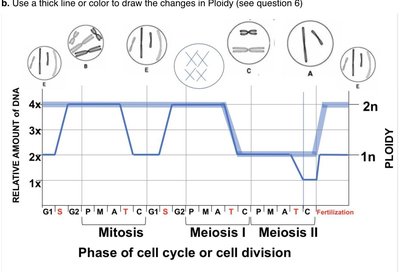
Life Cycle and Ploidy Changes
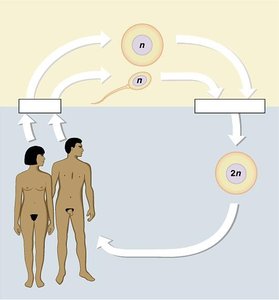
The life cycle of sexually reproducing organisms alternates between haploid and diploid stages. Fertilization restores diploidy, while meiosis reduces it to haploidy in gametes.
Haploid (n): One set of chromosomes, found in gametes.
Diploid (2n): Two sets of chromosomes, found in zygotes and somatic cells.
Fertilization: Fusion of two haploid gametes forms a diploid zygote.
Meiosis: Mechanisms and Phases
Phases of Meiosis
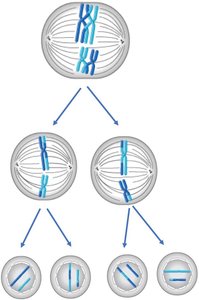
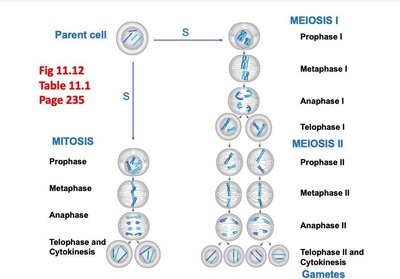
Meiosis consists of two sequential divisions: Meiosis I and Meiosis II. Each division has distinct phases, resulting in four unique haploid gametes from one diploid cell.
Meiosis I: Homologous chromosomes separate, reducing chromosome number.
Meiosis II: Sister chromatids separate, similar to mitosis.
Key Events: DNA replication occurs once, followed by two cell divisions.
Comparison of Mitosis and Meiosis
Mitosis and meiosis differ in their outcomes, mechanisms, and biological significance. The table below summarizes their key differences:
Process | Location | Products | Purpose |
|---|---|---|---|
Mitosis | Somatic cells | 2 identical diploid cells | Growth, repair, asexual reproduction |
Meiosis | Gonads | 4 unique haploid gametes | Sexual reproduction, genetic diversity |
Sources of Genetic Variation
Homologous Recombination (Crossing Over)
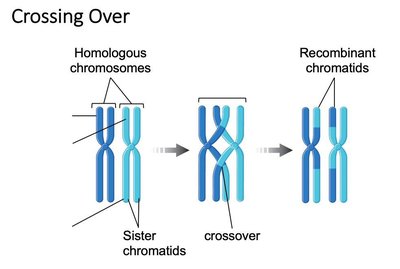
Crossing over occurs during Prophase I of meiosis, where homologous chromosomes exchange segments, creating new allele combinations. This process increases genetic diversity among offspring.
Homologous chromosomes: Chromosomes with the same genes but possibly different alleles.
Recombinant chromatids: Chromatids with new combinations of alleles after crossing over.
Independent Assortment
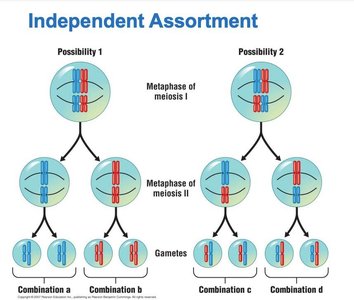
During Metaphase I of meiosis, homologous chromosome pairs align randomly, resulting in independent assortment. This random orientation leads to diverse combinations of chromosomes in gametes.
Law of Independent Assortment: Each pair of chromosomes segregates independently of others.
Result: Numerous possible combinations of chromosomes in gametes.
Random Fertilization
Any sperm can fertilize any egg, further increasing genetic variation. The combination of independent assortment and crossing over results in millions of possible gamete combinations.
Calculation: For humans, possible gametes per parent, leading to over 70 trillion possible zygote combinations.
Mendelian Laws and Genetic Inheritance
Law of Segregation
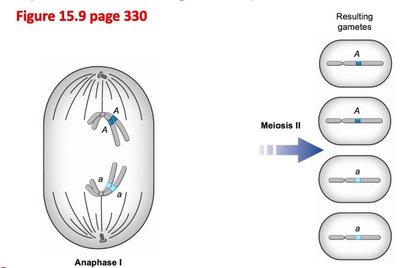
Mendel's first law states that homologous chromosomes (and their alleles) separate during Anaphase I of meiosis, ensuring each gamete receives only one allele for each gene.
Application: Explains why offspring inherit one allele from each parent.
Law of Independent Assortment
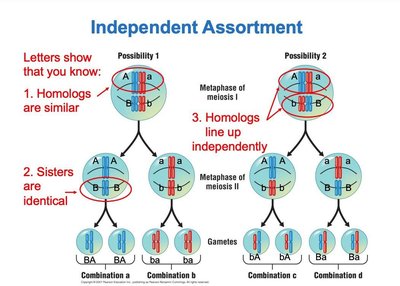
Mendel's second law describes how genes on different chromosomes assort independently during gamete formation, leading to genetic variation.
Application: Explains the inheritance patterns observed in dihybrid crosses.
Punnett Squares and Genetic Outcomes
Punnett squares are tools used to predict the genetic outcomes of crosses. The margins represent parental alleles, and the combinations represent possible offspring genotypes.
Example: Crossing Aa x Aa yields genotypes AA, Aa, and aa.
Summary Table: Mitosis vs. Meiosis
Feature | Mitosis | Meiosis I | Meiosis II |
|---|---|---|---|
Ploidy Change | 2n → 2n | 2n → 1n | 1n → 1n |
Sister Chromatids Separate? | Yes | No | Yes |
Homologs Separate? | No | Yes | No |
Cross Over? | No | Yes | No |
Independent Assortment? | No | Yes | No |
Produces? | 2 identical | 2 unique | 2 (total 4) unique |
Key Concepts for Study
Differentiate sister chromatids and homologous chromosomes.
Understand haploid (n) and diploid (2n) states.
Advantage of meiosis: genetic diversity.
Overview of meiosis: 1 DNA replication, 2 cell divisions.
Phases of Meiosis I and II: Prophase, Metaphase, Anaphase, Telophase.
Compare mitosis and meiosis.
Where does meiosis occur? Where does mitosis occur? What does meiosis generate?
