 뒤로
Land Plant Diversity and Evolution: From Algal Ancestors to Seedless Vascular Plants
스터디 가이드 - 스마트 노트
 자료에 맞춘 맞춤형 노트, 핵심 정의, 예시, 맥락을 확장해 제공합니다.
Land Plant Diversity and Evolution
Introduction
This study guide covers the evolutionary history, major clades, and key adaptations of land plants (embryophytes), focusing on their origins, relationships to green algae, and the diversity of nonvascular and seedless vascular plants. It is structured to help students understand the phylogenetic context, derived traits, and life cycles that define major plant groups.
Phylogenetic Context of Land Plants
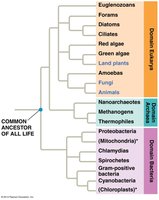
Land Plants within the Tree of Life
Land plants (embryophytes) are part of the Archaeplastida supergroup, which also includes red algae and green algae. Archaeplastida are defined by plastids that originated via primary endosymbiosis. The evolutionary relationships among these groups are crucial for understanding plant origins.
Archaeplastida: Includes red algae, green algae (chlorophytes and charophytes), and land plants.
Charophytes: A paraphyletic group of green algae most closely related to land plants.
Synapomorphies linking charophytes and land plants include DNA sequence homologies, structure of flagellated sperm, rings of cellulose-synthesizing proteins, and formation of a phragmoplast during mitosis.
Major Transitions in the History of Life
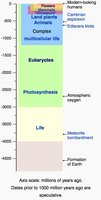
The evolution of land plants is one of several major transitions in the history of life on Earth, following the origins of prokaryotes, photosynthesis, and eukaryotes.
Origin of life/prokaryotic cells: ~3.5 billion years ago
Photosynthesis: ~2.7 billion years ago
Eukaryotic cells: ~1.8 billion years ago
Multicellular organisms: ~1.2 billion years ago
Land plants: ~470 million years ago
Phylogeny of Green Plants
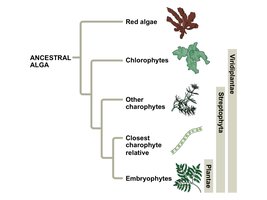
Land plants evolved from green algal ancestors, specifically within the charophyte lineage. The closest relatives of land plants are certain charophyte algae.
Chlorophylls a and b are present in both charophytes and land plants.
Cellulose in cell walls is synthesized by cellulose synthase complexes in the plasma membrane.
Sporopollenin is a tough polymer that protects zygotes from desiccation, first seen in charophytes.
Derived Traits of Embryophytes (Land Plants)
Adaptations to Terrestrial Life
Land plants evolved several key adaptations to survive and reproduce on land, where water is less available and structural support is needed.
Cuticle: A waxy layer that reduces water loss by evaporation.
Stomata: Pores that regulate gas exchange and water loss (absent in liverworts).
Apical meristems: Growth regions that allow upward and downward growth for resource acquisition.
Mycorrhizal associations: Symbiotic relationships with soil fungi to enhance nutrient uptake.
Alternation of generations: Life cycle with multicellular haploid (gametophyte) and diploid (sporophyte) stages.
Multicellular gametangia: Organs (archegonia and antheridia) that produce gametes.
Protected, dependent embryos: Embryos develop within female gametophyte tissues.
Spores with sporopollenin-rich walls: Resistant to desiccation, produced in sporangia.
Overview of Land Plant Diversity
Major Categories of Land Plants
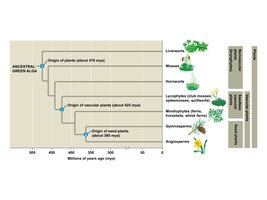
Land plants are classified based on the presence of vascular tissue and seeds.
Nonvascular plants (bryophytes): Lack vascular tissue; include mosses, liverworts, and hornworts.
Vascular plants: Have specialized tissues (xylem and phloem) for transport.
Seedless vascular plants: Include lycophytes and monilophytes (ferns, horsetails, whisk ferns).
Seed plants: Not covered in detail here; include gymnosperms and angiosperms.
Trends in Plant Evolution
One major trend in plant evolution is the reduction of the gametophyte generation and the dominance of the sporophyte in vascular plants.
In nonvascular plants, the gametophyte is dominant and photosynthetic.
In vascular plants, the sporophyte is dominant, larger, and more self-sufficient.
Nonvascular Plants (Bryophytes)
General Characteristics
Bryophytes include mosses, liverworts, and hornworts. They are restricted to moist habitats due to their reliance on water for fertilization and lack of vascular tissue.
Flagellated sperm require water to reach eggs.
Plants are usually short and close to the ground.
Life cycle dominated by the gametophyte stage.
Mosses (Bryophyta)
~15,000 species.
Germinate to form protonemata, which develop into gametophytes.
Gametangia (antheridia and archegonia) develop on gametophytes.
Sporophyte is nutritionally dependent on the gametophyte.
Spore dispersal can be explosive (e.g., in Sphagnum).
Liverworts (Hepatophyta)
~9,000 species.
Leafy or thalloid gametophytes; lack stomata.
Reproduce asexually via fragmentation or gemmae.
Hornworts (Anthocerophyta)
~100 species.
Flat gametophytes with a single large chloroplast per cell.
Often have symbiotic cyanobacteria for nitrogen fixation.
Sporophytes can grow up to 5–10 cm tall.
Derived Traits of Vascular Plants
Key Innovations
Dominant, branched sporophyte: Large, independent, and capable of complex morphologies.
Vascular system: Xylem (water and mineral transport; contains lignin for support) and phloem (transports photosynthates).
Roots: Organs for water/nutrient absorption and anchorage; evolved from rhizomes.
Leaves: Primary photosynthetic organs; two types—microphylls (single vein) and megaphylls (branched veins).
Sporophylls: Modified leaves bearing sporangia; allow for increased spore production.
Homosporous vs. heterosporous: Homosporous plants produce one type of spore; heterosporous plants produce megaspores (female) and microspores (male).
Seedless Vascular Plants
Lycophytes
~1,200 species (club mosses, spike mosses, quillworts).
Have microphylls only.
Form strobili (clusters of sporophylls).
Some are homosporous, others heterosporous.
Dominant vegetation ~300 mya; important in coal formation.
Monilophytes
~12,000 species (ferns, horsetails, whisk ferns).
Ferns: Mostly homosporous; spores produced in sori; wind-dispersed.
Horsetails: Reduced megaphylls; silica in cell walls; strobili; homosporous.
Whisk ferns: Reduced leaves; underground, non-photosynthetic gametophytes dependent on fungi.
Essential Vocabulary
Sporangia: Structures where spores are produced.
Vascular tissue: Xylem and phloem for transport.
Tracheid: Water-conducting cell in xylem.
Rhizoids: Root-like structures in nonvascular plants.
Peat: Partially decayed plant matter, mainly from Sphagnum moss.
Gemma: Asexual reproductive structure in liverworts.
Phragmoplast: Microtubule structure in plant cell division.
Sporopollenin: Durable polymer in spore walls.
Cuticle: Waxy covering on plant surfaces.
Stoma/Stomata: Pores for gas exchange.
Apical meristem: Growth region at plant tips.
Mycorrhizae: Symbiotic fungi aiding nutrient uptake.
Gametangia: Organs producing gametes (archegonium: female, antheridium: male).
Lignin: Structural polymer in vascular plants.
Rhizomes: Horizontal underground stems.
Microphyll/Megaphyll: Types of leaves.
Sporophyll: Leaf bearing sporangia.
Homosporous/Heterosporous: Types of spore production.
Strobilus/Strobili: Cluster of sporophylls.
Sorus/Sori: Cluster of sporangia on ferns.
Elater: Spore dispersal structure in horsetails.
Protonema/Protonemata: Early moss gametophyte stage.
