 뒤로
뒤로Meiosis and Sexual Life Cycles: Mechanisms of Genetic Variation
스터디 가이드 - 스마트 노트
 자료에 맞춘 맞춤형 노트, 핵심 정의, 예시, 맥락을 확장해 제공합니다.
Meiosis and Sexual Life Cycles
Introduction to Heredity and Variation
The resemblance between offspring and their parents is explained by biological mechanisms of heredity and variation. Inheritance (heredity) is the transmission of traits from parents to offspring, while variation refers to differences among individuals. Genetics is the scientific study of heredity and variation.
Genes: Units of heredity, composed of DNA segments.
Locus: Specific location of a gene on a chromosome.
Gametes: Reproductive cells (sperm and eggs) that transmit genes to offspring.
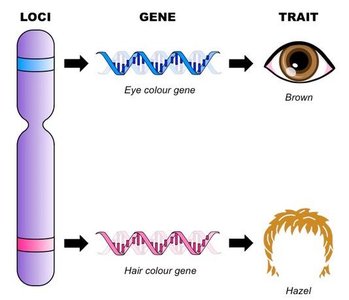
Chromosomes and Human Cells
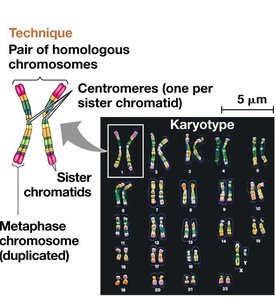
Humans possess two types of cells: somatic cells (body cells) and gametes (reproductive cells). Somatic cells contain 46 chromosomes (23 pairs), while gametes contain 23 chromosomes.
Homologous chromosomes: Chromosome pairs, one from each parent, carrying the same types of genes at the same loci but possibly different versions (alleles).
Autosomes: 22 pairs of chromosomes not involved in sex determination.
Sex chromosomes: 1 pair (XX in females, XY in males).
Diploid (2n): Two sets of chromosomes (somatic cells).
Haploid (n): One set of chromosomes (gametes).
Comparison of Asexual and Sexual Reproduction
Organisms reproduce either asexually or sexually. Asexual reproduction involves a single parent and produces genetically similar offspring (clones), while sexual reproduction involves two parents and results in genetically unique offspring due to gene recombination.
Asexual reproduction: No fusion of gametes, offspring are clones.
Sexual reproduction: Fusion of gametes, offspring exhibit variation.
Fertilization and Meiosis in Sexual Life Cycles
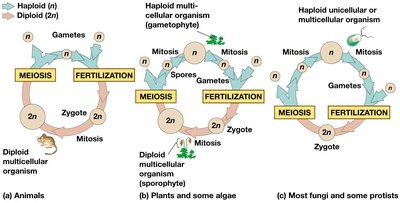
Meiosis and fertilization alternate in sexual life cycles, maintaining chromosome number across generations. Meiosis reduces chromosome number from diploid to haploid, while fertilization restores diploid status.
Meiosis: 2n → n, produces haploid gametes.
Fertilization: n + n → 2n, forms diploid zygote.
Mitosis: 2n → 2n, produces multicellular adults.
Life cycle: Sequence of stages from conception to offspring production.
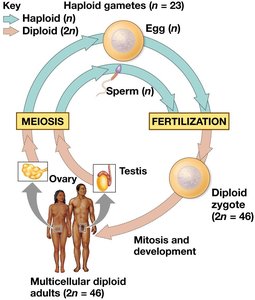
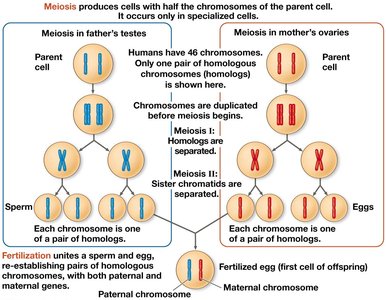
Types of Sexual Life Cycles
Sexual life cycles vary among animals, plants, algae, fungi, and protists. The alternation of meiosis and fertilization ensures genetic diversity and proper chromosome number.
Animal life cycle: Diploid-dominant, multicellular diploid stage.
Plant and algae life cycle: Alternation of generations, both diploid and haploid multicellular stages.
Fungi and protist life cycle: Haploid-dominant, multicellular haploid stage.
Meiosis: Mechanism and Stages
Overview of Meiosis
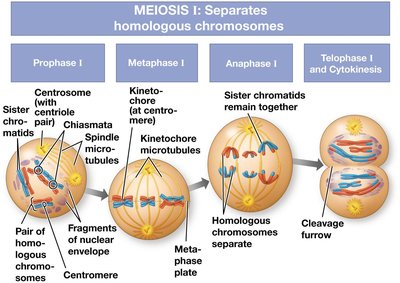
Meiosis consists of one round of DNA replication followed by two cell divisions (Meiosis I and II), resulting in four haploid cells from one diploid cell.
Meiosis I: Homologous chromosomes separate (reduction division).
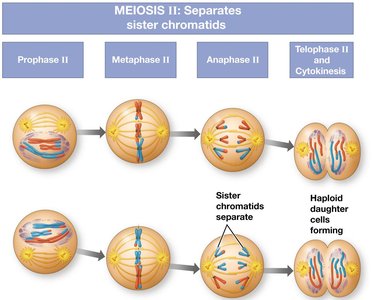
Meiosis II: Sister chromatids separate (equational division).
Meiosis I: Homologous Chromosome Separation
Meiosis I is characterized by the separation of homologous chromosomes, reducing chromosome number by half.
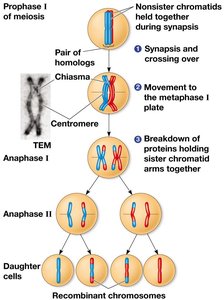
Prophase I: Homologous chromosomes pair (synapsis) and crossing over occurs.
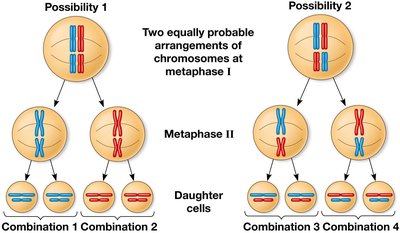
Metaphase I: Homologous pairs align randomly at the metaphase plate (independent assortment).
Anaphase I: Homologous chromosomes separate, sister chromatids remain together.
Telophase I & Cytokinesis: Two haploid daughter cells form, chromosomes remain duplicated.
Meiosis II: Sister Chromatid Separation
Meiosis II resembles mitosis, separating sister chromatids to produce four genetically distinct haploid cells.
Prophase II: Spindle forms in each haploid cell.
Metaphase II: Chromosomes align individually at the metaphase plate.
Anaphase II: Sister chromatids separate.
Telophase II & Cytokinesis: Four haploid daughter cells form, each genetically unique.
Comparison of Mitosis and Meiosis
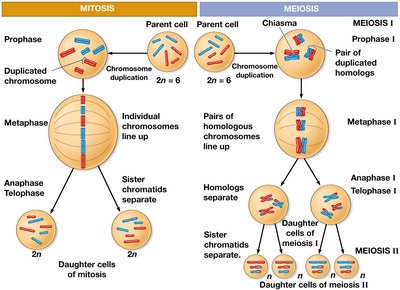
Mitosis and meiosis differ in their function, number of divisions, chromosome behavior, and genetic outcomes.
Mitosis: One division, produces two genetically identical diploid cells for growth and repair.
Meiosis: Two divisions, produces four genetically unique haploid cells for sexual reproduction.
Key differences: Homologous chromosomes separate in meiosis I; sister chromatids separate in meiosis II and mitosis.
Genetic Variation in Sexual Life Cycles
Sources of Genetic Variation
Sexual reproduction generates genetic variation through three main mechanisms:
Independent assortment: Random orientation of homologous chromosome pairs during metaphase I.
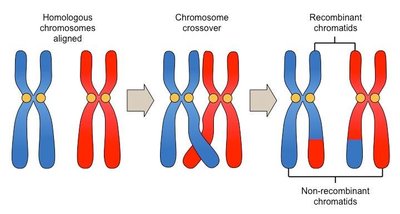
Crossing over: Exchange of genetic material between nonsister chromatids during prophase I, producing recombinant chromosomes.
Random fertilization: Any sperm can fuse with any egg, creating numerous possible genetic combinations.
Independent Assortment
Each homologous pair sorts independently during metaphase I, resulting in a variety of possible gamete combinations. For humans, with n = 23, there are possible combinations.
Crossing Over
Crossing over occurs between nonsister chromatids of homologous chromosomes, creating new combinations of maternal and paternal DNA. In humans, 1-3 crossover events occur per chromosome.
Random Fertilization
Random fertilization further increases genetic diversity. Each gamete has about 8.4 million possible chromosome combinations, and the fusion of two gametes results in approximately 70 trillion possible combinations.
Summary Table: Mitosis vs. Meiosis
Property | Mitosis | Meiosis |
|---|---|---|
Main function | Growth and repair | Sexual reproduction |
Where does it occur? | Somatic cells | Germline cells |
DNA replication | 1 | 1 |
Divisions | 1 | 2 |
Daughter cells | 2 | 4 |
Ploidy | Maintained (2n → 2n) | Reduced (2n → n) |
Genetic outcome | Genetically identical | Genetically different |
What separates? | Sister chromatids | I: Homologs; II: Sister chromatids |
Conclusion: The Role of Meiosis in Evolution
Mutations and the reshuffling of alleles during sexual reproduction provide the raw material for evolution. Genetic variation among offspring is essential for adaptation and survival in changing environments.
Mutation: Creates new alleles.
Sexual reproduction: Reshuffles alleles, producing genetically unique offspring.
Big Picture
One round of DNA replication followed by two divisions in meiosis produces haploid cells and genetic variation, ensuring the continuity and diversity of life.
