 뒤로
Meiosis and Sexual Life Cycles: Structure, Function, and Genetic Variation
스터디 가이드 - 스마트 노트
 자료에 맞춘 맞춤형 노트, 핵심 정의, 예시, 맥락을 확장해 제공합니다.
Meiosis and Sexual Life Cycles
Introduction to Reproduction and Genetics
Reproduction is the biological process by which new individual organisms are produced. It can occur via asexual or sexual means, each with distinct genetic consequences. Genetics is the scientific study of heredity and variation, focusing on how traits are passed from parents to offspring.
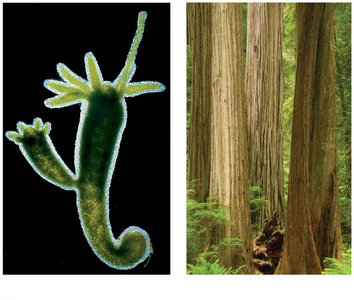
Asexual reproduction: Involves a single parent and produces genetically identical offspring (clones) through mitosis.
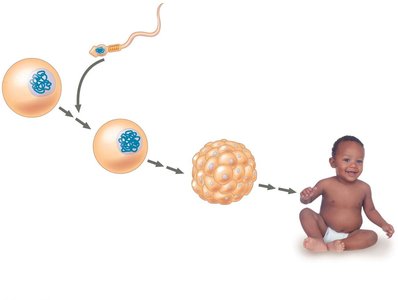
Sexual reproduction: Requires two parents and produces offspring with unique combinations of genes, relying on meiosis and fertilization.
Genes: Units of heredity made up of DNA segments, located at specific positions (loci) on chromosomes.
Gametes: Reproductive cells (sperm and eggs) that carry genes to the next generation.
Chromosome Structure and Types
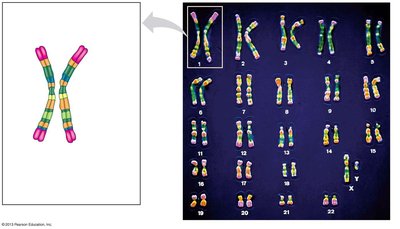
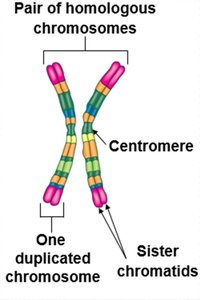
Chromosomes are thread-like structures composed of DNA and proteins, carrying genetic information. In humans, chromosomes occur in pairs within somatic cells, with one chromosome inherited from each parent.
Homologous chromosomes: Chromosome pairs with the same length, centromere position, and banding pattern, but possibly different genetic sequences.
Sex chromosomes: X and Y chromosomes determine an individual's sex (XX for females, XY for males).
Autosomes: The remaining 22 pairs of chromosomes not involved in sex determination.
Karyotype: An ordered display of chromosome pairs from a cell, used to study chromosomal abnormalities.

Alleles and Genetic Variation
Alleles are different versions of a gene found at the same locus on homologous chromosomes. Individuals may be homozygous (identical alleles) or heterozygous (different alleles) for a trait.
Homozygous: Both alleles for a gene are identical.
Heterozygous: Alleles for a gene differ between homologs.
Life Cycles and Chromosome Number
Diploid and Haploid Stages
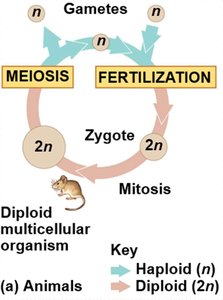
Organisms alternate between diploid (2n) and haploid (n) stages in their life cycles. Diploid cells contain two sets of chromosomes, while haploid cells contain one set.
Diploid (2n): Two sets of chromosomes; in humans, 2n = 46.
Haploid (n): One set of chromosomes; in humans, n = 23.
Gametes: Only haploid cells in animals, produced by meiosis.
Fertilization: Fusion of haploid gametes restores diploid chromosome number.


Alternation of Generations in Plants and Algae
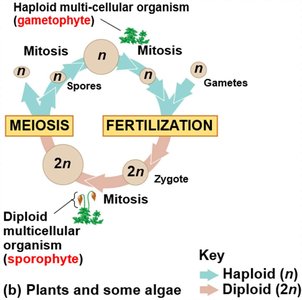
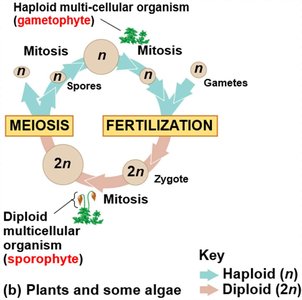
Plants and some algae exhibit alternation of generations, with both diploid (sporophyte) and haploid (gametophyte) multicellular stages.
Sporophyte: Diploid organism producing haploid spores by meiosis.
Gametophyte: Haploid organism producing gametes by mitosis.
Meiosis: Process and Phases
Overview of Meiosis
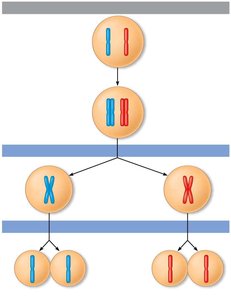
Meiosis is a specialized type of cell division that reduces the chromosome number by half, producing four haploid cells from one diploid cell. It consists of two consecutive divisions: meiosis I and meiosis II.
Meiosis I: Separates homologous chromosomes.
Meiosis II: Separates sister chromatids, similar to mitosis.
Result: Four genetically distinct haploid cells.
Phases of Meiosis I
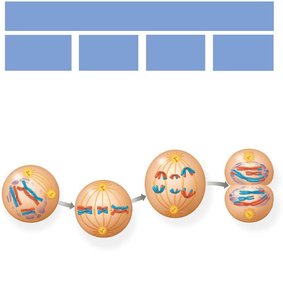
Meiosis I includes four phases: prophase I, metaphase I, anaphase I, and telophase I with cytokinesis. Unique events occur during meiosis I, such as synapsis and crossing over.
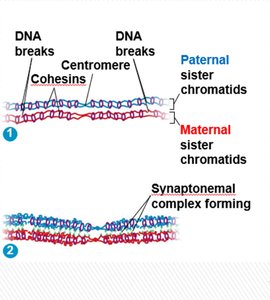
Prophase I: Homologous chromosomes pair up and exchange genetic material (crossing over).
Metaphase I: Homologous pairs align at the metaphase plate.
Anaphase I: Homologous chromosomes separate.
Telophase I: Two haploid cells form, each with duplicated chromosomes.
Phases of Meiosis II
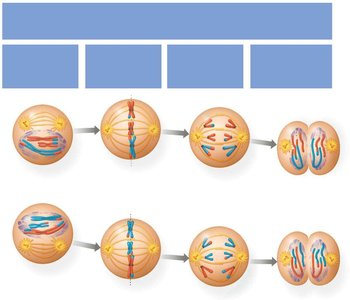
Meiosis II is similar to mitosis and includes prophase II, metaphase II, anaphase II, and telophase II with cytokinesis. Sister chromatids are separated, resulting in four haploid cells.
Prophase II: Chromosomes condense in each haploid cell.
Metaphase II: Chromosomes align at the metaphase plate.
Anaphase II: Sister chromatids separate.
Telophase II: Four haploid daughter cells form.
Comparison of Mitosis and Meiosis
Mitosis and meiosis are both processes of cell division, but they differ in their outcomes and roles in the organism.
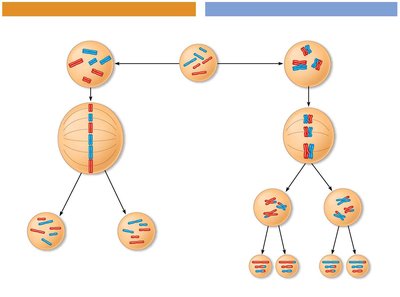
Mitosis: Produces two genetically identical diploid cells for growth and repair.
Meiosis: Produces four genetically distinct haploid cells for sexual reproduction.
Unique events in meiosis: Synapsis, crossing over, and separation of homologs occur only in meiosis I.
Property | Mitosis | Meiosis |
|---|---|---|
DNA Replication | Occurs during interphase | Occurs during interphase before meiosis I |
Number of Divisions | One | Two |
Synapsis of Homologs | No | Yes, during prophase I |
Daughter Cells | Two, identical | Four, genetically different |
Role | Growth, repair, asexual reproduction | Sexual reproduction, genetic variability |
Genetic Variation and Evolution
Sources of Genetic Variation
Genetic variation is essential for evolution and is produced in sexual life cycles through several mechanisms.
Mutations: The original source of genetic diversity, creating new alleles.
Crossing over: Exchange of genetic material between homologous chromosomes during prophase I.
Independent assortment: Random orientation of homologous pairs at metaphase I.
Random fertilization: Any sperm can fertilize any egg, increasing variability.

Significance of Genetic Variation
Genetic variation allows populations to adapt to changing environments. Asexual reproduction is advantageous in stable environments, while sexual reproduction provides genetic recombination that may be beneficial if conditions change.
Evolution: Genetic variation is the foundation for natural selection and evolution.
Alterations in Chromosome Number and Structure
Nondisjunction and Aneuploidy
Nondisjunction is the failure of chromosome pairs to separate properly during meiosis, resulting in gametes with abnormal chromosome numbers. Aneuploidy refers to changes in chromosome number, such as monosomy (one chromosome) or trisomy (three chromosomes).
Euploidy: Correct chromosome number for a species.
Aneuploidy: Incorrect chromosome number due to nondisjunction.
Human Genetic Disorders
Alterations in chromosome number can cause genetic disorders such as Down syndrome (trisomy 21) and syndromes involving sex chromosomes (Turner, Klinefelter, Jacob's, Swyer).
Down syndrome: Extra chromosome 21, associated with physical and cognitive symptoms.
Turner syndrome (XO): Female with a single X chromosome.
Klinefelter syndrome (XXY): Male with extra X chromosome.
Jacob's syndrome (XYY): Male with extra Y chromosome.
Swyer syndrome (XY female): Deletion of SRY gene, resulting in female phenotype.
Changes in Chromosome Structure
Structural changes in chromosomes include deletion, duplication, translocation, and inversion, each affecting gene arrangement and function.
Deletion: Loss of a chromosome segment.
Duplication: Repetition of a chromosome segment.
Translocation: Movement of a segment to a non-homologous chromosome.
Inversion: Reversal of a chromosome segment.
Conclusion
Meiosis and sexual life cycles are fundamental to genetic diversity and evolution. Understanding chromosome structure, the phases of meiosis, and the mechanisms of genetic variation is essential for studying heredity and the basis of genetic disorders.
