 뒤로
Meiosis and Sexual Reproduction: Study Notes for General Biology
스터디 가이드 - 스마트 노트
 자료에 맞춘 맞춤형 노트, 핵심 정의, 예시, 맥락을 확장해 제공합니다.
Meiosis and Sexual Reproduction
Reproduction: Asexual vs. Sexual
Reproduction is the biological process by which organisms generate new individuals. It can occur via asexual or sexual mechanisms, each with distinct genetic consequences.
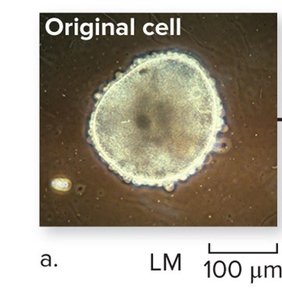
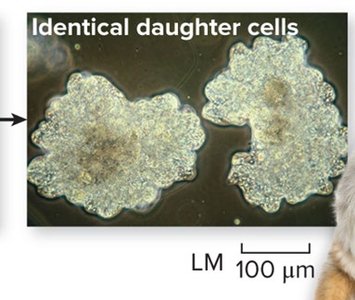
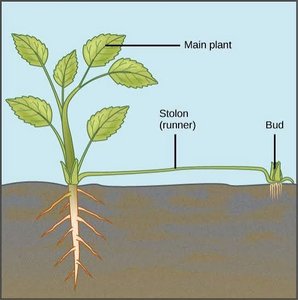
Asexual reproduction: Offspring are produced without the fusion of gametes, typically resulting in genetically identical clones of the parent.
Sexual reproduction: Involves the fusion of haploid gametes from two parents during fertilization, restoring the diploid chromosome number and generating genetic diversity.
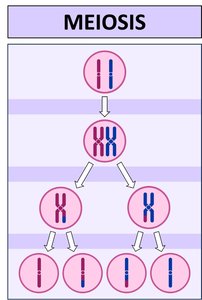
Meiosis: Reduces chromosome number by half, producing haploid gametes; fertilization restores diploidy.
Genetic variation: Sexual reproduction creates new allele combinations in offspring.
Asexual Reproduction
Asexual reproduction allows organisms to produce offspring rapidly without a mate. In eukaryotes, this often involves mitosis, while bacteria use binary fission.
Clones: Offspring are genetically identical to the parent.
Advantages: Rapid population growth, no need for a mate.
Disadvantages: Limited genetic variation, increased vulnerability to environmental changes.
Mutation: Only source of genetic variation in asexual populations.
Sexual Reproduction
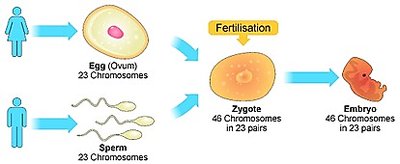
Sexual reproduction involves the fusion of two haploid gametes, typically from two parents, resulting in offspring with unique genetic combinations.
Gametes: Sperm and egg cells, each with half the chromosome number (haploid).
Fertilization: Restores diploid chromosome number in the zygote.
Development: Zygote undergoes mitosis to form a multicellular organism.
Genetic diversity: New allele combinations arise in each generation.
Organisms with Both Reproductive Modes
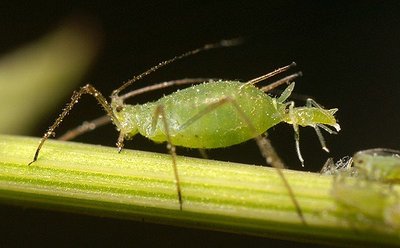
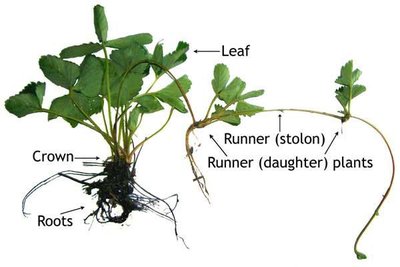
Some species can alternate between asexual and sexual reproduction, depending on environmental conditions. This flexibility enhances survival and maintains genetic diversity.
Examples: Aphids, starfish, zebra sharks, boa constrictors, strawberries, garlic, banyan trees, slime molds.
Meiosis and Fertilization in Humans
Human Life Cycle
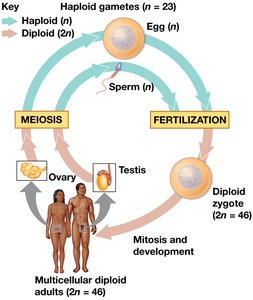
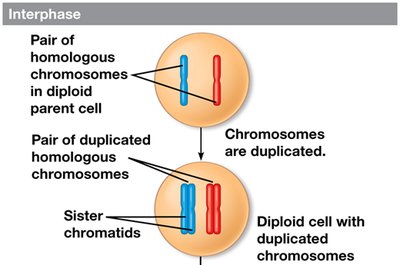
Humans are diploid organisms (2n = 46 chromosomes). Meiosis in the ovaries and testes produces haploid gametes (n = 23). Fertilization restores diploidy, and mitosis enables growth and development.
Diploid cells: Contain two sets of chromosomes.
Haploid gametes: Produced by meiosis, contain one set of chromosomes.
Zygote: Formed by fertilization, undergoes mitosis to become multicellular.
Overview of Meiosis
Meiosis I and II
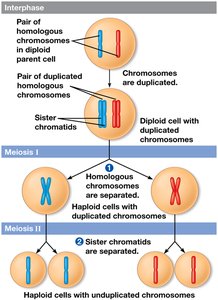
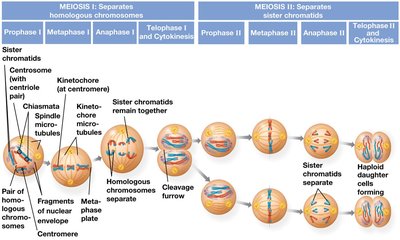
Meiosis consists of two consecutive divisions: Meiosis I separates homologous chromosomes, and Meiosis II separates sister chromatids. The result is four haploid cells, each genetically unique.
Meiosis I: Homologous chromosomes are separated.
Meiosis II: Sister chromatids are separated.
Crossing over: Chromosomes exchange segments, increasing genetic variation.
Independent assortment: Chromosomes are distributed randomly to gametes.
Prophase I: Chromosome Tetrad and Synapsis
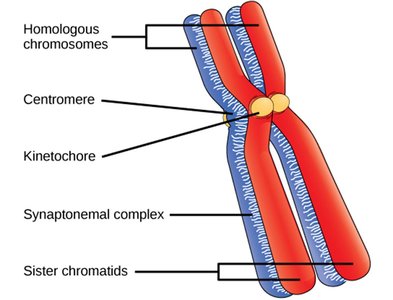
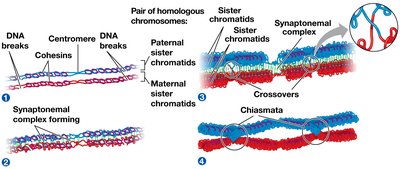
During Prophase I, homologous chromosomes pair up in a process called synapsis, forming tetrads. The synaptonemal complex holds the chromosomes together.
Tetrad: Structure with four chromatids (two homologous chromosomes).
Synaptonemal complex: Protein structure facilitating synapsis.
Prophase I: Crossing Over
Crossing over occurs between non-sister chromatids within tetrads, exchanging DNA segments and forming chiasmata. This process creates recombinant chromatids and increases genetic variation.
Chiasmata: Visible sites of crossover.
Recombinant chromatids: Chromatids with new allele combinations.
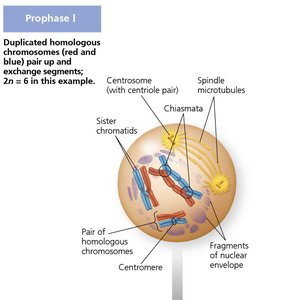
Prophase I: All Events
Prophase I involves chromosome condensation, synapsis, crossing over, chiasmata formation, nuclear envelope breakdown, and spindle fiber attachment.
Chromosome condensation: Chromosomes become visible.
Synapsis: Homologous chromosomes pair up.
Crossing over: Exchange of genetic material.
Chiasmata: Chromosomes remain connected.
Nuclear envelope breakdown: Spindle fibers attach to kinetochores.
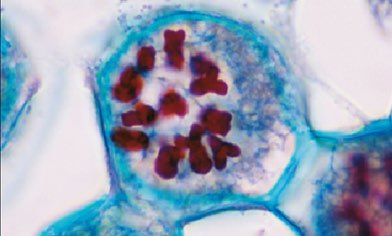
Metaphase I
Tetrads align along the metaphase plate. Each homolog attaches to spindle fibers from opposite poles, and their orientation is independent, ensuring diverse chromosome combinations in gametes.
Metaphase plate: Central region where chromosomes align.
Independent assortment: Random orientation of homologs.
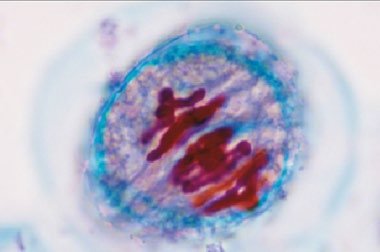
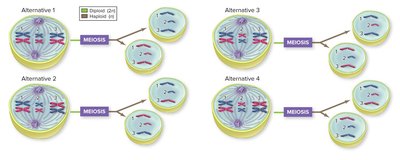
Independent Assortment: Source of Genetic Variation
Independent assortment during Metaphase I results in random distribution of maternal and paternal chromosomes. The number of possible combinations is $2^n$, where n is the haploid number.
Humans: n = 23, so $2^{23}$ combinations (over 8 million).
Genetic uniqueness: Siblings are genetically unique due to independent assortment.
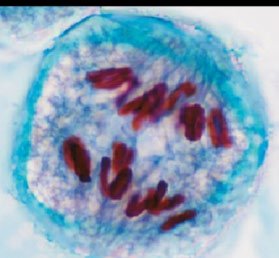
Anaphase I
Cohesin proteins along chromosome arms are cleaved, allowing homologs to separate. Sister chromatids remain attached at their centromeres, reducing chromosome number by half.
Homolog separation: Each homolog moves to opposite poles.
Sister chromatids: Remain together, unlike in mitosis.
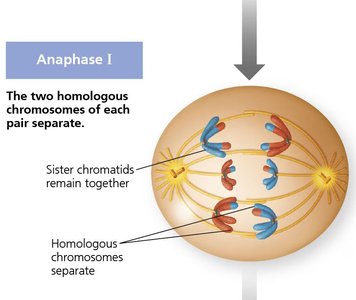
Telophase I and Cytokinesis
Homologous chromosomes reach opposite poles. Each pole contains a haploid set, and cytokinesis divides the cytoplasm, producing two haploid daughter cells.
Cleavage furrow: Forms in animal cells.
Cell plate: Forms in plant cells.
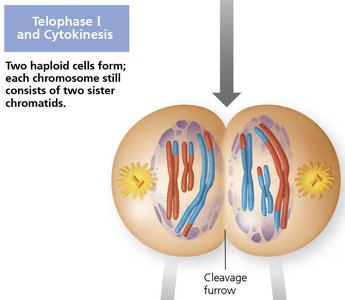
End of Meiosis I
Meiosis I results in two haploid cells, each with one chromosome from every homologous pair. Genetic variation is introduced through crossing over and independent assortment.
Chromosome number: Halved, but chromosomes still have two sister chromatids.
No DNA replication: Occurs before meiosis II.
Overview of Meiosis II
Meiosis II begins with two haploid cells. Sister chromatids separate, producing four genetically unique haploid cells that mature into gametes.
Meiosis II: Similar to mitosis, separates sister chromatids.
Gametes: Each carries one complete set of chromosomes.
Prophase II
Chromosomes condense in each haploid cell, spindle apparatus forms, and microtubules attach to kinetochores.
Nuclear envelope: If re-formed, breaks down again.
Metaphase II
Chromosomes align individually along the metaphase plate. Due to crossing over, sister chromatids are no longer genetically identical.
Kinetochores: Attach to microtubules from opposite poles.
Anaphase II
Cohesin proteins are cleaved, sister chromatids separate and move toward opposite poles. Each chromatid is now an individual chromosome.
Telophase II and Cytokinesis
Chromosomes reach opposite poles, nuclear envelopes reform, and cytokinesis produces four haploid daughter cells, each genetically distinct.
Mitosis vs. Meiosis
Comparison Table
Mitosis and meiosis are both forms of cell division, but they differ in purpose, process, and outcome.
Feature | Mitosis | Meiosis |
|---|---|---|
Number of divisions | 1 | 2 |
Number of daughter cells | 2 | 4 |
Chromosome number | Same as parent (diploid) | Half of parent (haploid) |
Genetic variation | None (identical) | High (unique) |
Purpose | Growth, repair | Gamete production |
Sources of Genetic Variation
Three Main Processes
Genetic variation in sexually reproducing organisms arises through independent assortment, crossing over, and random fertilization.
Independent assortment: Random distribution of chromosomes during meiosis.
Crossing over: Exchange of genetic material between homologous chromosomes.
Random fertilization: Any sperm can fertilize any egg, creating virtually limitless combinations.
For humans, each gamete has about 8.4 million possible chromosome combinations. The fusion of two gametes can yield over 70 trillion unique diploid combinations, not including variation from crossing over.
Errors in Meiosis
Aneuploidy and Nondisjunction
Errors during meiosis can result in abnormal chromosome numbers, known as aneuploidy. Nondisjunction occurs when homologous chromosomes or sister chromatids fail to separate properly.
Aneuploidy: Some gametes receive an extra chromosome, others are missing one.
Genetic disorders: Down syndrome (Trisomy 21), Turner syndrome (XO).
Key Terms: Meiosis, mitosis, gamete, zygote, chromosome, homologous chromosome, sister chromatid, synapsis, synaptonemal complex, chiasmata, crossing over, independent assortment, aneuploidy, nondisjunction.
