 뒤로
뒤로Membrane Structure and Transport: Study Notes for General Biology
스터디 가이드 - 스마트 노트
 자료에 맞춘 맞춤형 노트, 핵심 정의, 예시, 맥락을 확장해 제공합니다.
Membrane Structure and Function
Overview of the Plasma Membrane
The plasma membrane is a fundamental structure present in all cells, serving as a boundary between the internal cytoplasm and the external environment. It enables the compartmentalization of cellular processes and regulates the passage of substances in and out of the cell.
Selective permeability: Allows only certain molecules to cross, maintaining homeostasis.
Compartmentalization: Permits incompatible reactions to occur simultaneously within the cell.
Fluid mosaic model: Describes the dynamic arrangement of lipids and proteins within the membrane.
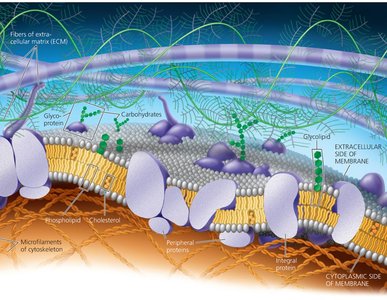
Components of the Plasma Membrane
The plasma membrane is composed of several key molecules, each contributing to its structure and function:
Phospholipids: Amphipathic molecules forming a bilayer, with hydrophilic heads facing outward and hydrophobic tails inward.
Proteins: Integral (transmembrane) and peripheral proteins perform transport, signaling, and structural roles.
Cholesterol: Modulates membrane fluidity and stability, especially in animal cells.
Carbohydrates: Glycoproteins and glycolipids are involved in cell recognition and signaling.
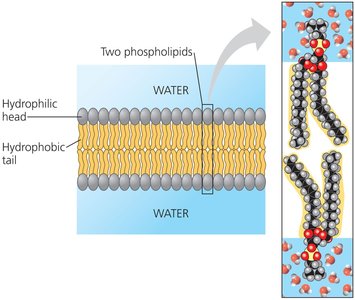
Phospholipid Structure and Bilayer Formation
Phospholipids are the primary structural component of membranes. Their amphipathic nature drives the formation of a bilayer, creating a semi-permeable barrier.
Hydrophilic head: Attracts water, faces outward.
Hydrophobic tail: Repels water, faces inward.
Bilayer arrangement: Ensures stability and selective permeability.
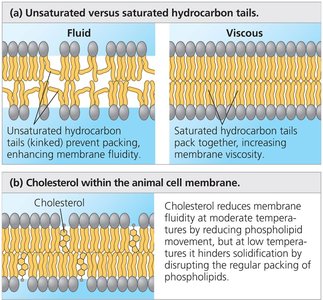
Membrane Fluidity
Membrane fluidity is essential for proper function, allowing proteins and lipids to move within the bilayer. Fluidity is influenced by fatty acid composition and cholesterol content.
Unsaturated fatty acids: Introduce kinks, preventing tight packing and increasing fluidity.
Saturated fatty acids: Allow tight packing, decreasing fluidity.
Cholesterol: Acts as a fluidity buffer, restraining movement at high temperatures and preventing solidification at low temperatures.
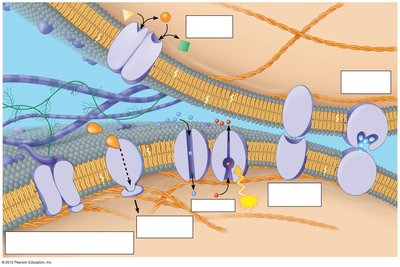
Membrane Proteins and Their Functions
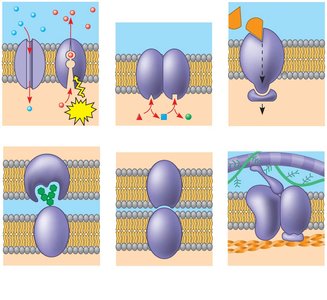
Proteins embedded in the membrane are responsible for most of its specific functions. They are classified as integral (transmembrane) or peripheral proteins.
Transport: Move substances across the membrane.
Enzymatic activity: Catalyze reactions at the membrane surface.
Signal transduction: Relay signals from outside to inside the cell.
Cell-cell recognition: Allow cells to identify each other.
Intercellular joining: Connect adjacent cells.
Attachment: Anchor the membrane to the cytoskeleton and extracellular matrix.
Role of Membrane Carbohydrates in Cell-Cell Recognition
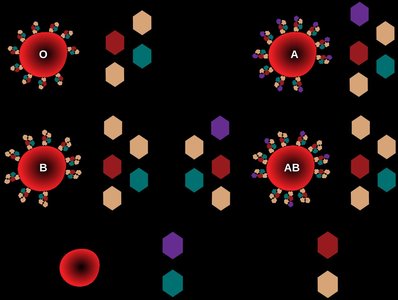
Carbohydrates attached to proteins (glycoproteins) or lipids (glycolipids) on the membrane surface serve as identification tags, crucial for cell-cell recognition and immune responses.
Glycocalyx: The carbohydrate-rich area on the cell surface.
Blood group antigens: Example of cell recognition via membrane carbohydrates.
Asymmetry: Carbohydrate chains are only present on the external side, making the membrane asymmetrical.
Membrane Transport Mechanisms
Selective Permeability
The plasma membrane regulates the movement of substances, allowing some molecules to pass while restricting others. This selective permeability is vital for maintaining cellular homeostasis.
Small, nonpolar molecules: Pass easily through the lipid bilayer.
Large or charged molecules: Require transport proteins.
Passive Transport
Passive transport involves the movement of substances down their concentration gradient without energy expenditure by the cell.
Diffusion: Movement of molecules from high to low concentration until equilibrium is reached.
Facilitated diffusion: Transport proteins assist the movement of hydrophilic molecules across the membrane.
Osmosis: Diffusion of water across a selectively permeable membrane.
Factors Affecting Diffusion
The rate of diffusion can be influenced by several factors:
Temperature: Higher temperatures increase diffusion rate.
Molecule size: Smaller molecules diffuse faster.
Concentration gradient: Steeper gradients increase diffusion rate.
Pressure: Increased pressure can accelerate diffusion.
Osmosis and Water Balance
Osmosis is the movement of water from areas of low solute concentration to high solute concentration. Water balance is crucial for cell survival, and cells must regulate their internal environment to prevent excessive water gain or loss.
Tonicity: Refers to the effect of a solution on cell volume (isotonic, hypertonic, hypotonic).
Osmoregulation: Mechanisms such as contractile vacuoles and cell walls help maintain water balance.
Facilitated Diffusion
Facilitated diffusion is a type of passive transport where specific proteins help hydrophilic molecules cross the membrane.
Channel proteins: Provide hydrophilic tunnels for molecules or ions.
Carrier proteins: Bind to molecules and change shape to shuttle them across.
Specificity: Transport proteins are highly specific for the substances they move.
Active Transport
Active transport requires energy (usually ATP) to move substances against their concentration gradient. This process is essential for maintaining concentration differences across the membrane.
Performed by: Specific membrane proteins.
Example: Sodium-potassium pump in animal cells.
Equation:
Bulk Transport: Exocytosis and Endocytosis
Large molecules such as proteins and polysaccharides are transported across the membrane via vesicles in processes called exocytosis and endocytosis.
Exocytosis: Vesicles fuse with the membrane to release contents outside the cell.
Endocytosis: The membrane engulfs material to bring it into the cell.
Bulk transport: Requires energy and is essential for cellular import/export of macromolecules.
Ion Pumps and Membrane Potential
Ion pumps maintain membrane potential, the voltage across the membrane, by actively transporting ions. The electrochemical gradient drives ion movement and is crucial for cellular signaling and energy storage.
Electrogenic pumps: Generate voltage across the membrane (e.g., sodium-potassium pump, proton pump).
Electrochemical gradient: Combination of chemical and electrical forces.
Cell Signaling and the Plasma Membrane
Role in Cell Communication
The plasma membrane is central to cell signaling, allowing cells to communicate and coordinate activities. Signaling involves the reception, transduction, and response to external signals.
Signal transduction pathways: Series of molecular events triggered by receptor activation.
Amplification: Signaling cascades amplify the cellular response.
Summary of Plasma Membrane Functions
Separates cell from environment
Regulates transport of substances
Facilitates cell communication
Maintains structural integrity
Supports cell recognition and signaling
Enables energy conversion and storage
