 뒤로
Membrane Transport: Structure and Function of Biological Membranes
스터디 가이드 - 스마트 노트
 자료에 맞춘 맞춤형 노트, 핵심 정의, 예시, 맥락을 확장해 제공합니다.
Membrane Transport
Structure and Function of Cell Membranes
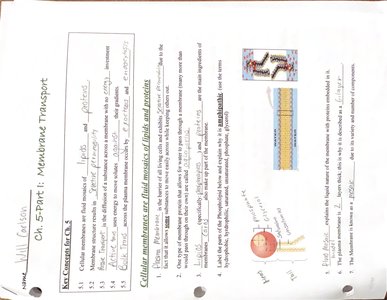
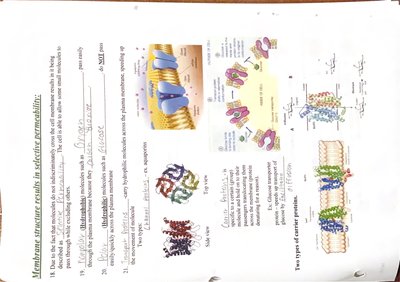
The cell membrane is a selectively permeable barrier that regulates the movement of substances into and out of the cell. Its structure is primarily composed of a phospholipid bilayer with embedded proteins, carbohydrates, and cholesterol, which together facilitate various transport mechanisms.
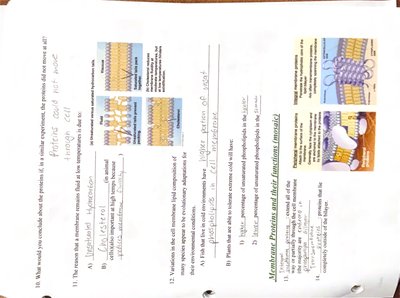
Phospholipid Bilayer: Consists of hydrophilic heads and hydrophobic tails, forming a double layer that separates the internal and external environments.
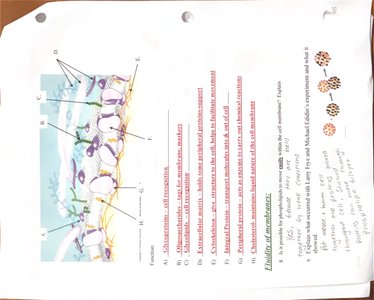
Membrane Proteins: Integral and peripheral proteins serve functions such as transport, signaling, and structural support.
Carbohydrates: Attached to proteins and lipids, they play roles in cell recognition and adhesion.
Cholesterol: Modulates membrane fluidity and stability.
Selective Permeability: Allows certain molecules to pass while restricting others, maintaining homeostasis.
Types of Membrane Transport
Transport across the cell membrane occurs via several mechanisms, classified as passive or active transport. These processes are essential for nutrient uptake, waste removal, and maintaining cellular equilibrium.
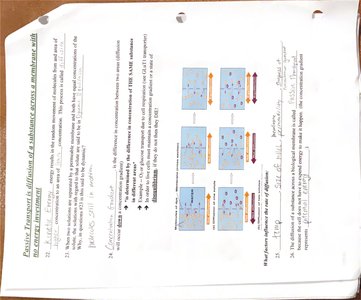
Passive Transport: Movement of substances down their concentration gradient without energy input.
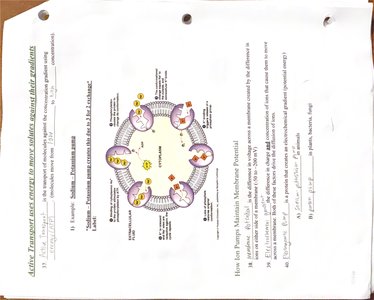
Active Transport: Movement of substances against their concentration gradient, requiring energy (usually ATP).
Passive Transport Mechanisms
Simple Diffusion: Direct movement of small, nonpolar molecules (e.g., O2, CO2) across the membrane.
Facilitated Diffusion: Movement of larger or polar molecules via specific transport proteins (channels or carriers).
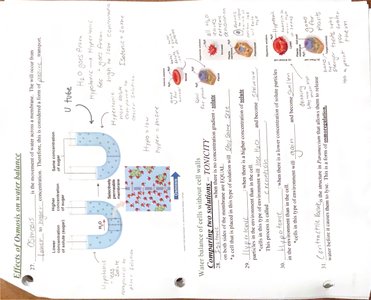
Osmosis: Diffusion of water across a selectively permeable membrane.
Active Transport Mechanisms
Primary Active Transport: Direct use of ATP to move ions (e.g., Na+/K+ pump).
Secondary Active Transport: Uses energy from the movement of one substance down its gradient to transport another substance against its gradient.
Bulk Transport: Endocytosis and Exocytosis
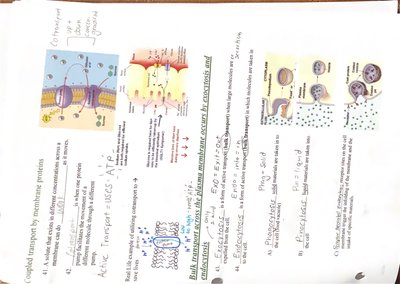
Bulk transport involves the movement of large particles or volumes of fluid via vesicles. This process is crucial for the uptake and release of macromolecules and cellular debris.
Endocytosis: The cell engulfs material via vesicle formation. Includes phagocytosis (solid particles), pinocytosis (liquids), and receptor-mediated endocytosis (specific molecules).
Exocytosis: The cell expels material by merging vesicles with the plasma membrane.
Effects of Osmosis on Cells
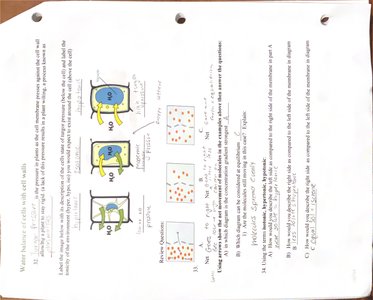
Osmosis can cause cells to swell, shrink, or remain unchanged depending on the tonicity of the surrounding solution.
Isotonic Solution: No net movement of water; cell volume remains constant.
Hypotonic Solution: Water enters the cell; cell may swell or burst.
Hypertonic Solution: Water leaves the cell; cell shrinks.
Membrane Proteins and Their Functions
Membrane proteins are essential for transport, communication, and structural integrity. They are classified based on their position and function.
Integral Proteins: Span the membrane and are involved in transport and signaling.
Peripheral Proteins: Attached to the membrane surface, often involved in signaling or structural support.
Transport Proteins: Facilitate movement of substances across the membrane.
Receptor Proteins: Receive and transmit signals from the environment.
Enzymatic Proteins: Catalyze reactions at the membrane surface.
Summary Table: Types of Membrane Transport
Type | Energy Required | Direction | Example |
|---|---|---|---|
Simple Diffusion | No | Down gradient | O2, CO2 |
Facilitated Diffusion | No | Down gradient | Glucose, ions |
Osmosis | No | Down gradient | Water |
Active Transport | Yes (ATP) | Against gradient | Na+/K+ pump |
Bulk Transport | Yes | Variable | Endocytosis, exocytosis |
Key Equations
Osmotic Pressure: Where is osmotic pressure, is the van't Hoff factor, is molarity, is the gas constant, and is temperature.
Membrane Potential: Where is membrane potential, is the gas constant, is temperature, is Faraday's constant, and is concentration.
Examples and Applications
Glucose Transport: Facilitated diffusion via carrier proteins.
Na+/K+ Pump: Maintains electrochemical gradients essential for nerve impulse transmission.
Endocytosis: Uptake of nutrients and removal of pathogens.
Additional info: Academic context was added to clarify the mechanisms and functions of membrane transport, including definitions, examples, and key equations.
