 뒤로
Membranes, Transport, Energy & Enzymes: BIO 103 Exam #3 Study Guide
스터디 가이드 - 스마트 노트
 자료에 맞춘 맞춤형 노트, 핵심 정의, 예시, 맥락을 확장해 제공합니다.
Membrane Structure and Function
The Fluid Mosaic Model
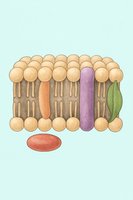
The plasma membrane is described by the fluid mosaic model, which emphasizes its dynamic and flexible nature. The membrane is composed of a sea of phospholipids in which proteins, cholesterol, and carbohydrates are embedded and move laterally. This structure allows for selective permeability and adaptability in cellular environments.
Phospholipid Bilayer: Two layers of phospholipids arranged tail-to-tail, with hydrophilic heads facing outward and hydrophobic tails inward, forming a selectively permeable barrier.
Key Membrane Components:
Phospholipids: Structural backbone of the membrane.
Cholesterol: Stabilizes membrane fluidity.
Proteins: Involved in transport, signaling, and recognition.
Carbohydrates: Provide cell identity and communication.
Membrane Fluidity & Protein Functions
Membrane fluidity is regulated by temperature, cholesterol, and the saturation of fatty acids. Proteins embedded in the membrane serve various functions, including transport, communication, recognition, and cell attachment.
Temperature: Higher temperatures increase fluidity; lower temperatures decrease it.
Cholesterol: Acts as a buffer, preventing excessive rigidity or fluidity.
Unsaturated Fatty Acids: Increase fluidity due to kinked tails.
Protein Functions
Transport: Channel and carrier proteins move substances across the membrane that cannot cross on their own, such as ions and large polar molecules.

Communication: Receptor proteins bind signaling molecules and trigger responses inside the cell.

Recognition: Glycoproteins act as cellular ID tags, helping the immune system distinguish self from non-self.

Cell Attachment: Adhesion proteins anchor cells to the extracellular matrix and neighboring cells, maintaining tissue integrity.

Membrane Transport
Selective Permeability & Passive Transport
The plasma membrane is selectively permeable, allowing only certain substances to cross. Small, nonpolar molecules cross easily, while large or charged molecules require assistance.
Simple Diffusion: Movement of small, nonpolar substances down their concentration gradient without energy or protein assistance. Examples: O2, CO2, ethanol.
Facilitated Diffusion: Movement of polar or charged substances down their gradient with the help of transport proteins. No ATP required. Examples: glucose, Na+, K+.
Osmosis: Diffusion of water across a selectively permeable membrane, moving toward the more concentrated (hypertonic) solution.
Hypertonic, Hypotonic & Isotonic Solutions
Hypertonic: Higher solute concentration outside the cell; water leaves the cell, causing it to shrivel.
Hypotonic: Lower solute concentration outside; water enters the cell, causing it to swell.
Isotonic: Equal solute concentrations; no net water movement, cell maintains normal shape.
Active Transport & Bulk Transport
Active transport moves substances against their concentration gradient and requires ATP. Bulk transport involves vesicle-mediated movement of large molecules.
Sodium-Potassium Pump (Na+/K+ ATPase): Uses 1 ATP to move 3 Na+ out and 2 K+ in per cycle, maintaining electrochemical gradients.
Coupled Transport: Uses ion gradients to move other substances against their gradient (secondary active transport).
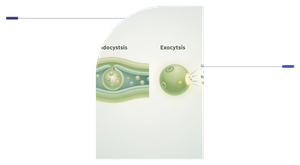
Endocytosis & Exocytosis
Endocytosis: Cell membrane folds inward to form a vesicle that engulfs material.
Exocytosis: Intracellular vesicle fuses with the membrane to release contents outside.
Types of Endocytosis
Phagocytosis: "Cell eating"; pseudopods engulf large particles into a food vacuole.
Pinocytosis: "Cell drinking"; membrane folds inward to bring in extracellular fluid and dissolved solutes.
Receptor-Mediated Endocytosis: Highly specific; receptor proteins bind target molecules and bring them in via coated vesicles.
Energy Fundamentals
Types of Energy
All cellular work depends on energy, which exists in two main forms:
Kinetic Energy: Energy of motion (heat, light, moving electrons).
Potential Energy: Stored energy based on position or structure (chemical bonds, concentration gradients).
Oxidation & Reduction (Redox)
Redox reactions involve the transfer of electrons:
Oxidation: Loss of electrons.
Reduction: Gain of electrons.
These processes always occur together. OIL RIG: Oxidation Is Loss, Reduction Is Gain.
Laws of Thermodynamics
1st Law: Energy cannot be created or destroyed, only converted.
2nd Law: Every energy conversion increases entropy (disorder); some energy is always lost as heat.
Entropy
Entropy: Measure of disorder or randomness. Living organisms maintain low internal entropy but increase the entropy of their surroundings.
Free Energy, ATP & Metabolic Pathways
Free Energy (G)
Exergonic Reactions: Release free energy (ΔG < 0), spontaneous. Example: cellular respiration.
Endergonic Reactions: Require energy input (ΔG > 0), non-spontaneous. Example: protein synthesis.
ATP Hydrolysis
ATP → ADP + Pi: Releases ~7.3 kcal/mol of free energy, powering endergonic reactions via phosphorylation.
Metabolic Pathways
Cells organize reactions into sequential pathways for efficient energy use and control.
Allosteric Regulation
Allosteric proteins change shape when a regulatory molecule binds to a site other than the active site, allowing real-time regulation of metabolic activity.
Enzymes: Catalysts of Life
Enzyme Function
Enzymes are biological catalysts that speed up chemical reactions by lowering activation energy (Ea). They are highly specific and are not consumed in the reaction.
Active Site: Specifically shaped region where substrate binds.
Induced Fit Model: Enzyme changes shape upon substrate binding to optimize the reaction.
Enzyme Specificity: One enzyme, one substrate (or class of substrates).
Factors Affecting Enzyme Activity
Temperature: Activity increases with heat up to an optimal point; excessive heat causes denaturation.
pH: Each enzyme has an optimal pH; deviations disrupt active site shape.
Inhibitors:
Competitive: Block the active site.
Noncompetitive: Bind elsewhere and alter enzyme shape.
Quick-Reference: Key Terms
Substrate: Reactant that binds to enzyme.
Active site: Enzyme's binding region.
Cofactor: Inorganic helper (e.g., Zn2+, Fe2+).
Coenzyme: Organic helper (e.g., vitamins).
Denaturation: Loss of enzyme shape/function.
Allosteric site: Regulatory binding site.
Feedback inhibition: End product inhibits its own pathway.
Key Equations
ATP Hydrolysis:
Free Energy Change:
Additional info: Academic context was added to clarify the functions of membrane proteins, types of transport, and enzyme regulation.
