 뒤로
Mendelian Genetics: Principles of Inheritance
스터디 가이드 - 스마트 노트
 자료에 맞춘 맞춤형 노트, 핵심 정의, 예시, 맥락을 확장해 제공합니다.
Mendelian Genetics: Principles of Inheritance
Historical Context and Early Hypotheses of Inheritance
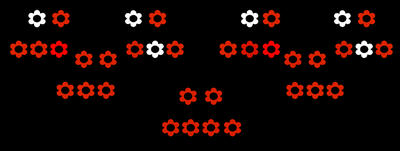
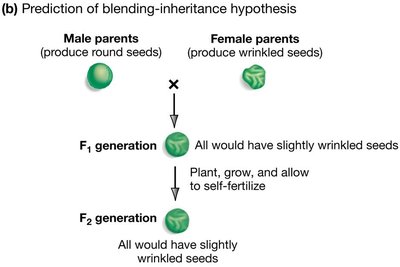
Before Mendel's experiments, two main hypotheses attempted to explain how traits were inherited: blending inheritance and inheritance of acquired characteristics. Blending inheritance proposed that offspring would have intermediate traits between their parents, while inheritance of acquired characteristics suggested that traits modified during an organism's life could be passed to offspring.
Blending Inheritance: Parental traits blend in offspring, resulting in intermediate phenotypes.
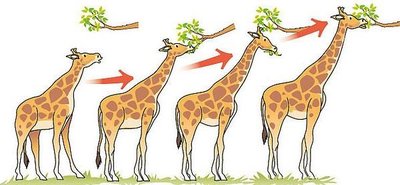
Inheritance of Acquired Characteristics: Traits altered by use or environment are inherited by the next generation.
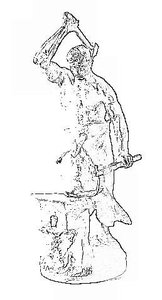
Example: The idea that a blacksmith's muscular arms or a giraffe's longer neck from stretching would be passed to their offspring.
Gregor Mendel and the Foundation of Genetics
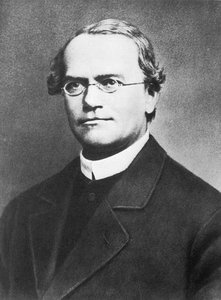
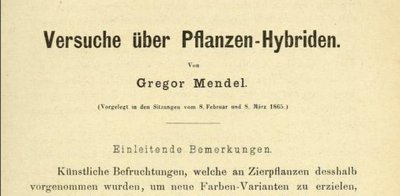
Gregor Mendel, an Austrian monk, revolutionized the study of heredity through quantitative experiments with garden peas (Pisum sativum). His work laid the foundation for the chromosome theory of inheritance and the concept of the gene.
Background: Mendel had training in statistics and used quantitative analysis.
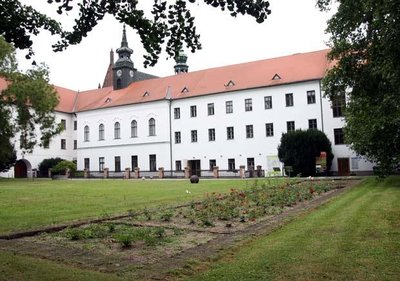
Model Organism: Garden peas were chosen for their ease of cultivation, short generation time, and polymorphic traits.
Traits Studied: Mendel focused on seven easily recognizable traits, each with two distinct phenotypes.
Mendel's Experimental Approach
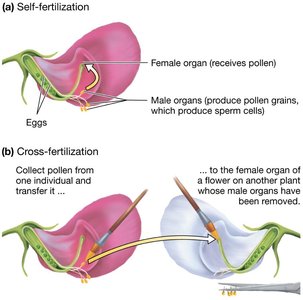
Mendel's experiments involved controlled crosses between pure lines of peas, allowing him to observe inheritance patterns across generations. He used self-fertilization and cross-fertilization to produce true-breeding and hybrid plants.
Self-fertilization: Pollen from the same flower fertilizes the egg.
Cross-fertilization: Pollen from one plant fertilizes the egg of another plant.
Pure Lines: Plants that consistently produce offspring with the same trait when self-fertilized.
Hybridization: Crossing two pure lines with different traits to produce hybrids.
Traits and Phenotypes in Pea Plants
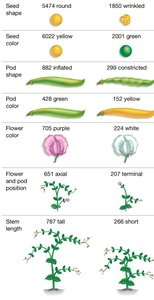
Mendel selected seven traits, each with two contrasting phenotypes, to study inheritance. These traits included seed shape, seed color, pod shape, pod color, flower color, flower and pod position, and stem length.
Phenotype: Observable features of an individual.
Polymorphic Traits: Traits found in discrete forms (variants).
Monohybrid Crosses and the Rejection of Blending Inheritance
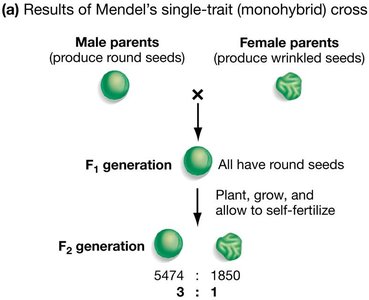
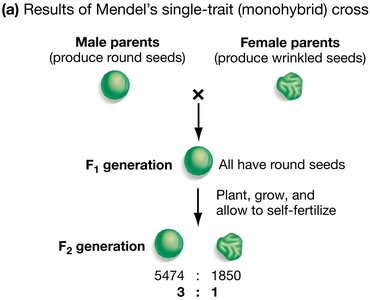
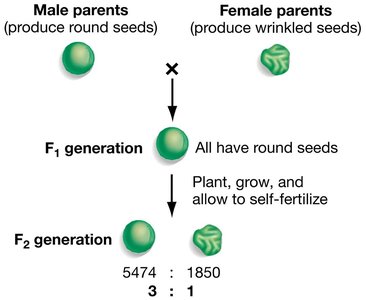
Mendel's monohybrid crosses involved mating pure lines that differed in a single trait. The results contradicted the blending inheritance hypothesis, as the F1 generation displayed only one parental phenotype, and the F2 generation showed a 3:1 ratio of dominant to recessive traits.
Monohybrid Cross: Mating between parents differing in one trait.
F1 Generation: First filial generation, all showing the dominant phenotype.
F2 Generation: Second filial generation, showing a 3:1 ratio of dominant to recessive phenotypes.
Dominant Trait: Trait displayed in the F1 generation.
Recessive Trait: Trait masked in the F1 generation but reappears in F2.
Reciprocal Crosses and Sex Influence
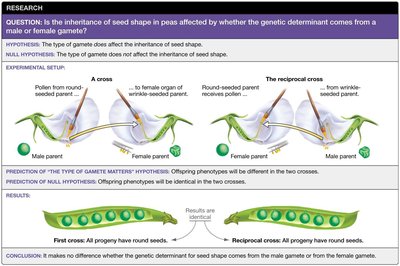
Mendel performed reciprocal crosses to test whether the sex of the parent influenced inheritance. The results showed that sex did not affect the inheritance of the traits he studied, though later research revealed sex-linked inheritance in other cases.
Reciprocal Cross: Crossing two pure lines in reverse (switching male and female phenotypes).
Result: Identical outcomes, indicating sex was not a factor for the traits Mendel studied.
Dominant and Recessive Traits: Summary Table
Mendel observed that for all seven traits, the F1 generation displayed the dominant phenotype, while the recessive phenotype reappeared in the F2 generation. The ratio of dominant to recessive phenotypes was consistently close to 3:1.
Dominant Phenotype: Tall stems, purple flowers, etc.
Recessive Phenotype: Dwarf stems, white flowers, etc.
Particulate Inheritance: Mendel's Hypothesis
Mendel proposed the hypothesis of particulate inheritance, stating that hereditary determinants (genes) do not blend or change through use. Instead, they act as discrete, unchanging particles.
Particulate Inheritance: Genes are inherited as distinct units.
Key Point: Explains the reappearance of recessive traits and the consistency of inheritance patterns.
Summary Table: Mendel's Model of Inheritance
Mendel's Claim | Comment |
|---|---|
Peas have two copies of each gene and may have two different alleles. | This is true for many organisms. |
Genes are particles of inheritance that do not blend together. | Genes do not change when transmitted between generations. |
Each gamete contains one copy of each gene (one allele). | Principle of segregation: gene pairs segregate during gamete formation. |
Each parent contributes equally to offspring genotype. | Offspring acquire two copies of each gene, one from each parent. |
Some alleles are dominant to others. | Dominant alleles mask recessive alleles in heterozygotes. |
*Additional info: Mendel's work established the foundation for modern genetics, including the concepts of genes, alleles, genotype, and phenotype. His principles are still used to explain inheritance patterns, though many variations exist (e.g., incomplete dominance, codominance, sex-linked traits, polygenic inheritance).*
