 뒤로
Photosynthesis and The Cell Cycle: Mini-Textbook Study Notes
스터디 가이드 - 스마트 노트
 자료에 맞춘 맞춤형 노트, 핵심 정의, 예시, 맥락을 확장해 제공합니다.
Photosynthesis
Overview of Photosynthesis
Photosynthesis is a fundamental biological process by which plants, algae, and some bacteria convert solar energy into chemical energy, primarily in the form of glucose. This process occurs within specialized organelles called chloroplasts, which are most abundant in the mesophyll cells of plant leaves. - Key Point 1: Chloroplasts are the site of photosynthesis in plants and other photosynthetic organisms. - Key Point 2: Stomata are microscopic pores in leaves that allow for gas exchange: CO2 enters and O2 exits. - Key Point 3: Veins transport water from roots and distribute sugars produced by photosynthesis to other parts of the plant.
The Two Stages of Photosynthesis
Photosynthesis consists of two main stages: the light reactions and the Calvin cycle. - Light Reactions: Occur in the thylakoid membranes; produce ATP, NADPH, and O2 from water and light energy. - Calvin Cycle: Occurs in the stroma; uses ATP, NADPH, and CO2 to synthesize organic molecules (e.g., glucose). - Key Point: The Calvin cycle is light-independent and does not require direct light.
The Cell Cycle
Cell Division and Its Roles
Cell division is essential for reproduction, growth, and repair in living organisms. It can occur via asexual or sexual reproduction. - Asexual Reproduction: Produces genetically identical offspring (clones). - Sexual Reproduction: Produces offspring with unique genetic combinations.
Examples of Asexual and Sexual Reproduction
- Yeast cells reproduce asexually by budding, producing genetically identical daughter cells. 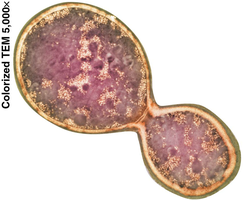 - Sea stars can reproduce asexually via fragmentation and regeneration.
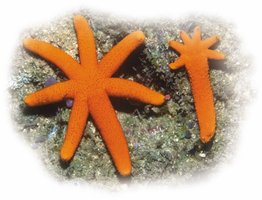 - Sexual reproduction in humans and other animals results in genetic diversity.

Binary Fission in Prokaryotes
Prokaryotic cells (such as bacteria) reproduce asexually by binary fission, a process in which the cell divides in half after duplicating its chromosome. - Key Steps: 1. Chromosome duplication and separation 2. Elongation and movement of chromosome copies 3. Division into two daughter cells - Binary fission is classified as asexual because offspring inherit DNA from a single parent. 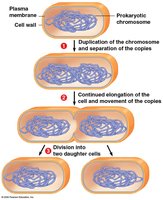
Cellular Organization of Genetic Material
The genetic material in cells is organized as DNA molecules packaged into chromosomes. - Genome: All the DNA in a cell; can be a single molecule (prokaryotes) or multiple molecules (eukaryotes). - Chromatin: Complex of DNA and protein in eukaryotic chromosomes; condenses during cell division. - Somatic cells: Have two sets of chromosomes. - Gametes: Have half as many chromosomes as somatic cells. 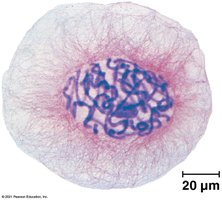
Chromosome Duplication and Distribution
Before cell division, chromosomes are duplicated, forming two sister chromatids joined at the centromere. During division, chromatids separate and become individual chromosomes. 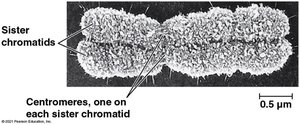
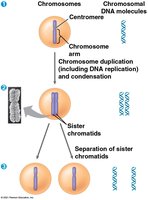
The Cell Cycle: Phases and Regulation
The cell cycle is the sequence of events in the life of a cell, including growth, DNA replication, and division. - Mitotic (M) Phase: Includes mitosis (nuclear division) and cytokinesis (cytoplasmic division). - Interphase: Consists of G1 (growth), S (DNA synthesis), and G2 (preparation for division). - Chromosomes are duplicated only during the S phase. 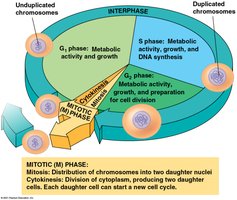
Mitosis: Stages and Key Events
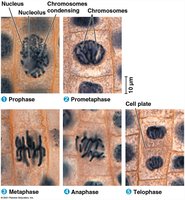
Mitosis is conventionally divided into five stages: prophase, prometaphase, metaphase, anaphase, and telophase.
G2 of Interphase and Prophase
- G2: Chromosomes duplicated but not condensed; nucleoli present; centrosomes duplicated. - Prophase: Chromatin condenses; nucleoli disappear; mitotic spindle forms; centrosomes move apart. 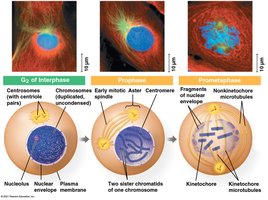
Prometaphase and Metaphase
- Prometaphase: Nuclear envelope fragments; microtubules attach to kinetochores; chromosomes condense further. - Metaphase: Chromosomes align at the metaphase plate; kinetochores attached to spindle microtubules. 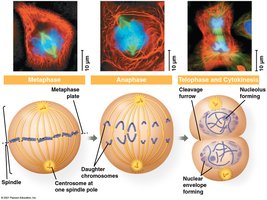
Anaphase
- Anaphase: Cohesins cleaved; sister chromatids separate; chromatids move to opposite poles; cell elongates.
Telophase and Cytokinesis
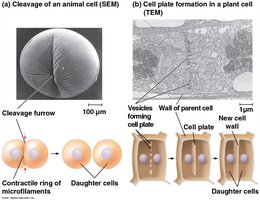
- Telophase: Nuclear envelopes reform; chromosomes decondense; nucleoli reappear. - Cytokinesis: Division of cytoplasm; cleavage furrow in animal cells; cell plate in plant cells. 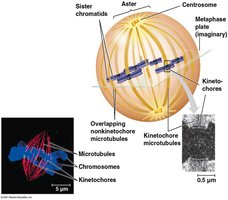
Regulation of the Cell Cycle
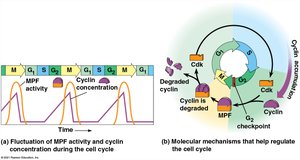
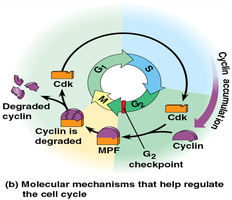
The cell cycle is regulated by a molecular control system involving cyclins and cyclin-dependent kinases (Cdks). - Cyclins: Proteins with cyclically fluctuating concentrations. - Cdk: Enzymes that must bind cyclins to be active; regulate cell cycle transitions. - MPF (Maturation-Promoting Factor): Cyclin-Cdk complex that triggers entry into M phase. 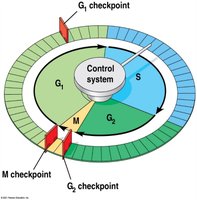
Cell Cycle Checkpoints
Checkpoints are control mechanisms that ensure proper cell cycle progression. - G1, G2, and M checkpoints monitor cell growth, DNA integrity, and chromosome attachment. - G0 phase: Non-dividing state entered if cell does not receive go-ahead signal. - Internal signals: Ensure chromosomes are properly attached before anaphase. 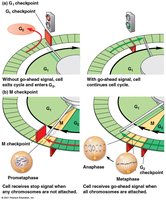
Loss of Cell Cycle Controls in Cancer Cells
Cancer cells evade normal cell cycle controls, leading to uncontrolled division and tumor formation. - Benign tumors: Remain localized; usually not harmful. - Malignant tumors: Invade tissues; can metastasize to other parts of the body. - Chemotherapy: Targets rapidly dividing cells; side effects due to impact on normal dividing cells. 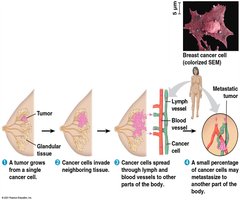
Summary Table: Cell Cycle Phases
Phase | Main Events |
|---|---|
G1 | Cell growth, metabolic activity |
S | DNA synthesis, chromosome duplication |
G2 | Preparation for division, growth |
M (Mitosis) | Division of nucleus and cytoplasm |
Summary Table: Mitosis Stages
Stage | Key Features |
|---|---|
Prophase | Chromatin condenses, spindle forms |
Prometaphase | Nuclear envelope fragments, kinetochores form |
Metaphase | Chromosomes align at metaphase plate |
Anaphase | Sister chromatids separate, move to poles |
Telophase | Nuclear envelopes reform, chromosomes decondense |
Additional info: These notes expand on the original content by providing definitions, examples, and tables for clarity and completeness, suitable for General Biology college students.
