 뒤로
Photosynthesis: Mechanisms and Importance in the Biosphere
스터디 가이드 - 스마트 노트
 자료에 맞춘 맞춤형 노트, 핵심 정의, 예시, 맥락을 확장해 제공합니다.
Photosynthesis: Overview and Significance
Big Idea and Biological Importance
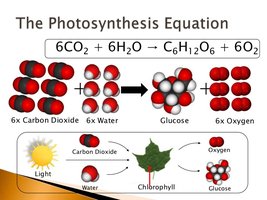
Photosynthesis is the fundamental process by which plants, algae, and certain bacteria convert solar energy into chemical energy, producing carbohydrates that sustain life on Earth. This process not only fuels the growth and metabolism of autotrophic organisms but also provides energy and organic molecules for heterotrophs.
Photosynthesis Equation:
Autotrophs: Organisms that produce their own food from inorganic substances.
Heterotrophs: Organisms that obtain organic molecules by consuming other organisms.
Photosynthesis Feeds the Biosphere
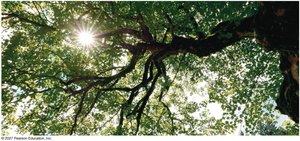
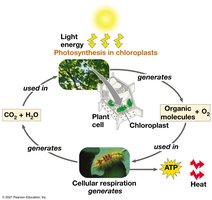
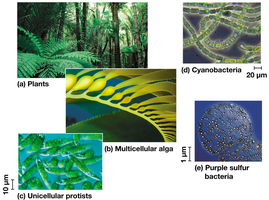
Photosynthesis nourishes almost all life directly or indirectly. Autotrophs, including plants, algae, and some bacteria, are the primary producers, while heterotrophs depend on them for energy and organic molecules.
Photoautotrophs: Use sunlight to synthesize organic molecules.
Decomposers: Consume dead organic material or waste.
Chloroplasts: The Sites of Photosynthesis
Structure and Function
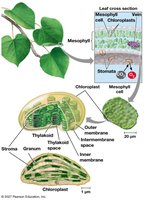
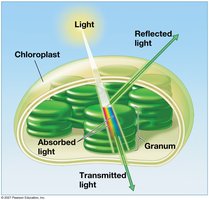
Chloroplasts are specialized organelles found mainly in the mesophyll cells of leaves. Their internal structure, including the stroma and thylakoid membranes, is essential for the chemical reactions of photosynthesis.
Stomata: Microscopic pores for gas exchange.
Thylakoids: Membranous sacs where light reactions occur; stacked as grana.
Chlorophyll: The green pigment responsible for light absorption.
Photosynthesis: Chemical and Redox Processes
Tracking Atoms and Redox Changes
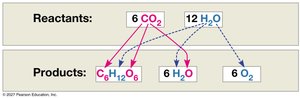
Photosynthesis involves splitting water molecules and incorporating hydrogen into sugars, releasing oxygen as a by-product. The process is a redox reaction, reversing the electron flow seen in cellular respiration.
Water Splitting: Provides electrons and protons for sugar synthesis.
Redox Process: CO2 is reduced; H2O is oxidized.
Endergonic Reaction: Requires energy input from light.

Stages of Photosynthesis
Light Reactions and Calvin Cycle
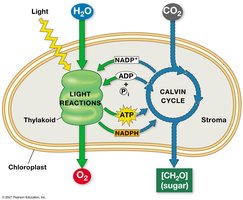
Photosynthesis occurs in two main stages: the light reactions and the Calvin cycle.
Light Reactions: Occur in thylakoids; split water, release O2, produce ATP and NADPH.
Calvin Cycle: Occurs in stroma; uses ATP and NADPH to fix CO2 and synthesize sugars.
The Nature of Sunlight
Electromagnetic Spectrum and Light Energy
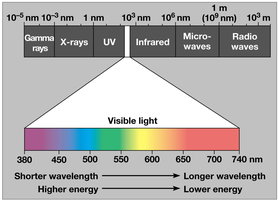
Light is electromagnetic energy, traveling in waves. The visible spectrum (380–740 nm) is crucial for photosynthesis, with shorter wavelengths carrying more energy.
Photons: Discrete particles of light energy.
Wavelength: Determines energy and color.
Photosynthetic Pigments: Light Receptors
Types and Functions of Pigments
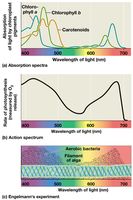
Pigments absorb specific wavelengths of light. Chlorophyll a is the primary pigment, while chlorophyll b and carotenoids are accessory pigments that broaden the absorption spectrum and provide photoprotection.
Chlorophyll a: Directly participates in light reactions.
Chlorophyll b: Accessory pigment, broadens absorption.
Carotenoids: Absorb violet and blue-green light; protect against excess light.
Light Reactions: Mechanism and Electron Flow
Photosystems and Electron Transport
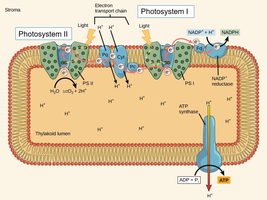
Light reactions involve two photosystems (PSII and PSI) embedded in the thylakoid membrane. Linear electron flow produces ATP and NADPH, while cyclic electron flow generates only ATP.
Photosystem II (P680): Absorbs 680 nm light, splits water, initiates electron transport.
Photosystem I (P700): Absorbs 700 nm light, produces NADPH.
Electron Transport Chain: Transfers electrons, pumps protons, creates gradient for ATP synthesis.
Calvin Cycle: Carbon Fixation and Sugar Synthesis
Phases and Key Steps
The Calvin cycle uses ATP and NADPH to fix CO2 and produce glyceraldehyde 3-phosphate (G3P), a precursor for glucose and other carbohydrates.
Phase 1: Carbon Fixation: CO2 binds to RuBP, catalyzed by rubisco.
Phase 2: Reduction: 3-phosphoglycerate is converted to G3P using ATP and NADPH.
Phase 3: Regeneration: RuBP is regenerated for the next cycle.
Photosynthesis: Essential for Life
Energy Storage and Ecological Impact
The energy captured by chloroplasts is stored in organic compounds, fueling cellular processes and forming the basis of food webs. Plants store excess sugar as starch in various tissues.
Glucose: Used for energy and biosynthesis.
Starch: Storage form of sugar in plants.
Summary Table: Photosynthesis vs. Cellular Respiration
Process | Reactants | Products | Energy Source |
|---|---|---|---|
Photosynthesis | CO2, H2O | Glucose, O2 | Light |
Cellular Respiration | Glucose, O2 | CO2, H2O, ATP | Chemical (Glucose) |
Key Equations
Photosynthesis:
Cellular Respiration:
Additional info:
Photosynthesis is a highly regulated process, with environmental factors such as light intensity, CO2 concentration, and temperature affecting its rate.
Accessory pigments not only broaden the absorption spectrum but also protect against photooxidative damage.
