 뒤로
Photosynthesis: Structure, Function, and Mechanisms
스터디 가이드 - 스마트 노트
 자료에 맞춘 맞춤형 노트, 핵심 정의, 예시, 맥락을 확장해 제공합니다.
Photosynthesis
Why We Need Plants
Plants are essential for life on Earth because they produce oxygen and organic molecules through photosynthesis, supporting nearly all living organisms either directly or indirectly. They form the base of most food chains and are crucial for maintaining atmospheric oxygen levels.

Energy Cycle in Ecosystems
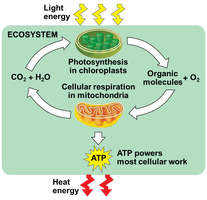
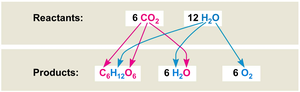
The energy cycle in ecosystems involves the flow of energy from sunlight to chemical energy via photosynthesis, and its release through cellular respiration. Photosynthesis converts carbon dioxide and water into glucose and oxygen, while cellular respiration breaks down glucose to release energy, carbon dioxide, and water.
Photosynthesis: An anabolic, endergonic reaction that stores energy.
Cellular Respiration: A catabolic, exergonic reaction that releases energy.
ATP: The main energy currency of cells, produced during these processes.
Types of Organisms: Autotrophs vs. Heterotrophs
Definitions and Examples
Organisms are classified based on how they obtain energy and carbon:
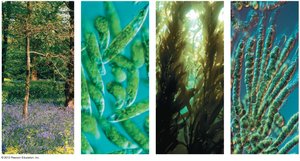
Autotrophs: "Self-feeders" that produce their own food from inorganic sources. Plants are photoautotrophs, using light energy.
Heterotrophs: "Other feeders" that consume organic molecules from other organisms. Includes animals, fungi, and many bacteria.
Autotrophs are producers, while heterotrophs are consumers or decomposers.
Photosynthetic Organisms
Classification
Photosynthesis occurs in a variety of organisms:
Plants: Multicellular eukaryotes.
Protists: Both single-celled and multicellular eukaryotes (e.g., algae).
Bacteria: Prokaryotes, including cyanobacteria.
Chloroplast Structure
Key Components
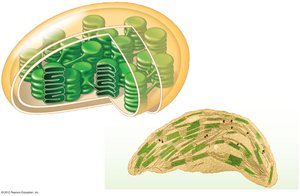
The chloroplast is the organelle where photosynthesis occurs in plants and algae. It contains:
Thylakoids: Membranous sacs where light reactions take place.
Granum: Stack of thylakoids.
Stroma: Fluid surrounding thylakoids, site of the Calvin cycle.
Inner and Outer Membranes: Enclose the chloroplast.
Leaf Structure and Photosynthesis
Functional Anatomy
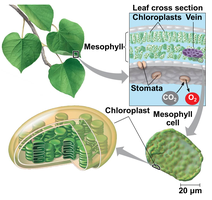
Leaves are the primary site of photosynthesis. Their structure includes:
Mesophyll: Main photosynthetic tissue between upper and lower epidermis.
Veins: Deliver water and nutrients.
Stomata: Pores for gas exchange (CO2 in, O2 out).
Photosynthesis as a Redox Reaction
Historical Context and Mechanism
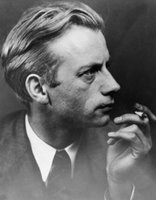
Photosynthesis is a light-dependent redox reaction. Cornelius Bernardus van Niel proposed that hydrogen from an oxidizable compound reduces carbon dioxide. In plants, water is oxidized to produce oxygen gas.
Redox Reactions in Photosynthesis and Respiration
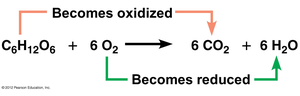
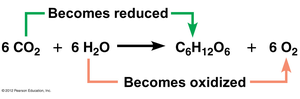
Photosynthesis and cellular respiration are complementary redox reactions:
Photosynthesis: CO2 is reduced, H2O is oxidized.
Cellular Respiration: Glucose is oxidized, O2 is reduced.
Photosynthesis: Two-Part Process
Light Reactions and Calvin Cycle
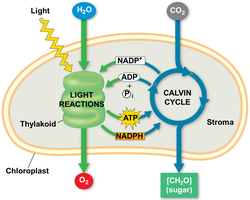
Photosynthesis consists of two main stages:
Light Reactions: Occur in thylakoids, generate ATP and NADPH, release O2.
Calvin Cycle: Occurs in stroma, uses ATP and NADPH to synthesize sugars from CO2.
Light and Pigments
Nature of Light
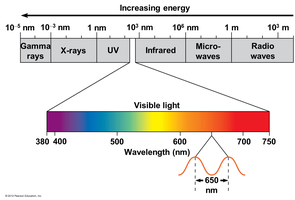
Light is electromagnetic radiation, consisting of photons. The energy of light depends on its wavelength; shorter wavelengths have higher energy.
Chlorophyll and Light Absorption
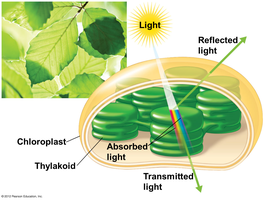
Chlorophyll is the primary pigment in plants, absorbing most visible light except green. Pigments absorb energy from photons, which is used to drive photosynthesis.
Pigments in Photosynthesis
Different pigments absorb different wavelengths:
Chlorophyll a: Main pigment.
Chlorophyll b: Assists in light absorption.
Carotenoids: Accessory pigments, protect against photo-damage.
These pigments expand the range of light usable for photosynthesis.
Light Reactions: Mechanism
Photoexcitation and Energy Transfer
When chlorophyll absorbs a photon, its electron becomes photoexcited and moves to a higher energy state. The energy released as the electron returns to ground state can be:
Released as heat
Emitted as light
Transferred to another molecule
Photosystems
Photosystems are complexes that harvest light energy. Each consists of a light-harvesting complex and a reaction-center complex. Photosystem II (PSII) and Photosystem I (PSI) work together to drive the light reactions.
Summary Table: Photosynthesis vs. Cellular Respiration
Process | Type of Metabolism | Energy Flow | Main Reactants | Main Products |
|---|---|---|---|---|
Photosynthesis | Anabolic | Stores energy (Endergonic) | CO2, H2O, Light | Glucose, O2 |
Cellular Respiration | Catabolic | Releases energy (Exergonic) | Glucose, O2 | CO2, H2O, ATP |
Key Equations
Photosynthesis
The overall equation for photosynthesis is:
Cellular Respiration
The overall equation for cellular respiration is:
Additional info: Further details on the Calvin Cycle, C4 and CAM adaptations, and biofuels are present in the original materials but are not included here due to space constraints. These topics are important for understanding advanced photosynthetic mechanisms and applications.
