 뒤로
Photosynthesis: The Process That Feeds the Biosphere
스터디 가이드 - 스마트 노트
 자료에 맞춘 맞춤형 노트, 핵심 정의, 예시, 맥락을 확장해 제공합니다.
Photosynthesis: The Process That Feeds the Biosphere
Overview of Photosynthesis
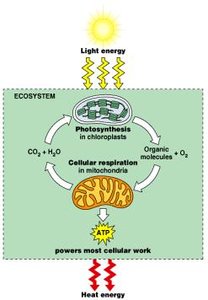
Photosynthesis is a fundamental biological process that converts solar energy into chemical energy, sustaining nearly all life on Earth. It occurs in chloroplasts of plants and other photosynthetic organisms, and is essential for the production of organic molecules and oxygen.
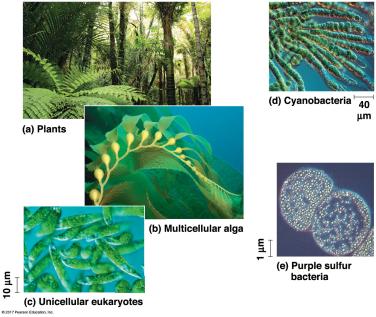
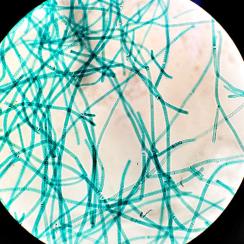
Photosynthetic organisms include plants, algae, certain unicellular eukaryotes, and some prokaryotes.
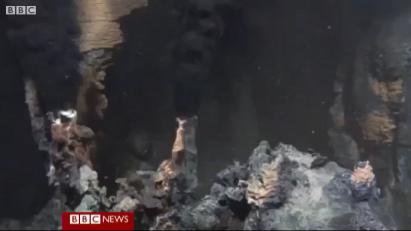
Autotrophs are organisms that produce their own organic compounds; photoautotrophs use light as an energy source, while chemoautotrophs oxidize inorganic substances.
Heterotrophs depend on autotrophs for organic molecules and oxygen.
Chloroplasts: The Sites of Photosynthesis
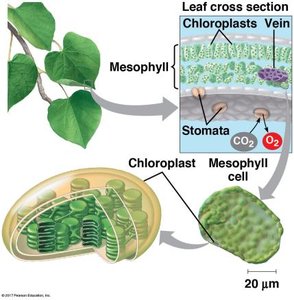
Chloroplasts are specialized organelles found mainly in the mesophyll cells of leaves. They contain the molecular machinery for photosynthesis, including pigment molecules and membrane systems.
Mesophyll cells are the primary location of chloroplasts in leaves.
Stomata are pores that allow gas exchange (CO2 in, O2 out).
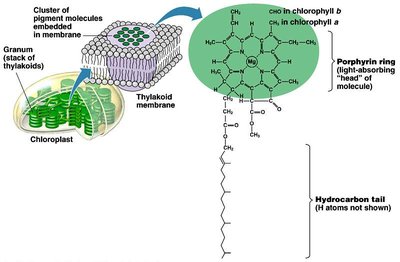
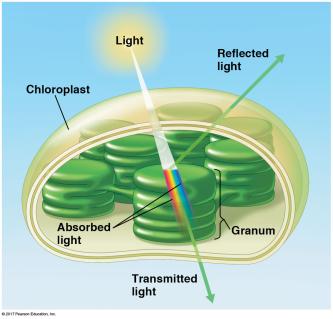
Chloroplast structure includes inner and outer membranes, thylakoid membranes (stacked into grana), thylakoid space, and stroma.
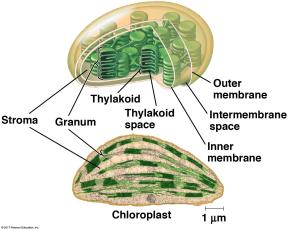
Chlorophylls and Pigments
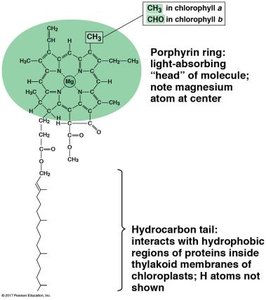
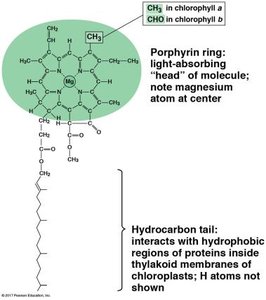
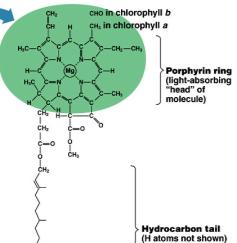
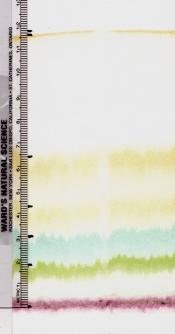
Chlorophylls are the primary pigments involved in photosynthesis, absorbing light energy and exciting electrons. Accessory pigments expand the range of light absorption and protect against excess light.
Chlorophyll a: Universal pigment, absorbs violet-blue and red light, reflects blue-green.
Chlorophyll b: Absorbs blue and orange light, reflects yellow-green.
Accessory pigments: Carotenoids (reflect yellow, orange, red), xanthophylls, anthocyanins (reflect pink-red to blue/purple).
Anthocyanins act as antioxidants and UV sunscreen, but are not involved in photosystems I and II.
Photosynthesis as a Redox Reaction
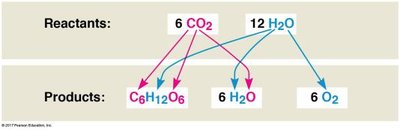
Photosynthesis is a redox process in which water is oxidized and carbon dioxide is reduced to form glucose. The overall chemical equation is:
Equation:
Water is oxidized, releasing electrons and protons.
CO2 is reduced to sugar.
O2 is released as a by-product.
Photosynthesis is endergonic; energy is provided by light.
The Two Stages of Photosynthesis
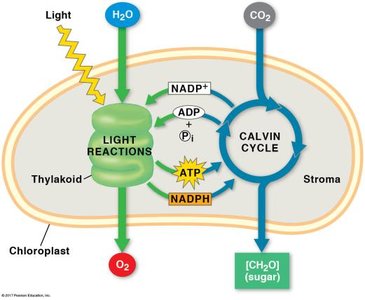
Photosynthesis consists of two main stages: the light reactions and the Calvin cycle.
Light reactions (in thylakoids): Split water, release O2, reduce NADP+ to NADPH, generate ATP by photophosphorylation.
Calvin cycle (in stroma): Forms sugar from CO2, using ATP and NADPH. Begins with carbon fixation.
The Nature of Sunlight
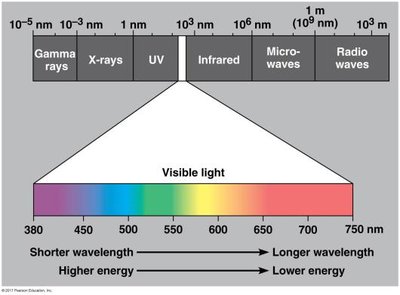
Light is electromagnetic energy, traveling in waves and as photons. The wavelength determines the energy and type of electromagnetic radiation.
Visible light: 380–750 nm, drives photosynthesis.
Shorter wavelengths have higher energy; longer wavelengths have lower energy.
Absorption and Action Spectra
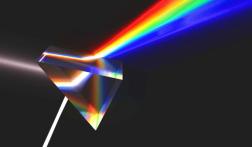
The absorption spectrum shows which wavelengths are absorbed by individual pigments, while the action spectrum shows the overall effectiveness of different wavelengths for photosynthesis.
Chlorophyll a absorbs violet-blue and red light most efficiently.
Structural differences between chlorophyll a and b cause differences in absorption spectra.
Excitation of Chlorophyll by Light
When chlorophyll absorbs light, electrons are excited to higher energy states. The return to ground state releases energy as heat or fluorescence.
Excited electrons increase potential energy.
Controlled electron flow produces ATP and NADPH.
Photosystems and Light Reactions
Photosystems are complexes of pigment molecules and proteins that capture light energy and initiate electron transport.
Photosystem II (PSII): Contains P680 chlorophyll a, splits water, produces O2, initiates electron transport chain for ATP production.
Photosystem I (PSI): Contains P700 chlorophyll a, receives electrons, initiates electron transport chain for NADPH production.
Noncyclic electron flow: Involves both PSII and PSI, produces ATP, NADPH, and O2.
Cyclic electron flow: Involves only PSI, produces ATP.
Chemiosmosis and ATP Production
ATP is generated in chloroplasts by chemiosmosis, using the energy from electron transport to pump protons and drive ATP synthase.
Movement of electrons is kinetic energy.
Protons are pumped into thylakoid space, creating potential energy.
Protons diffuse through ATP synthase, producing ATP in the stroma.
This process is called photophosphorylation.
The Calvin Cycle
The Calvin cycle uses ATP and NADPH to reduce CO2 to sugar. It is an anabolic cycle, regenerating its starting material and producing glyceraldehyde-3-phosphate (G3P).
Occurs in the stroma.
Reactants: CO2, ribulose bisphosphate (RuBP), ATP, NADPH.
Products: G3P, RuBP.
Three cycles are required to produce one G3P molecule.
Plants using this pathway are called C3 plants.
Photorespiration and Adaptations
Photorespiration is an unproductive process that occurs when Rubisco binds O2 instead of CO2, consuming ATP and reducing photosynthetic yield. C4 and CAM plants have evolved mechanisms to minimize photorespiration.
C4 plants: Spatial separation of carbon fixation and Calvin cycle; CO2 is incorporated into four-carbon compounds in mesophyll cells, then released in bundle-sheath cells.
CAM plants: Temporal separation; CO2 is fixed at night into organic acids, then released for the Calvin cycle during the day.
The Importance of Photosynthesis
Photosynthesis stores solar energy as chemical energy in organic compounds, providing energy and carbon skeletons for cellular respiration and biosynthesis. Excess sugar is stored as starch, and cellulose is used for cell structure.
Photosynthesis is essential for life, supporting food webs and oxygen production.
Key Terms and Root Words
auto-: self
chem-: chemical
cycl-: circle, cycle
hetero-: other, different
chlor-: green
photo-: light
phyll-: leaf
troph-: nourishment
Summary Table: Photosynthesis vs. Cellular Respiration
Process | Location | Reactants | Products | Energy Source |
|---|---|---|---|---|
Photosynthesis | Chloroplasts | CO2, H2O, Light | Glucose, O2 | Solar energy |
Cellular Respiration | Mitochondria | Glucose, O2 | CO2, H2O, ATP | Chemical energy |
