 뒤로
뒤로Plant Diversity I: How Plants Colonized Land
스터디 가이드 - 스마트 노트
 자료에 맞춘 맞춤형 노트, 핵심 정의, 예시, 맥락을 확장해 제공합니다.
The Greening of Earth
Overview of Terrestrial Life
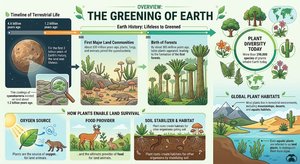
The colonization of land by plants was a pivotal event in Earth's history, transforming the planet's surface and enabling the development of terrestrial ecosystems. Early land was largely lifeless, but over time, plants, fungi, and animals established themselves, leading to the formation of the first forests.
Timeline: Prokaryotes appeared on land about 3.2 billion years ago; small plants, fungi, and animals joined within the last 500 million years.
First forests: Emerged around 385 million years ago, with species different from those found today.
Impact: Plants provided oxygen, stabilized soil, and enabled land survival for other organisms.
Adaptations Enabling the Move to Land
Key Adaptations for Terrestrial Life
The transition from aquatic to terrestrial environments required plants to evolve several adaptations to overcome challenges such as water scarcity, structural support, and reproduction in dry habitats.
Benefits: Unfiltered sunlight, abundant CO2, and nutrient-rich soil.
Challenges: Scarcity of water, lack of structural support, and reproduction in dry conditions.
Adaptations: Alternation of generations, walled sporangia, apical meristems, cuticle, and stomata.
Alternation of Generations
Life Cycle of Plants
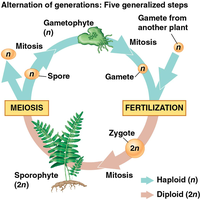
Alternation of generations is a fundamental process in plant life cycles, involving two distinct multicellular stages: the haploid gametophyte and the diploid sporophyte.
Gametophyte (n): Multicellular, haploid stage producing gametes (sperm and eggs) via mitosis.
Sporophyte (2n): Multicellular, diploid stage producing haploid spores via meiosis.
Cycle: Fertilization produces a diploid zygote, which grows into a sporophyte; meiosis in the sporophyte produces spores, which develop into gametophytes.
Haploid vs. Diploid in Plants
Chromosome Number and Generations
Understanding the difference between haploid and diploid cells is essential for grasping plant reproduction and life cycles.
Haploid (n): One set of unpaired chromosomes; forms the gametophyte generation.
Diploid (2n): Two sets of chromosomes; forms the sporophyte generation.
Transitions: Meiosis reduces chromosome number (2n → n); fertilization restores diploidy (n + n → 2n).

Mitosis and Meiosis in Plants
Cell Division Processes
Plants utilize both mitosis and meiosis for growth, repair, and reproduction, each with distinct purposes and outcomes.
Mitosis: Occurs in meristematic regions; produces two identical diploid cells for growth and asexual reproduction.
Meiosis: Occurs in reproductive organs; produces four unique haploid spores for sexual reproduction.
Key difference: Mitosis maintains chromosome number; meiosis halves it.
Traits of Terrestrial Plants
Walled Spores Produced in Sporangia
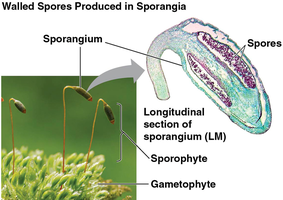
Terrestrial plants evolved specialized structures for reproduction and survival in dry habitats.
Sporangia: Multicellular organs where sporophytes produce spores.
Walled spores: Protective walls enable spores to survive harsh conditions.
Apical Meristems
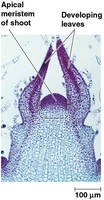
Apical meristems are regions of active cell division at the tips of roots and shoots, enabling continuous growth and resource acquisition.
Function: Allow elongation of roots and shoots.
Importance: Essential for adaptation to terrestrial environments.
Roots
Roots are specialized structures for anchorage and nutrient absorption. Early plants lacked true roots, relying on symbiotic associations with fungi (mycorrhizae) for nutrient uptake.
Advantage: Roots improved nutrient absorption and stability.
Evolution: Fossil evidence suggests roots evolved after symbiosis with fungi.
Bryophytes: Nonvascular Plants
Characteristics and Life Cycle
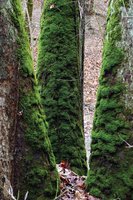
Bryophytes are nonvascular plants with life cycles dominated by the gametophyte stage. They lack extensive transport systems and true roots, stems, or leaves.
Groups: Liverworts, mosses, hornworts.
Reproduction: Seedless, produce spores.
Constraints: Limited height due to lack of vascular tissue and rigid support.
Vascular Plants: Seedless and Seed Plants
Vascular Tissue: Xylem and Phloem
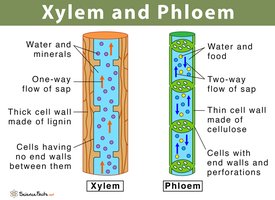
Vascular plants possess specialized tissues for the transport of water, minerals, and nutrients, enabling greater size and complexity.
Xylem: Transports water and minerals; composed of lignified cells.
Phloem: Transports food (sugars); composed of cells with end walls and perforations.
Classification of Plants
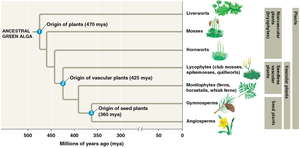
Plant evolution is marked by the emergence of key groups: nonvascular plants, seedless vascular plants, and seed plants.
Nonvascular plants: Bryophytes (liverworts, mosses, hornworts).
Seedless vascular plants: Lycophytes (club mosses) and monilophytes (ferns and relatives).
Seed plants: Gymnosperms and angiosperms.
Seedless Vascular Plants
Lycophytes and Monilophytes
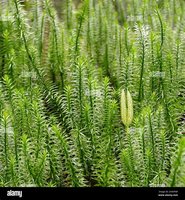
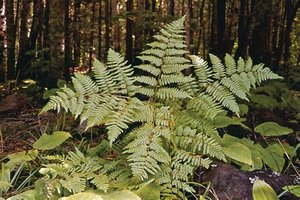
Seedless vascular plants are divided into two clades: lycophytes and monilophytes. These plants require moist habitats for reproduction.
Lycophytes: Club mosses and relatives; require moisture for swimming sperm.
Monilophytes: Ferns, horsetails, whisk ferns; have well-developed roots and leaves.
Seed Plants: Gymnosperms and Angiosperms
Characteristics and Classification
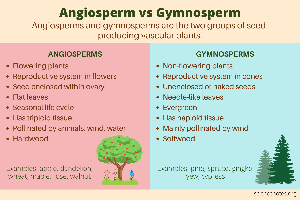
Seed plants are vascular plants that produce seeds, which are embryos packaged with nutrients inside a protective coat. They are divided into gymnosperms and angiosperms.
Gymnosperms: Produce "naked" seeds not enclosed in chambers.
Angiosperms: Produce flowers; seeds develop inside chambers that become fruits.
Diversity: Nearly 90% of living plant species are angiosperms.
Bryophyte Life Cycle
Dominance of Gametophytes
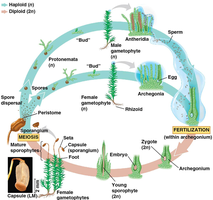
Bryophytes have life cycles dominated by the haploid gametophyte stage, with sporophytes dependent on gametophytes for nutrition and support.
Gametophytes: Larger and longer-living than sporophytes.
Sporophytes: Present for only part of the life cycle; consist of foot, seta, and sporangium.
Rhizoids: Root-like structures for anchorage, not absorption.
Bryophyte Phyla
Classification and Examples
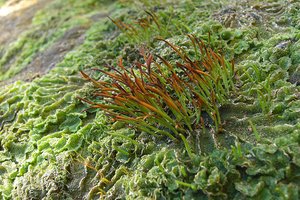
Bryophytes are represented by three phyla: liverworts, hornworts, and mosses. Each group has unique characteristics and ecological roles.
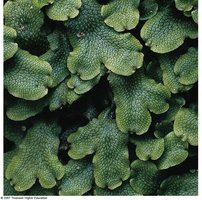
Liverworts (Hepatophyta): Flattened, lobelike thalli; no true leaves, stems, or roots.
Hornworts (Anthocerophyta): Long, horn-shaped sporophytes; symbiosis with nitrogen-fixing bacteria.
Mosses (Bryophyta): Common in moist environments; can survive desiccation.
Seedless Vascular Plant Life Cycle
Dominance of Sporophytes
In seedless vascular plants, the diploid sporophyte is the dominant stage, with gametophytes being small and short-lived.
Vascular tissue: Xylem and phloem enable tall growth and efficient transport.
Reproduction: Restricted to moist habitats for sperm motility.
Summary Table: Plant Groups and Key Features
Comparison of Major Plant Groups
Group | Vascular Tissue | Dominant Generation | Reproduction | Examples |
|---|---|---|---|---|
Bryophytes | No | Gametophyte | Spore | Liverworts, Mosses, Hornworts |
Seedless Vascular | Yes | Sporophyte | Spore | Ferns, Club Mosses |
Seed Plants | Yes | Sporophyte | Seed | Gymnosperms, Angiosperms |
Conclusion
Plant Evolution and Terrestrial Adaptation
The colonization of land by plants was enabled by a series of evolutionary adaptations, leading to the diversification of plant groups and the development of complex terrestrial ecosystems. Understanding these adaptations and life cycles is fundamental to the study of plant biology and ecology.
