 뒤로
뒤로Plasma Membrane Structure and Transport Mechanisms
스터디 가이드 - 스마트 노트
 자료에 맞춘 맞춤형 노트, 핵심 정의, 예시, 맥락을 확장해 제공합니다.
The Plasma Membrane
Functions of the Plasma Membrane
The plasma membrane is a critical structure that defines the boundaries of cells and organelles. It manages the entry and exit of substances, receives external signals, initiates cellular responses, and facilitates adhesion to neighboring cells.
Selective permeability: Allows certain molecules to pass while restricting others.
Signal reception: Contains receptor proteins for communication.
Cell adhesion: Enables cells to stick together and form tissues.
Fluid Mosaic Model
The fluid mosaic model describes the plasma membrane as a dynamic structure composed of a mosaic of phospholipids, cholesterol, proteins, and carbohydrates, giving it a fluid character. Proposed by S.J. Singer and G.L. Nicolson in 1972, this model explains the flexibility and functionality of the membrane.
Membrane Components
Phospholipids
Phospholipids are amphiphilic molecules forming the main fabric of the membrane. Each consists of two fatty acid chains (nonpolar), a glycerol molecule, and a phosphate group (polar).
Hydrophobic tails: Face inward, away from water.
Hydrophilic head: Faces outward, toward water.
Saturated fatty acids: All single C–C bonds; more rigid.
Unsaturated fatty acids: At least one double C=C bond; more fluid.
Phospholipids arrange themselves in a bilayer, with polar heads facing outward and hydrophobic tails inward.
Proteins
Proteins are the second major component of membranes, functioning as transporters, receptors, enzymes, or in binding and adhesion.
Integral proteins: Embedded within the bilayer, with hydrophobic and hydrophilic regions.
Peripheral proteins: Located on the membrane surface.
Integral membrane proteins' arrangement depends on their hydrophobic and hydrophilic regions.
Carbohydrates
Carbohydrates are found on the exterior surface of the plasma membrane, bound to proteins (glycoproteins) or lipids (glycolipids). They play roles in cell-cell recognition and attachment.
Membrane Fluidity
Membrane fluidity is essential for function and is influenced by phospholipid type, temperature, and cholesterol content.
Saturated fatty acids: Increase rigidity.
Unsaturated fatty acids: Increase fluidity.
Cholesterol: Acts as a fluidity buffer.
Membranes are asymmetric, with different proteins and carbohydrates on the inner and outer surfaces.
Membrane Transport
Selective Permeability
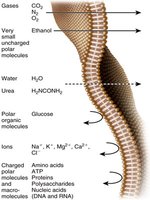
The plasma membrane allows some molecules to pass while restricting others, maintaining distinct internal and external environments.
Passive transport: No energy required.
Active transport: Requires energy (ATP).
Passive Transport
Passive transport includes diffusion and facilitated diffusion, moving substances down their concentration gradients.
Diffusion: Movement of small nonpolar molecules (e.g., O2, CO2) through the lipid bilayer.
Facilitated diffusion: Movement of ions and small polar molecules via channel or carrier proteins.
Factors affecting diffusion rates include concentration gradients, molecule mass, temperature, solvent density, solubility, surface area, distance, and pressure.
Facilitated Passive Transport
Facilitated transport uses transmembrane proteins to move substances down their concentration gradients.
Channel proteins: Hydrophilic core, may be open or gated (e.g., aquaporins for water).
Carrier proteins: Specific to a single substance, change shape to transport it (e.g., glucose transport proteins).
Osmosis and Tonicity
Osmosis is the diffusion of water across a membrane, moving from higher to lower water concentration. Tonicity describes how extracellular solutions affect cell volume via osmosis.
Hypertonic: Water leaves the cell.
Isotonic: No net water movement.
Hypotonic: Water enters the cell.
Animal cells function best in isotonic environments; plant, fungal, and bacterial cells prefer hypotonic solutions for turgor pressure.
Osmoregulation
Osmoregulation is the control of water and solute balance. Organisms use various mechanisms, such as contractile vacuoles in protists and osmoreceptors in animals, to maintain homeostasis.
Active Transport
Mechanisms of Active Transport
Active transport moves ions or molecules against their concentration or electrochemical gradients, requiring energy.
Primary active transport: Uses ATP (e.g., Na+-K+ pump).
Secondary active transport: Uses electrochemical gradients created by primary transport.
Carrier proteins (pumps) include uniporters, symporters, and antiporters.
Electrochemical Gradients
Electrochemical gradients combine concentration and electrical gradients, essential for cell function.
Bulk Transport
Endocytosis and Exocytosis
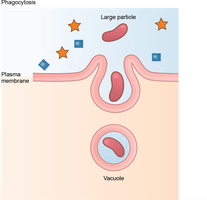
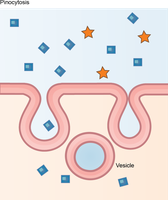
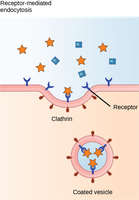
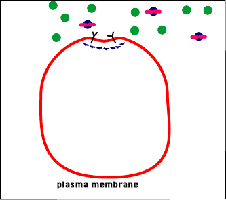
Bulk transport moves large molecules or particles via vesicles, requiring energy.
Endocytosis: Importing substances.
Exocytosis: Exporting substances.
Types of endocytosis:
Phagocytosis: Engulfing large particles.
Pinocytosis: Engulfing fluids.
Receptor-mediated endocytosis: Targeted uptake via receptors.
Diseases Associated with Membrane Transport Proteins
Cystic Fibrosis
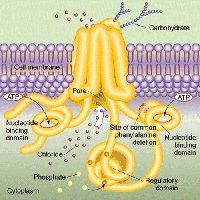
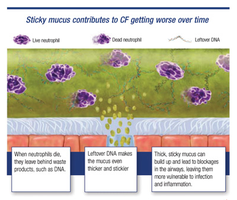
Cystic fibrosis is an inherited disease caused by defective membrane transport proteins, leading to thick, sticky mucus in the lungs and digestive tract. This mucus traps bacteria, causing infection and inflammation.
Pulmozyme Treatment
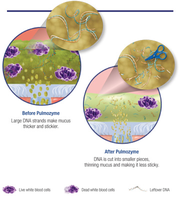
Pulmozyme is a medication that breaks down DNA in mucus, making it less sticky and easier to clear from the airways.
Summary Table: Types of Membrane Transport
Type | Energy Required | Direction | Example |
|---|---|---|---|
Passive Transport | No | Down gradient | O2 diffusion |
Facilitated Diffusion | No | Down gradient | Glucose transport |
Active Transport | Yes (ATP or gradient) | Against gradient | Na+-K+ pump |
Bulk Transport | Yes | Variable | Phagocytosis, Exocytosis |
Key Equations
Diffusion rate:
Osmosis: (Osmotic pressure equation)
Additional info: Academic context was added to clarify mechanisms, examples, and disease relevance.
