 뒤로
Population Ecology and the Distribution of Organisms: Study Guide
스터디 가이드 - 스마트 노트
 자료에 맞춘 맞춤형 노트, 핵심 정의, 예시, 맥락을 확장해 제공합니다.
Population Ecology and the Distribution of Organisms
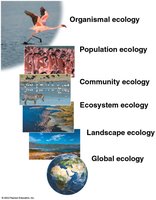
Levels of Biological Organization in Ecology
Ecology examines the interactions between organisms and their environment at multiple levels of biological organization. Understanding these levels is fundamental to ecological research and environmental management.
Organismal Ecology: Focuses on individual organisms and their physiological, behavioral, and evolutionary adaptations to the environment.
Population Ecology: Studies groups of individuals of the same species, analyzing factors that affect population size and dynamics.
Community Ecology: Investigates interactions among different species within a community.
Ecosystem Ecology: Explores energy flow and chemical cycling among biotic and abiotic components.
Landscape Ecology: Examines spatial patterns and processes across multiple ecosystems.
Global Ecology: Considers the biosphere and global processes affecting life on Earth.
Example: An ecologist studying a new frog species may ask about environmental factors limiting its distribution or how interactions with other species affect its population size.
Climate and Its Influence on Biomes
Climate, defined as the long-term prevailing weather conditions in an area, is a major determinant of biome distribution. Four physical components—temperature, precipitation, sunlight, and wind—shape the environment and influence both abiotic and biotic factors.
Abiotic Factors: Nonliving chemical and physical attributes (e.g., temperature, water, sunlight).
Biotic Factors: Living components, such as other organisms.
Global Climate Patterns: Driven by solar energy and Earth's movement, causing latitudinal variations in temperature and precipitation.
Latitudinal Variation: Sunlight is most direct at the tropics, more diffuse at higher latitudes.
Global Air Circulation: Warm, wet air rises near the equator, creating precipitation; dry air descends at 30° latitude, forming deserts.
Wind Patterns: Trade winds (east to west in tropics), westerlies (west to east in temperate zones).
Seasonality and Bodies of Water
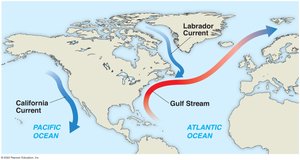
Seasonal variations in light and temperature increase with latitude due to Earth's axial tilt and orbit. Large bodies of water and ocean currents moderate climate, influencing terrestrial environments.
Seasonality: Wet and dry air belts shift with the sun's angle, causing seasonal changes.
Ocean Currents: Affect coastal climates by heating or cooling air masses.
Example: During the day, air rises over warm land, drawing cool breezes from water; at night, air rises over warmer water, drawing cooler air from land.
Effects of Vegetation and Mountains on Climate
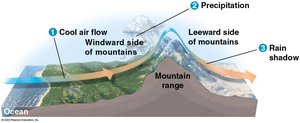
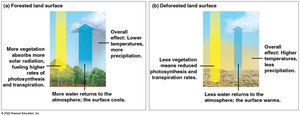
Vegetation and topography significantly influence local climate. Forests absorb more solar energy, increasing precipitation and reducing surface temperature. Mountain ranges create rain shadows, affecting precipitation patterns.
Forested vs. Deforested Land: Forests cool the surface and increase precipitation; deforestation warms the surface and reduces precipitation.
Rain Shadow Effect: Mountains block moist air, causing precipitation on the windward side and dry conditions on the leeward side.
Terrestrial Biomes
Biomes are major life zones characterized by vegetation type or physical environment. Climate determines vegetation and limits biome distribution, with latitudinal patterns reflecting climate gradients.
Climograph: Plots annual mean temperature and precipitation, showing biome distribution.
Disturbance: Events like fire or human activity alter biome distribution.
Vertical Layering: Forests have canopy, understory, ground layer, and root layer, providing diverse habitats.
Major Features: Global distribution, mean annual temperature and precipitation, dominant plants and animals.
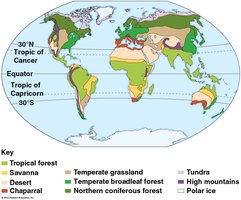
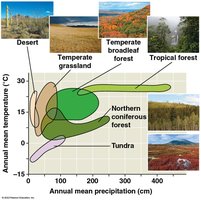
Examples of Terrestrial Biomes
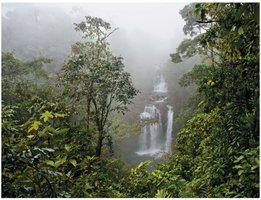
Tropical Forest: Equatorial regions, high temperature, constant or seasonal rainfall, diverse plant and animal life.
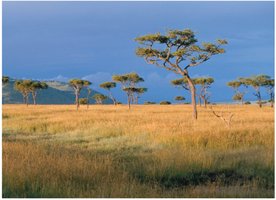
Savanna: Grass-dominated, fire-adapted plants, seasonal drought, large mammals.
Desert: Low precipitation, extreme temperature variation, plants adapted to drought.
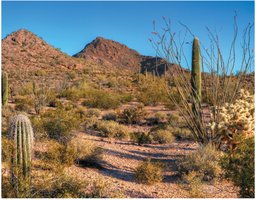
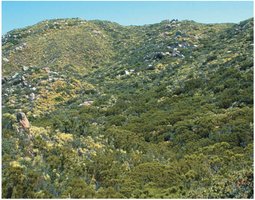
Chaparral: Shrubs and small trees, fire and drought-adapted, seasonal rainfall.
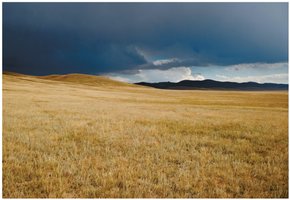
Temperate Grassland: Seasonal precipitation, drought and fire-adapted grasses.
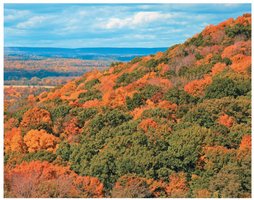
Temperate Broadleaf Forest: Deciduous trees, seasonal climate, hibernating mammals.
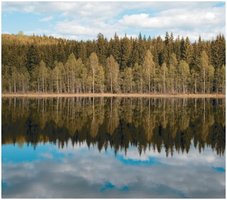
Northern Coniferous Forest (Taiga): Conifer-dominated, cold winters, migratory birds and large mammals.
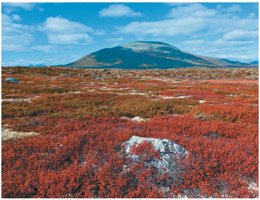
Tundra: Arctic and alpine regions, low precipitation, permafrost, herbaceous vegetation.
Aquatic Biomes
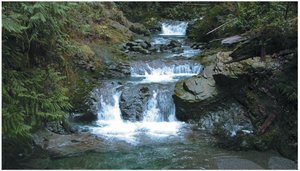
Aquatic biomes are defined by their physical and chemical environment, such as salinity and light penetration. Marine biomes have higher salt concentrations than freshwater biomes, and light intensity decreases with depth.
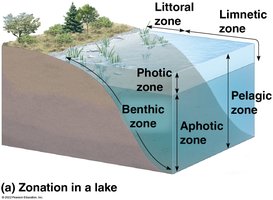
Zones by Depth: Photic zone (light for photosynthesis), aphotic zone (little light), pelagic zone (open water), benthic zone (bottom sediments).
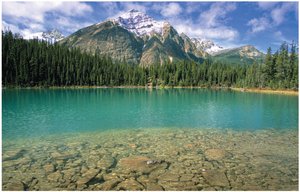
Lakes: Oligotrophic (nutrient-poor, oxygen-rich) vs. eutrophic (nutrient-rich, oxygen-poor).
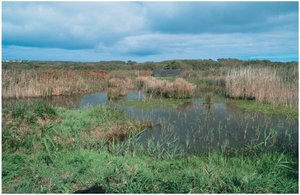
Wetlands and Estuaries: Highly productive, variable salinity, low dissolved oxygen.
Streams and Rivers: Environmental conditions change from headwaters (cold, clear) to mouth (warm, turbid).
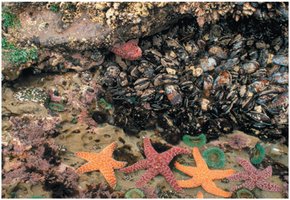
Intertidal Zones: Periodically submerged, high variation in temperature and salinity.
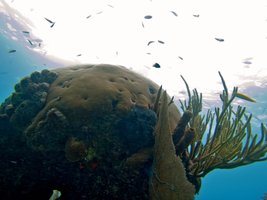
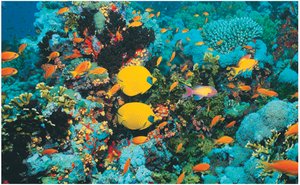
Coral Reefs: Calcium carbonate skeletons, high biodiversity, require high oxygen and solid substrate.
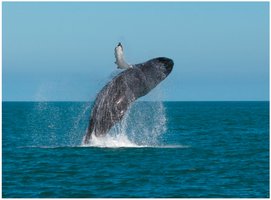
Oceanic Pelagic Zone: Covers most of Earth's surface, high oxygen, phytoplankton dominant.
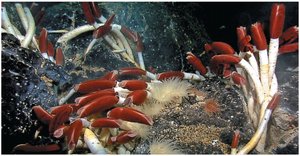
Marine Benthic Zone: Seafloor, dark, cold, high pressure, chemoautotrophic prokaryotes near hydrothermal vents.
Species Distribution and Dispersal
Species distributions are shaped by ecological factors and evolutionary history. Dispersal is the movement of individuals or gametes away from their origin, contributing to global distribution. Geographic isolation can lead to unique lineages.
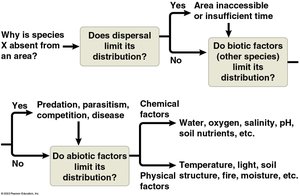
Transplants: Used to test if dispersal limits species distribution.
Biotic Factors: Interactions such as predation, herbivory, mutualism, parasitism, and competition can limit distribution.
Abiotic Factors: Physical conditions (temperature, water, oxygen, salinity, sunlight, rocks, soil) can prevent survival or reproduction.
Population Structure and Dynamics
A population is a group of individuals of the same species living in a defined area. Population ecology studies how biotic and abiotic factors influence density, distribution, and size.
Density: Number of individuals per unit area or volume.
Dispersion: Pattern of spacing—clumped, uniform, or random.
Demography: Study of births, deaths, and migration rates over time.
Life Table: Age-specific summary of survival and reproductive rates.
Survivorship Curves: Type I (high early/mid-life, steep drop later), Type II (constant rate), Type III (high early mortality, stable later).
Population Growth Models
Population size changes due to births, deaths, immigration, and emigration. Growth can be exponential or logistic, depending on resource availability.
Exponential Growth: Occurs under ideal conditions; population increases by a constant proportion. J-shaped curve.
Equation: where r is the intrinsic rate of increase.
Carrying Capacity (K): Maximum population size an environment can support.
Logistic Growth: Growth slows as population approaches K. S-shaped curve.
Equation:
Life History Strategies and Population Regulation
Life history traits affect reproduction and survival. Organisms face trade-offs between survival and reproduction, leading to different strategies.
K-selection: Traits advantageous at high densities; few, large offspring, high parental investment.
r-selection: Traits maximizing reproductive success at low densities; many, small offspring, low parental investment.
Density-Dependent Regulation: Birth and death rates change with population density, regulating growth.
Density-Independent Factors: Affect population size but do not regulate it (e.g., weather).
Population Stability, Fluctuation, and Metapopulations
Population sizes can fluctuate due to environmental factors and interactions with other species. Metapopulations are groups of populations linked by immigration and emigration, allowing recolonization of habitat patches.
Stability: Long-term studies show populations may not be stable; affected by weather and predators.
Metapopulations: Local populations occupy suitable habitat patches; extinction and recolonization occur.
Additional info: These notes provide a comprehensive overview of population ecology and the distribution of organisms, including key concepts, examples, and relevant images to reinforce understanding. Equations are provided in LaTeX format for mathematical models of population growth.
