 뒤로
Protein Sorting and Transport Inside the Cell
스터디 가이드 - 스마트 노트
 자료에 맞춘 맞춤형 노트, 핵심 정의, 예시, 맥락을 확장해 제공합니다.
Protein Sorting in Eukaryotic Cells
Signal Sequences and Protein Targeting
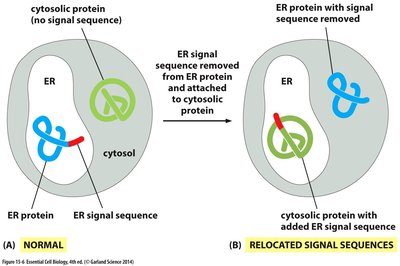
Proteins synthesized in eukaryotic cells must be directed to their correct cellular destinations. This process relies on signal sequences, which are specific amino acid motifs that act as molecular "zip codes" for protein targeting.
Signal sequences: Short stretches (15–60 amino acids) found in proteins destined for organelles or membranes.
Nuclear localization sequence (NLS): Directs proteins to the nucleus.
ER import signal sequence: Directs proteins to the endoplasmic reticulum (ER).
Signal sequences are recognized by cellular machinery, ensuring proteins reach their intended location.
Example: A protein with an NLS will be imported into the nucleus, while one with an ER signal sequence will enter the ER.
Protein Synthesis and Ribosome Location
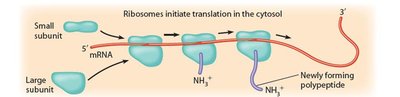
All proteins begin synthesis on free ribosomes in the cytoplasm. The fate of the ribosome—whether it remains free or attaches to the ER—depends on the protein being synthesized.
Free ribosomes: Synthesize proteins that remain in the cytosol or are imported post-translationally into organelles.
ER-bound ribosomes: Synthesize proteins destined for the endomembrane system or secretion.
Mechanisms of Protein Transport
Co-translational vs. Post-translational Transport
Proteins are sorted by two main mechanisms: co-translational and post-translational transport.
Co-translational transport: Protein is imported into the ER while it is still being synthesized. Ribosomes attach to the ER membrane.
Post-translational transport: Protein is fully synthesized in the cytosol and then transported to its destination (e.g., nucleus, mitochondria, chloroplasts).
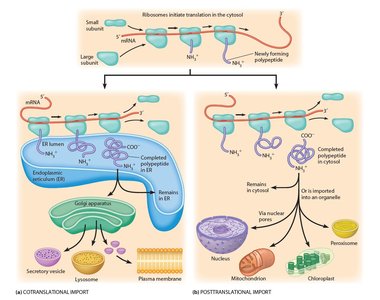
Summary Table: Co-translational vs. Post-translational Transport
Transport Type | Ribosome Location | Destination | Timing |
|---|---|---|---|
Co-translational | ER-bound | Endomembrane system, secretion | During synthesis |
Post-translational | Free in cytosol | Nucleus, mitochondria, chloroplasts | After synthesis |
Nuclear Transport
Nuclear Pore Complex and Protein Import
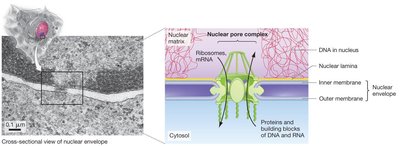
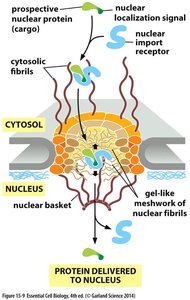
The nuclear pore complex regulates the passage of molecules between the cytoplasm and nucleus. Proteins required in the nucleus are synthesized in the cytoplasm and imported post-translationally.
Nuclear localization signal (NLS): Recognized by nuclear import receptors.
Energy-dependent process: Import requires energy, often in the form of GTP.
Other molecules: Nucleotides and mRNA also pass through nuclear pores.
Transport to Mitochondria and Chloroplasts
Post-translational Import and Chaperones
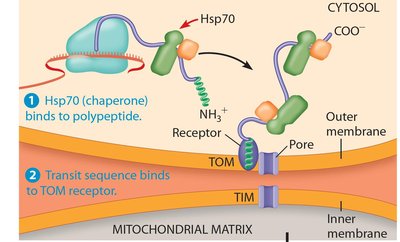
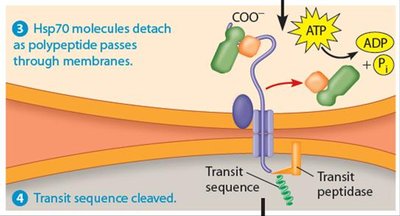
Proteins destined for mitochondria and chloroplasts are imported post-translationally. They are kept unfolded by chaperone proteins and guided by signal sequences.
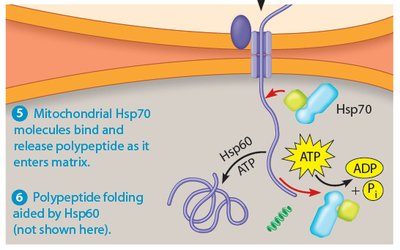
Chaperones: Prevent premature folding, allowing proteins to thread through membrane channels.
Signal sequence: Binds to receptor proteins in the organelle's outer membrane.
ATP: Provides energy for translocation.
Folding: Proteins fold after import, sometimes aided by additional chaperones.
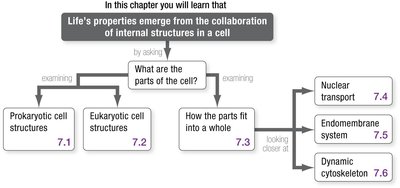
The Endomembrane System and Protein Trafficking
Pathway of Protein Transport
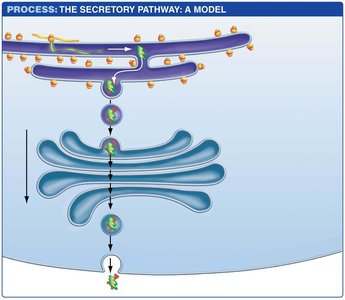
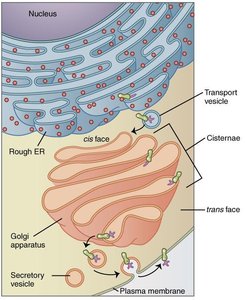
The endomembrane system includes the ER, Golgi apparatus, lysosomes, and transport vesicles. Proteins are trafficked through this system for modification, sorting, and secretion.
Entry into ER: Proteins enter the ER via co-translational transport.
Modification: Glycosylation occurs in the ER, producing glycoproteins.
Golgi apparatus: Proteins are sorted and packaged into vesicles.
Secretion: Vesicles deliver proteins to the plasma membrane or other organelles.
Signal Hypothesis and ER Import
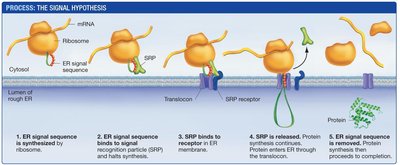
The signal hypothesis explains how proteins are directed to the ER. The signal sequence is recognized by the signal recognition particle (SRP), which pauses translation and directs the ribosome to the ER membrane.
SRP: Binds to signal sequence and ribosome.
SRP receptor: Located on ER membrane, facilitates docking.
Translocon: Channel through which protein enters ER.
Signal sequence removal: After import, the signal sequence is cleaved.
Vesicular Transport and Protein Sorting
Vesicle-Mediated Transport
Proteins and membrane components are transported between compartments via vesicles. The Golgi apparatus sorts proteins into vesicles targeted to specific destinations.
Transport vesicles: Carry soluble proteins, membrane lipids, and membrane proteins.
Sorting: Receptors in the Golgi direct vesicles to the plasma membrane, lysosomes, or other organelles.
Secretory pathways: Constitutive (continuous) and regulated (stimulus-dependent).
Lysosomal Recycling and Endocytosis
Material Recycling in Lysosomes
Lysosomes are responsible for recycling cellular material through several pathways.
Receptor-mediated endocytosis: Uptake of specific molecules via receptors.
Phagocytosis: Engulfment of large particles or cells.
Autophagy: Degradation of internal cellular components.
Summary Table: Protein Sorting Pathways
Destination | Signal Sequence | Transport Mechanism | Modification |
|---|---|---|---|
Nucleus | NLS | Post-translational | None |
ER | ER import signal | Co-translational | Glycosylation |
Mitochondria/Chloroplasts | Transit sequence | Post-translational | Folding by chaperones |
Golgi/Plasma Membrane | Sorting signals | Vesicular transport | Further modification |
Lysosome | Mannose-6-phosphate | Vesicular transport | Enzyme activation |
Key Terms and Concepts
Signal sequence: Amino acid motif directing protein localization.
Co-translational transport: Import during protein synthesis.
Post-translational transport: Import after protein synthesis.
Chaperone: Protein assisting in folding and transport.
Endomembrane system: Network of organelles for protein sorting and trafficking.
Vesicular transport: Movement of proteins and membranes via vesicles.
Lysosome: Organelle for recycling and degradation.
Additional info: Academic context was added to clarify mechanisms, definitions, and pathways for protein sorting and transport in eukaryotic cells.
