 뒤로
뒤로Protists: Diversity, Evolution, and Ecological Roles
스터디 가이드 - 스마트 노트
 자료에 맞춘 맞춤형 노트, 핵심 정의, 예시, 맥락을 확장해 제공합니다.
Protists: Diversity, Evolution, and Ecological Roles
Introduction to Protists
Protists are a diverse group of mostly unicellular eukaryotic organisms that play crucial roles in ecological systems and evolutionary history. They exhibit remarkable structural, functional, and nutritional diversity, and are classified into several major supergroups based on molecular and morphological evidence.
Protists are eukaryotes, meaning their cells contain membrane-bound organelles and a nucleus.
Most protists are unicellular, but some are colonial or multicellular.
They are found in aquatic and moist terrestrial environments.
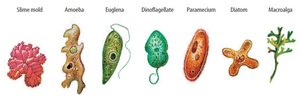
Structural and Functional Diversity in Protists
Protists display more structural and functional diversity than any other group of eukaryotes. Their nutritional modes include photoautotrophy, heterotrophy, and mixotrophy, and they reproduce both sexually and asexually.
Photoautotrophs: Contain chloroplasts and perform photosynthesis.
Heterotrophs: Absorb organic molecules or ingest food particles.
Mixotrophs: Combine photosynthesis and heterotrophic nutrition.
Reproduction can be sexual or asexual, depending on the species and environmental conditions.
Major Supergroups of Eukaryotes
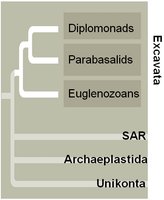
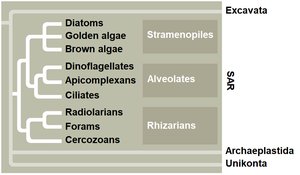
Current hypotheses divide eukaryotes into four supergroups: Excavata, SAR, Archaeplastida, and Unikonta. These groups are based on genetic and morphological data.
Endosymbiosis in Eukaryotic Evolution
Endosymbiosis has played a central role in the evolution of eukaryotic cells. Mitochondria and plastids originated from prokaryotes engulfed by ancestral eukaryotes.
Primary endosymbiosis: Mitochondria evolved from an alpha proteobacterium; plastids from a cyanobacterium.
Secondary endosymbiosis: Some protist lineages acquired plastids by engulfing other eukaryotic algae.
Excavata
Characteristics of Excavata
The clade Excavata is defined by a unique cytoskeleton and, in some members, an "excavated" feeding groove. It includes three main groups: diplomonads, parabasalids, and euglenozoans.
Diplomonads and Parabasalids
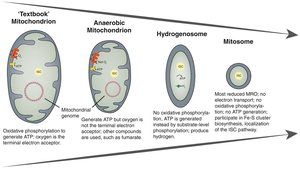
Both groups lack plastids and have modified mitochondria.
Most live in anaerobic environments.
Diplomonads: Have mitosomes (reduced mitochondria), two nuclei, multiple flagella, and are often parasitic (e.g., Giardia intestinalis).
Parabasalids: Have hydrogenosomes (produce hydrogen), include Trichomonas vaginalis, a sexually transmitted parasite.
Euglenozoans
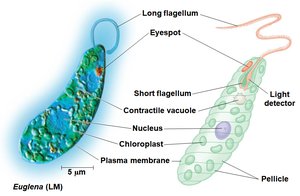
Euglenozoans are a diverse group including predatory heterotrophs, photosynthetic autotrophs, mixotrophs, and parasites. They are distinguished by a spiral or crystalline rod inside their flagella.
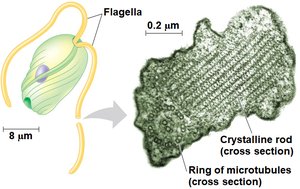
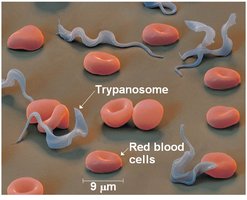
Kinetoplastids: Have a single large mitochondrion with a kinetoplast (organized DNA mass). Some are free-living, others are parasitic (e.g., Trypanosoma causes African sleeping sickness and Chagas' disease).
Euglenids: Possess one or two flagella, can be mixotrophic, and have a flexible pellicle.
SAR Supergroup
The SAR supergroup is monophyletic and includes Stramenopiles, Alveolates, and Rhizarians. It is highly diverse and defined by DNA similarities.
Stramenopiles
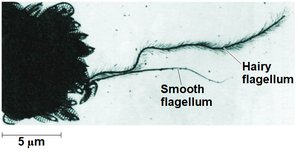
Stramenopiles include some of the most important photosynthetic organisms. Most have a "hairy" flagellum paired with a smooth flagellum.
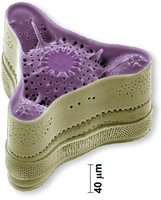
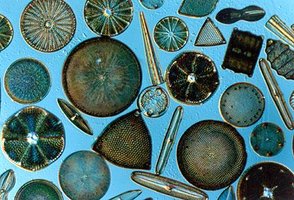
Diatoms: Unicellular algae with glass-like walls of silicon dioxide; major component of phytoplankton.
Brown algae: Largest and most complex algae, all multicellular, include "seaweeds" with structures analogous to plants (holdfast, stipe, blade).

Alveolates
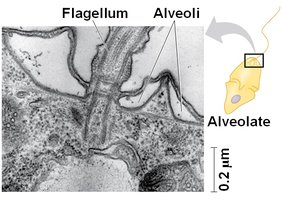
Alveolates are characterized by membrane-bound sacs (alveoli) under the plasma membrane. Major groups include dinoflagellates, apicomplexans, and ciliates.
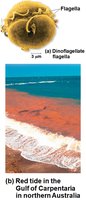
Dinoflagellates: Two flagella, cellulose plates, cause toxic "red tides" during blooms.
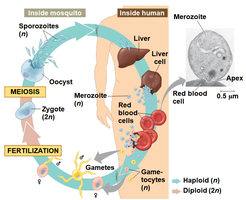
Apicomplexans: Animal parasites, complex life cycles (e.g., Plasmodium causes malaria).
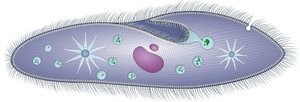
Ciliates: Use cilia for movement and feeding, have two types of nuclei, reproduce by conjugation and binary fission (e.g., Paramecium).
Rhizarians
Rhizarians are mostly amoebas with threadlike pseudopodia. Major groups include radiolarians, foraminiferans (forams), and cercozoans.
Radiolarians: Marine, have silica skeletons, pseudopodia radiate from central body.
Foraminiferans: Porous shells (tests) of calcium carbonate, pseudopodia extend through pores, some house symbiotic algae.
Archaeplastida
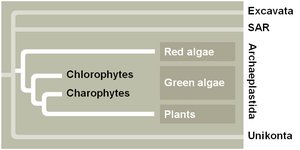
Archaeplastida includes red algae, green algae, and plants. Red and green algae are the closest relatives of land plants.
Red Algae
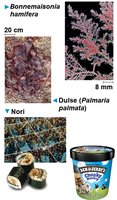
Reddish color due to phycoerythrin pigment.
Usually multicellular, abundant in tropical coastal waters.
Green Algae
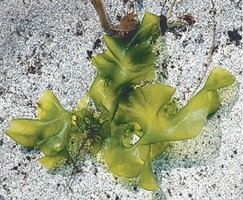
Named for green chloroplasts; closely related to plants.
Two main groups: chlorophytes and charophytes (the latter most closely related to plants).
Exhibit diverse forms: unicellular, colonial, multicellular.
Complex life cycles, often with alternation of generations.
Unikonta
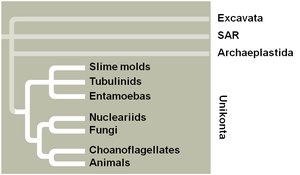
Unikonta includes animals, fungi, and some protists. It is divided into two main clades: amoebozoans and opisthokonts.
Amoebozoans
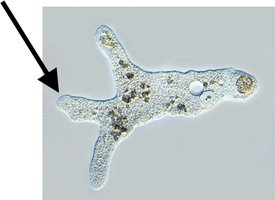
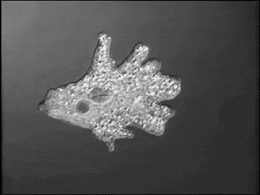
Amoebas with lobe- or tube-shaped pseudopodia.
Include slime molds, tubulinids, and entamoebas.
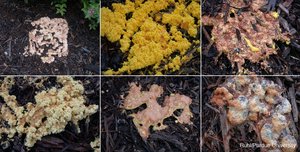
Slime Molds
Once classified as fungi due to spore-producing fruiting bodies (convergent evolution).
Two lineages: plasmodial (unicellular feeding mass) and cellular (motile stage, fruiting body).
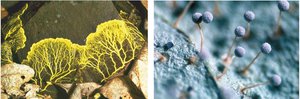
Tubulinids and Entamoebas
Tubulinids: Common unicellular protists in soil, freshwater, and marine environments; heterotrophic.
Entamoebas: Parasitic, infect vertebrates and some invertebrates (e.g., Entamoeba histolytica causes amebic dysentery).
Ecological Roles of Protists
Protists are essential in ecological communities as symbionts and producers.
Symbiotic Protists
Some benefit hosts (e.g., dinoflagellates nourish coral polyps; wood-digesting protists in termites).
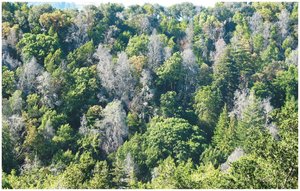
Some are parasitic (e.g., Plasmodium causes malaria; Phytophthora causes plant diseases).
Photosynthetic Producer Protists
Major producers in aquatic ecosystems, converting CO2 to organic compounds using sunlight.
Population growth is often limited by nutrient availability; blooms can occur when nutrients are added.
