 뒤로
Sensory Ecology: Mechanisms and Modalities in General Biology
스터디 가이드 - 스마트 노트
 자료에 맞춘 맞춤형 노트, 핵심 정의, 예시, 맥락을 확장해 제공합니다.
Sensory Ecology: Introduction
Definition and Scope
Sensory ecology is the scientific study of how organisms acquire, process, and use sensory information from their environment to navigate ecological challenges. It integrates physiological responses, behavioral responses, and environmental information to understand how sensory systems influence survival and reproduction. 



How Sensory Organs Collect and Convey Information
Sensory Information Processing
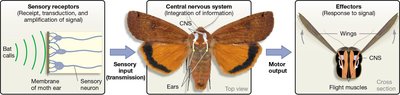
Sensory organs detect environmental stimuli and convert them into electrical signals that are transmitted to the brain for interpretation. This process involves specialized receptor cells and neural pathways.
Peripheral Nervous System (PNS): Detects external stimuli via sensory receptor cells.
Transduction: Conversion of an external stimulus (light, sound, touch, chemicals) into an internal signal (action potentials).
Transmission: Signal is sent to the Central Nervous System (CNS) for processing.
Central Nervous System (CNS): Integrates sensory information and coordinates responses.

Types of Sensory Receptors
Photoreceptors: Respond to specific wavelengths of light.
Mechanoreceptors: Detect physical distortion caused by pressure or vibration.
Chemoreceptors: Detect specific chemical molecules.
Thermoreceptors: Sense temperature changes.
Electroreceptors: Detect electric fields.
Magnetoreceptors: Detect magnetic fields.
Cellular Mechanisms: Action Potentials and Ion Pumps
Sodium-Potassium ATPase Pump
The sodium-potassium pump is essential for maintaining the electrochemical gradient across the cell membrane, which is necessary for the generation of action potentials.
Active Transport: Uses ATP to move sodium (Na+) out of the cell and potassium (K+) into the cell.
Ratio: 3 Na+ out, 2 K+ in per cycle.

Action Potentials
Action potentials are rapid changes in membrane potential that allow neurons to transmit signals.
Resting Potential: The cell maintains a negative charge inside relative to outside.
Depolarization: Sodium channels open, Na+ enters, making the inside more positive.
Repolarization: Potassium channels open, K+ exits, restoring negative charge.
Back to Resting Potential: Sodium-potassium pump restores original ion distribution.

Visual Sensory System
Photoreception: Sensing Light
Photoreceptors in the eyes detect light and enable vision. The evolution of visual perception has led to diverse eye structures and functions across species.
Compound Eyes: Found in insects; wide field of view, excellent motion detection, but poor image resolution.
Camera Eyes: Found in vertebrates; high image resolution, focused vision.
Variety of Pupil Shapes
Different animals have evolved unique pupil shapes to optimize vision for their ecological needs.
Round: Versatile vision for generalist foragers and predators.
Vertical Slit: Depth perception for ambush predators.
Horizontal: Panoramic view for prey animals.
W-shaped: Light filtering for animals in uneven light environments.
Mechanosensory System
Mechanoreception: Sensing Pressure Changes
Mechanoreceptors detect physical changes such as sound waves and vibrations.
Sound: Produced by vibrating objects, detected by hair cells in the ear.
Frequency: Number of oscillations per second, measured in hertz (Hz).
Echolocation in Bats and Acoustic Arms Race
Bats use ultrasonic echolocation to locate prey, while moths have evolved sensitive ears to detect and evade bats. Some moths produce ultrasonic clicks to jam bat sonar. 
Lateral Line System in Fish
Fish use the lateral line system to detect water movements, aiding in predator/prey detection, schooling, navigation, and social communication. 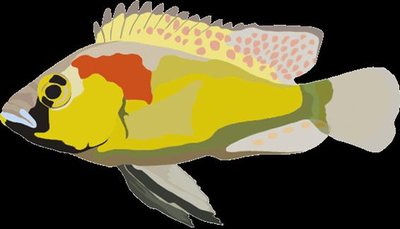
Chemosensory System
Chemoreception: Sensing Chemicals
Chemoreceptors are involved in gustation (taste) and olfaction (smell).
Gustation: Taste buds detect chemical substances in food.
Olfaction: Olfactory epithelium and vomeronasal organ detect airborne odorants and pheromones.
Vomeronasal Organ vs Main Olfactory Epithelium
Main Olfactory Epithelium (MOE): Detects airborne odorants.
Vomeronasal Organ (VNO): Detects pheromones and non-volatile social cues.
Oxytocin and Pair-Bonding
Oxytocin and its receptors play a key role in forming stable pairs in some mammals, such as prairie voles, highlighting the importance of chemical signals in social behavior.
Comparing Sensory Modalities
Effectiveness Under Different Environmental Conditions
Visual System: Most effective in well-lit environments; limited in darkness or murky water.
Mechanosensory System: Effective in detecting vibrations and sounds, especially in low visibility environments.
Chemosensory System: Crucial for detecting food, mates, and predators via chemical cues; effective in both terrestrial and aquatic environments.
Summary Table: Sensory Modalities and Their Functions
Modality | Receptor Type | Main Function | Example Organism |
|---|---|---|---|
Photoreception | Photoreceptor | Detects light | Human, insect |
Mechanoreception | Mechanoreceptor | Detects pressure/vibration | Bat, fish |
Chemoreception | Chemoreceptor | Detects chemicals | Dog, moth |
Thermoreception | Thermoreceptor | Detects temperature | Snake |
Electroreception | Electroreceptor | Detects electric fields | Shark |
Magnetoreception | Magnetoreceptor | Detects magnetic fields | Bird |
Conclusion
Sensory ecology provides a framework for understanding how organisms interact with their environment through specialized sensory systems. These systems are adapted to ecological challenges and are crucial for survival, reproduction, and communication. Additional info: Expanded explanations and context were added to ensure completeness and academic quality.
