 뒤로
The Cell Cycle and Cell Division: Structure, Regulation, and Diversity
스터디 가이드 - 스마트 노트
 자료에 맞춘 맞춤형 노트, 핵심 정의, 예시, 맥락을 확장해 제공합니다.
The Cell Cycle
Overview and Importance
The cell cycle is a series of events that cells undergo to grow and divide. It is essential for growth, development, repair, and reproduction in multicellular organisms. Most cell division results in genetically identical daughter cells through mitosis, while meiosis produces gametes for sexual reproduction.
Growth and Development: Cell division allows organisms to grow and develop from a single cell.
Repair and Healing: Damaged tissues are repaired by cell division.
Differentiation: Cells specialize for specific functions during development.
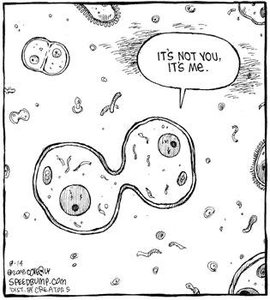
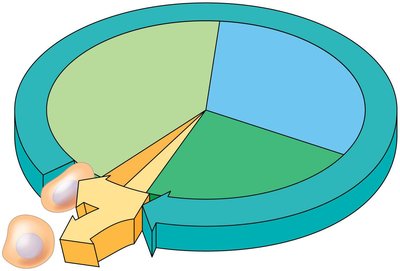
Cell Cycle Phases
The cell cycle consists of several distinct phases:
G1 Phase: Cell grows and produces proteins and organelles.
S Phase: DNA is replicated, resulting in two sister chromatids per chromosome.
G2 Phase: Cell continues to grow and prepares for division.
M Phase: Includes mitosis (division of the nucleus) and cytokinesis (division of the cytoplasm).
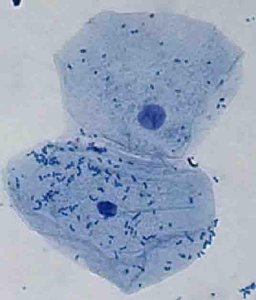
Major Cellular Structures in Division
DNA: Carries genetic information; replicated during S phase.
Nucleus: Contains chromosomes; nuclear envelope breaks down during mitosis.
Mitotic Spindle: Made of microtubules; separates chromosomes during mitosis.
Cleavage Furrow: Forms in animal cells during cytokinesis.
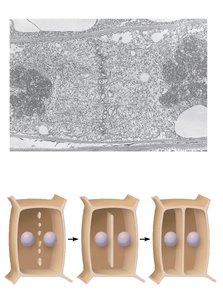
Cell Plate: Forms in plant cells during cytokinesis.
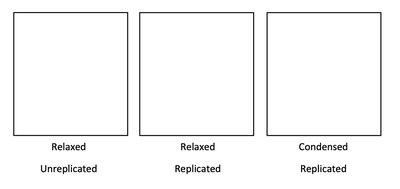
Chromosome Organization and Chromatin States
Genome, Chromosomes, and Chromatin
Genome: The complete set of genetic material in a cell.
Chromosomes: Structures that carry DNA; eukaryotes have multiple linear chromosomes, prokaryotes have a single circular chromosome.
Chromatin: DNA wrapped around histone proteins; can be relaxed or condensed.
Chromatin States During Cell Cycle
Chromatin changes its state throughout the cell cycle:
Relaxed, Unreplicated: G1 phase
Relaxed, Replicated: S and G2 phases
Condensed, Replicated: M phase (mitosis)
Cell Division: Mitosis and Cytokinesis
Mitosis: Steps and Key Events
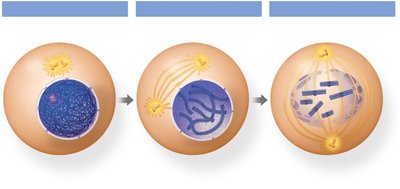
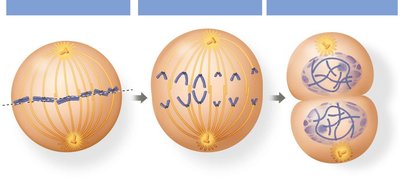
Mitosis is the process by which a cell divides its nucleus and distributes duplicated chromosomes to two daughter nuclei.
Prophase: Chromatin condenses, spindle forms, nuclear envelope breaks down.
Metaphase: Chromosomes align at the metaphase plate.
Anaphase: Sister chromatids separate and move to opposite poles.
Telophase: Nuclear envelope reforms, chromosomes relax.
Cytokinesis: Animal vs. Plant Cells
Animal Cells: Cytoplasm divides via a cleavage furrow.
Plant Cells: Cytoplasm divides via formation of a cell plate.
Bacterial Cell Division: Binary Fission
Binary Fission Process
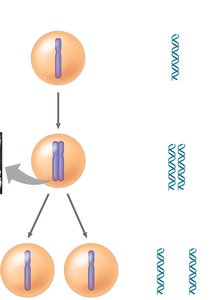
Bacteria divide by binary fission, a simpler process than mitosis.
Chromosome Replication: DNA is copied.
Segregation: Each copy moves to opposite ends of the cell.
Division: Cell splits into two genetically identical daughter cells.
Regulation of the Cell Cycle
Cell Cycle Checkpoints
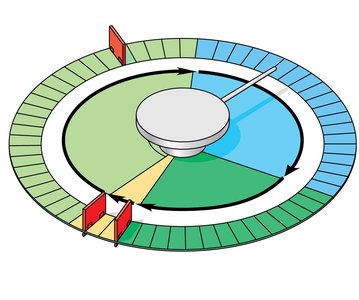
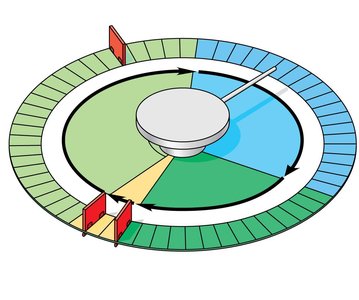
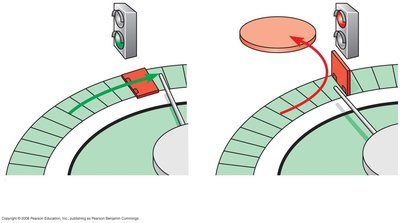
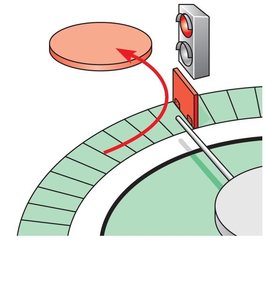
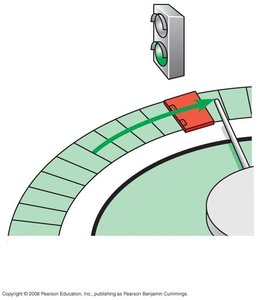
The cell cycle is regulated by checkpoints that ensure proper division and prevent errors.
G1 Checkpoint: Assesses cell size, nutrients, DNA integrity.
G2 Checkpoint: Ensures DNA is fully replicated and undamaged.
M Checkpoint: Ensures all chromosomes are attached to the spindle before anaphase.
Consequences of Bypassing Checkpoints
Genomic Instability: Can lead to cancer or cell death.
Uncontrolled Division: May result in tumor formation.
Cell Cycle Arrest and G0 Phase
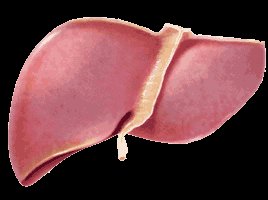
Some cells exit the cell cycle and enter a quiescent state called G0.
Permanent Arrest: Neurons and muscle cells often remain in G0.
Temporary Arrest: Liver cells and fibroblasts can reenter the cycle if needed.
Cell Cycle Dynamics and DNA Content
DNA Content Changes During Cell Cycle
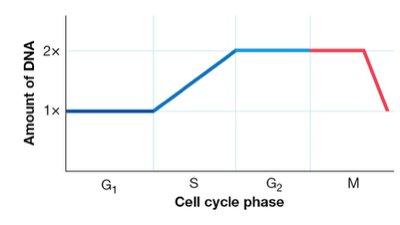
The amount of DNA in a cell changes as it progresses through the cell cycle.
G1 Phase: 1x DNA content
S Phase: DNA is replicated, increasing to 2x
G2 Phase: 2x DNA content
M Phase: DNA content returns to 1x after division
Comparing Cell Division in Animals, Plants, and Bacteria
Key Differences
Feature | Animal Cells | Plant Cells | Bacteria |
|---|---|---|---|
Division Process | Mitosis & Cytokinesis | Mitosis & Cell Plate Formation | Binary Fission |
Structure Involved | Cleavage Furrow | Cell Plate | Septum |
Chromosome Type | Linear | Linear | Circular |
Nucleus | Present | Present | Absent |
Cell Cycle Control and Cancer
External Signals and Cancer
External Signals: Growth factors and environmental cues influence cell division.
Cancer: Results from loss of cell cycle control, leading to uncontrolled division.
HeLa Cells: Widely used in research to study cell cycle regulation and cancer.
Summary Table: Cell Cycle Phases and Events
Phase | DNA State | Nuclear Envelope | Mitotic Spindle |
|---|---|---|---|
G1 | Relaxed, Unreplicated | Present | Absent |
S | Relaxed, Replicated | Present | Absent |
G2 | Relaxed, Replicated | Present | Absent |
M (Prophase) | Condensed, Replicated | Breaking Down | Forming |
M (Metaphase) | Condensed, Replicated | Absent | Present |
M (Anaphase) | Condensed, Replicated | Absent | Present |
M (Telophase) | Relaxed, Unreplicated | Reforming | Disassembling |
Key Terms and Concepts
Chromatid: One of two identical halves of a replicated chromosome.
Centromere: Region where sister chromatids are joined.
Mitotic Spindle: Structure that separates chromosomes during mitosis.
Cleavage Furrow: Indentation that begins cytokinesis in animal cells.
Cell Plate: Structure that forms during cytokinesis in plant cells.
Binary Fission: Simple division process in bacteria.
Checkpoints: Regulatory points in the cell cycle.
G0 Phase: Non-dividing state.
Equations and Formulas
DNA Replication:
Cell Division:
Summary
The cell cycle is a fundamental process in biology, ensuring proper growth, development, and maintenance of organisms. Its regulation is crucial for preventing diseases such as cancer, and understanding its phases and mechanisms is essential for all biology students. Additional info: Academic context was added to clarify cell cycle regulation, checkpoint consequences, and the comparison of division mechanisms across cell types.
