 뒤로
The Cell Cycle: Mechanisms, Regulation, and Implications for Cancer
스터디 가이드 - 스마트 노트
 자료에 맞춘 맞춤형 노트, 핵심 정의, 예시, 맥락을 확장해 제공합니다.
Chapter 12: The Cell Cycle
Overview and Roadmap
The cell cycle is a fundamental process in biology, governing how cells grow, replicate their DNA, and divide. Understanding the cell cycle is essential for grasping how organisms develop, maintain tissues, and how errors in this process can lead to diseases such as cancer.
The cell cycle culminates in cell division, which is essential for growth, development, and tissue repair.
Key topics include the four phases of the cell cycle, mechanisms of cell division (mitosis and cytokinesis), regulation of the cell cycle, and the consequences of loss of control (cancer).
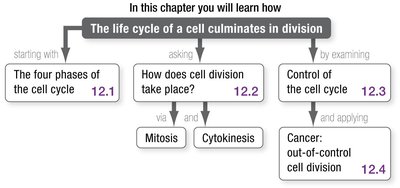
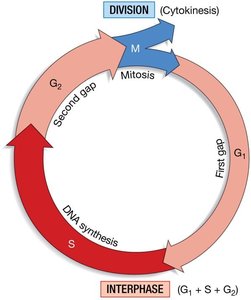
The Four Phases of the Cell Cycle
Phases and Their Functions
The cell cycle consists of a series of phases that prepare a cell for division and ensure accurate transmission of genetic material.
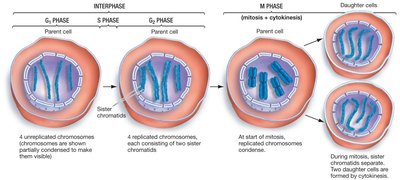
Interphase is composed of three subphases: G1 (First Gap), S (DNA Synthesis), and G2 (Second Gap).
M Phase (Mitotic Phase) includes mitosis (division of the nucleus) and cytokinesis (division of the cytoplasm).
Cells spend most of their time in interphase, where they grow, replicate DNA, and prepare for division.
Cell Division: Mitosis and Meiosis
Types of Cell Division
Cell division occurs via two main processes: mitosis and meiosis. Each serves a distinct biological purpose.
Mitosis produces genetically identical daughter cells and is used for growth, repair, and asexual reproduction.
Meiosis produces gametes (sperm and egg) with half the chromosome number, enabling sexual reproduction and genetic diversity.
Fertilization restores the diploid chromosome number in sexually reproducing organisms.
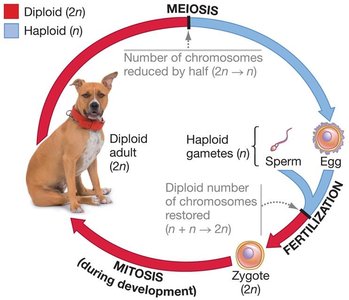
Meiosis: Halving Genetic Material
Meiosis consists of two sequential divisions (Meiosis I and II) that reduce chromosome number and generate genetic diversity.
Meiosis I separates homologous chromosomes.
Meiosis II separates sister chromatids.
Result: Four haploid daughter cells, each with one chromosome from each homologous pair.
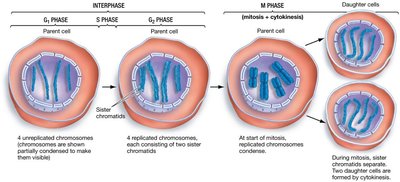
Mitosis: Cellular Replication
Mitosis ensures that each daughter cell receives an identical set of chromosomes.
During interphase, chromosomes are replicated.
In mitosis, sister chromatids are separated and distributed to daughter cells.
Cytokinesis follows, dividing the cytoplasm and completing cell division.
Chromosome Structure and Replication
What Is a Chromosome?
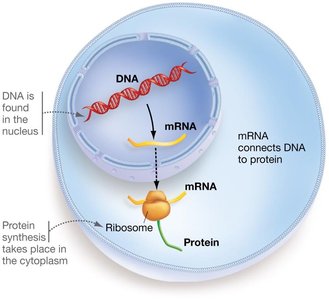
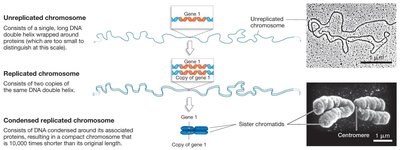
A chromosome is a single, long double helix of DNA wrapped around proteins called histones. Chromosomes carry genes, which are regions of DNA coding for specific RNAs and proteins.
Chromatin is the DNA-histone complex found in the nucleus.
During interphase, chromatin is relaxed; during mitosis, it condenses into visible chromosomes.
Each replicated chromosome consists of two sister chromatids joined at the centromere.
Cell Cycle Regulation
Control Mechanisms
The cell cycle is tightly regulated to ensure proper division and prevent errors. Regulation occurs at several checkpoints, with key molecules controlling progression.
M-phase-promoting factor (MPF) is a complex of cyclin and cyclin-dependent kinase (Cdk) that triggers entry into mitosis.
MPF activity is regulated by cyclin concentration and phosphorylation.
Negative feedback and protein destruction are important for turning off MPF and controlling cell cycle progression.
Cell-Cycle Checkpoints
Checkpoints are critical control points where the cell assesses whether to proceed with division.
G1 Checkpoint: Assesses cell size, nutrients, social signals, and DNA damage. The tumor suppressor protein p53 can halt the cycle or trigger apoptosis if DNA is damaged.
G2 Checkpoint: Ensures DNA replication is complete and undamaged before mitosis.
M-Phase Checkpoints: Ensure proper chromosome attachment and separation during mitosis.
Cancer: Loss of Cell-Cycle Control
Mechanisms and Consequences
Cancer arises when cell-cycle checkpoints fail, leading to uncontrolled cell division. Defects in regulatory proteins, such as oncogenes and tumor suppressors, are common in cancerous cells.
Malignant tumors are invasive and can spread (metastasize) to other parts of the body.
Benign tumors are noncancerous and noninvasive.
Loss of social control and overproduction of cyclins or defective Rb protein can drive cells to divide uncontrollably.
Summary Table: Cell Cycle Phases and Key Events
Phase | Main Event | Checkpoint |
|---|---|---|
G1 | Cell growth, preparation for DNA synthesis | Cell size, nutrients, DNA damage |
S | DNA synthesis (replication) | None |
G2 | Preparation for mitosis | DNA replication completion, DNA damage |
M | Mitosis and cytokinesis | Chromosome attachment, separation |
Key Terms and Concepts
Chromosome: DNA molecule with associated proteins, carrying genetic information.
Chromatin: DNA-protein complex in the nucleus.
Sister Chromatids: Identical copies of a chromosome joined at the centromere.
Centromere: Region where sister chromatids are joined.
Mitotic Spindle: Structure of microtubules that separates chromosomes during mitosis.
MPF: M-phase-promoting factor, triggers mitosis.
Oncogene: Mutated gene that promotes uncontrolled cell growth.
Tumor Suppressor: Gene that prevents uncontrolled cell division.
Equations and Formulas
Cell cycle regulation often involves phosphorylation reactions:
Phosphorylation:
Chromosome Number in Meiosis: (diploid to haploid)
Conclusion
The cell cycle is a highly regulated process essential for life. Understanding its phases, control mechanisms, and implications for diseases like cancer is fundamental for students of biology.
