 뒤로
The Chemical Context of Life: Elements, Atoms, and Bonds
스터디 가이드 - 스마트 노트
 자료에 맞춘 맞춤형 노트, 핵심 정의, 예시, 맥락을 확장해 제공합니다.
Chapter 2: The Chemical Context of Life
Concept 2.1: Elements and Compounds
Understanding the chemical basis of life begins with the study of elements and compounds. Elements are pure substances that cannot be broken down by chemical reactions, while compounds are substances formed from two or more elements in fixed ratios, possessing unique emergent properties.
Element: A substance that cannot be broken down into other substances by chemical reactions.
Compound: A substance consisting of two or more elements combined in a fixed ratio.
Emergent Properties: Compounds have characteristics different from their constituent elements.
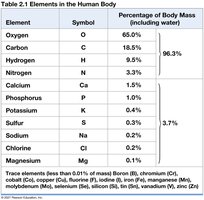
Essential Elements: Carbon (C), hydrogen (H), oxygen (O), and nitrogen (N) make up 96% of living matter.
Trace Elements: Required in minute quantities; example: iron (Fe).
Toxic Elements: Some naturally occurring elements, such as arsenic, are toxic to most organisms.
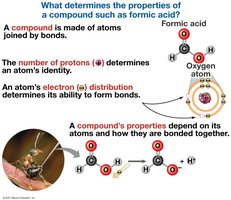
Table: Elements in the Human Body
Element | Symbol | Percentage of Body Mass (including water) |
|---|---|---|
Oxygen | O | 65.0% |
Carbon | C | 18.5% |
Hydrogen | H | 9.5% |
Nitrogen | N | 3.3% |
Calcium | Ca | 1.5% |
Phosphorus | P | 1.0% |
Potassium | K | 0.4% |
Sulfur | S | 0.3% |
Sodium | Na | 0.2% |
Chlorine | Cl | 0.2% |
Magnesium | Mg | 0.1% |
Concept 2.2: Atoms and Molecules
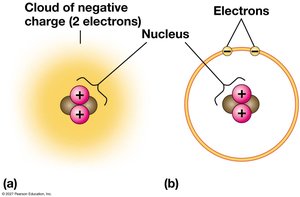
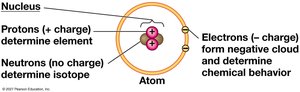
Atoms are the fundamental units of matter, composed of subatomic particles: protons, neutrons, and electrons. The arrangement and number of these particles determine the properties of each element.
Atom: The smallest unit of matter retaining the properties of an element.
Subatomic Particles:
Protons: Positive charge, determine element identity.
Neutrons: No charge, determine isotope.
Electrons: Negative charge, determine chemical behavior.
Atomic Number: Number of protons in the nucleus.
Mass Number: Sum of protons and neutrons.
Isotopes: Atoms of the same element with different numbers of neutrons.
Radioactive Isotopes: Used in biological applications such as medical imaging.
Concept 2.3: Electron Distribution and Chemical Properties
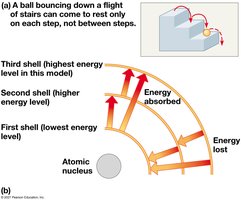
The distribution of electrons in an atom's shells determines its chemical properties and reactivity. Electrons possess potential energy based on their distance from the nucleus, and their arrangement in shells influences bonding behavior.
Energy: Capacity to cause change.
Potential Energy: Energy due to position or structure.
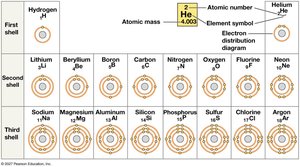
Electron Shells: Electrons occupy shells with distinct energy levels.
Valence Electrons: Electrons in the outermost shell, crucial for chemical bonding.
Chemical Inertness: Elements with full valence shells are unreactive.
Concept 2.4: Chemical Bonds and Interactions
Atoms with incomplete valence shells form chemical bonds to achieve stability. The main types of bonds are covalent, ionic, and weak interactions such as hydrogen bonds and van der Waals forces.
Covalent Bonds
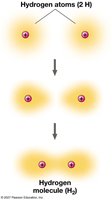
Covalent Bond: Sharing of valence electrons between atoms.
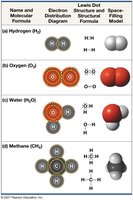
Single Bond: Sharing one pair of electrons.
Double Bond: Sharing two pairs of electrons.
Structural Formula: Representation of bonds (e.g., H–H, O=O).
Molecular Formula: Abbreviated notation (e.g., H2).
Valence: Bonding capacity of an atom.
Electronegativity: Atom's ability to attract electrons in a bond.

Bond Polarity
Nonpolar Covalent Bond: Electrons shared equally.
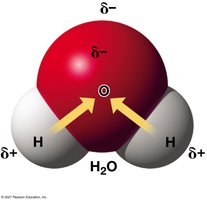
Polar Covalent Bond: Electrons shared unequally, resulting in partial charges.
Ionic Bonds
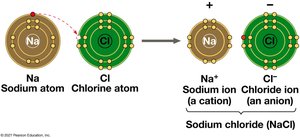
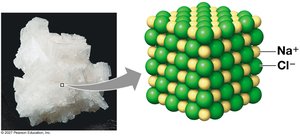
Ionic Bond: Attraction between oppositely charged ions (cation and anion).
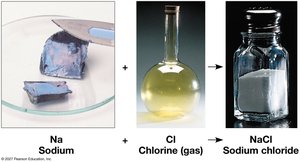
Ionic Compounds: Also called salts; stable when dry, dissociate in water.
Weak Chemical Interactions
Hydrogen Bonds: Form when a hydrogen atom covalently bonded to one electronegative atom is attracted to another electronegative atom (usually O or N).
Van der Waals Interactions: Weak attractions between molecules or parts of molecules that result from transient local partial charges.
Biological Importance: Weak bonds help maintain the functional form of large biological molecules.
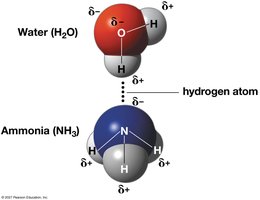
Concept 2.4: Chemical Reactions and Equilibrium
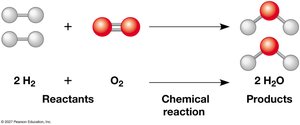
Chemical reactions involve the making and breaking of bonds, transforming reactants into products. All reactions are reversible, and equilibrium is reached when forward and reverse reactions occur at equal rates.
Reactants: Starting molecules in a reaction.
Products: Resulting molecules after the reaction.
Chemical Equilibrium: State where reactant and product concentrations remain constant.
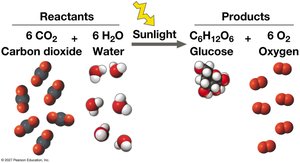
Example: Photosynthesis
Photosynthesis: Sunlight powers the conversion of carbon dioxide and water to glucose and oxygen.
Equation:
Summary Table: Types of Chemical Bonds
Bond Type | Definition | Example |
|---|---|---|
Covalent | Sharing of electrons | H2, O2, H2O |
Ionic | Transfer of electrons | NaCl |
Hydrogen | Attraction between H and electronegative atom | H2O, NH3 |
Van der Waals | Transient local partial charges | Biological macromolecules |
Additional info: The notes expand on brief points from the original slides, providing definitions, examples, and context for each concept. All images included are directly relevant to the adjacent explanations, reinforcing key ideas in atomic structure, bonding, and chemical reactions.
