 뒤로
The Chromosomal Basis of Inheritance: Study Notes
스터디 가이드 - 스마트 노트
 자료에 맞춘 맞춤형 노트, 핵심 정의, 예시, 맥락을 확장해 제공합니다.
The Chromosomal Basis of Inheritance
Chromosome Theory of Inheritance
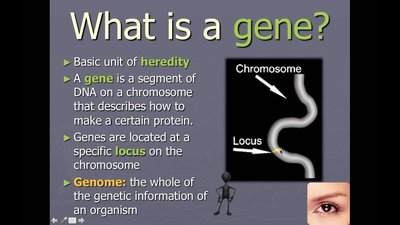
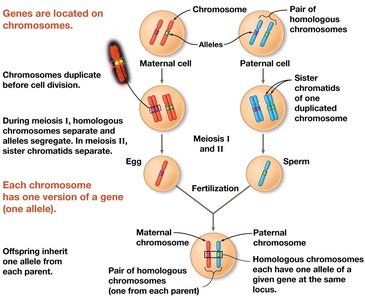
The chromosome theory of inheritance links Mendelian genetics to the physical behavior of chromosomes during meiosis. Mendelian genes have specific loci (positions) on chromosomes, and chromosomes undergo segregation and independent assortment. The behavior of chromosomes during meiosis accounts for Mendel’s laws of segregation and independent assortment.
Gene: A segment of DNA located at a specific locus on a chromosome that codes for a protein.
Chromosome: A structure composed of DNA and proteins that carries genetic information.
Segregation: Each parent passes one allele for each gene to offspring.
Independent Assortment: Genes on different chromosomes are distributed independently during gamete formation.
Genome: The complete set of genetic material in an organism.
Historical Evidence: Thomas Hunt Morgan’s Work
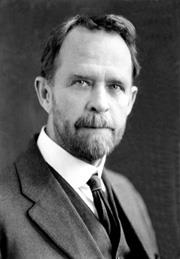
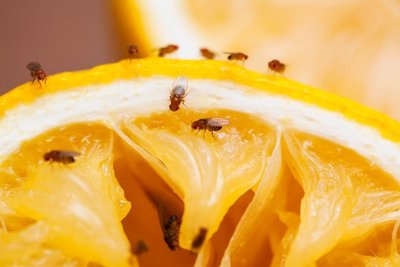
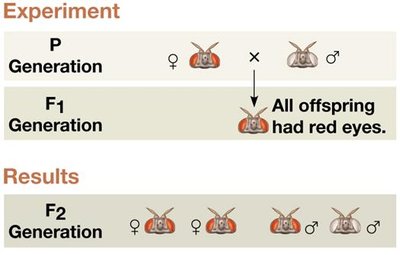
The first solid evidence associating a specific gene with a specific chromosome came from Thomas Hunt Morgan’s experiments with fruit flies (Drosophila melanogaster).
Model Organism: Morgan chose fruit flies because they produce many offspring, have short generation times, and possess only four pairs of chromosomes.
Wild-type phenotype: The most common phenotype in a population (e.g., red eyes in fruit flies).
Mutant phenotype: Traits that differ from the wild-type (e.g., white eyes in fruit flies).
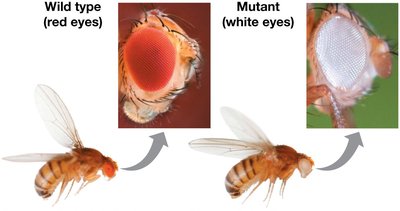
Experimental Evidence: Eye Color Inheritance in Fruit Flies
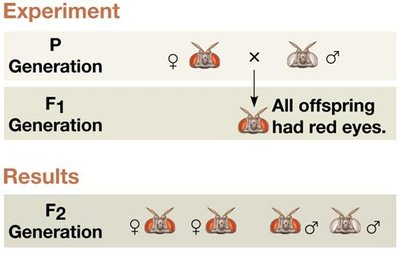
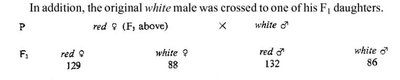
Morgan’s experiments demonstrated that the gene for eye color in fruit flies is located on the X chromosome. Crosses between wild-type females and mutant males showed that red eyes are dominant over white eyes.
Dominant Trait: Red eyes.
Recessive Trait: White eyes.
Hemizygous: Males have only one X chromosome, so a single recessive allele will express the trait.
Chromosomal Basis of Mendel’s Laws
The physical separation of chromosomes during meiosis explains Mendel’s laws. Homologous chromosomes separate during meiosis I, and sister chromatids separate during meiosis II, ensuring each gamete receives one allele for each gene.
Law of Segregation: The two alleles for each gene separate during gamete formation.
Law of Independent Assortment: Alleles of genes on nonhomologous chromosomes assort independently.
Sex Determination and Sex Chromosomes
Sex Determination Systems
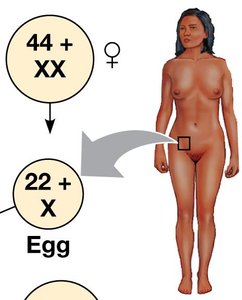
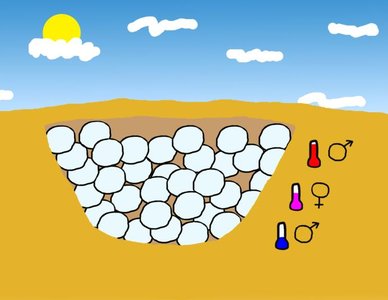
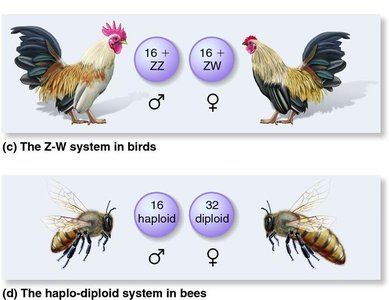
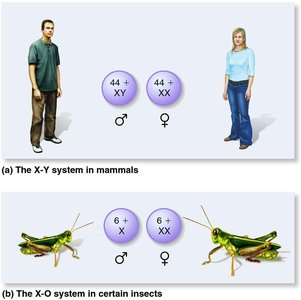
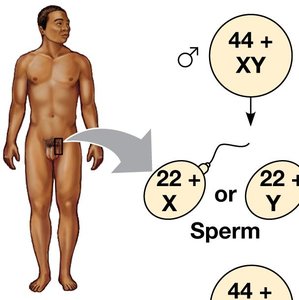
Different organisms use various systems to determine sex, including XY, XO, ZW, and haplo-diploid systems. In mammals, the XY system is used, where males are XY and females are XX.
XY System: Males (XY), Females (XX) in mammals.
XO System: Males (XO), Females (XX) in certain insects.
ZW System: Males (ZZ), Females (ZW) in birds.
Haplo-diploid System: Males (haploid), Females (diploid) in bees.
Sex-Linked Genes
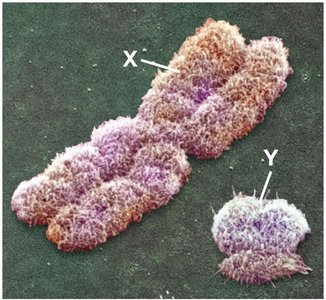
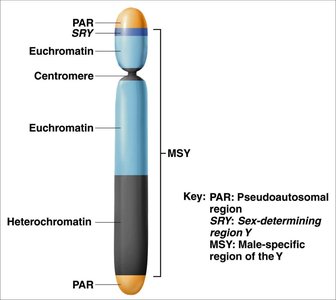
Genes located on sex chromosomes are called sex-linked genes. Most sex-linked genes are found on the X chromosome (X-linked), while few are on the Y chromosome (Y-linked).
X-linked genes: Genes found on the X chromosome.
Y-linked genes: Genes found on the Y chromosome; fewer in number.
Hemizygous: Males have only one X chromosome, so recessive X-linked traits are more likely to be expressed in males.
Sex-Linked Disorders
Sex-linked disorders are often caused by mutations in genes on the X chromosome. Examples include color blindness, hemophilia, and Duchenne muscular dystrophy.
Color blindness: Inability to distinguish certain colors, more common in males.
Hemophilia: Blood does not clot properly due to mutations in clotting factor genes.
Duchenne muscular dystrophy: Progressive muscle degeneration.
Disorder | Causes |
|---|---|
Red-Green color blindness | Inability to distinguish colors |
Hemophilia A | Mutation in Factor VIII, blood does not clot |
Hemophilia B | Mutation in Factor IX, blood does not clot |
Duchenne muscular dystrophy | Muscle degeneration, loss of control |
X-linked agammaglobulinemia (XLA) | Do not generate mature B cells, develop serious infections |
X Inactivation in Female Mammals
In female mammals, one of the two X chromosomes in each cell is randomly inactivated during embryonic development, forming a Barr body. This prevents double dosing of gene products and results in mosaic expression of X-linked genes.
Barr body: Inactive X chromosome in female cells.
Mosaicism: Heterozygous females express different alleles in different cells.
Xist gene: Encodes RNA that initiates X inactivation.
Linked Genes and Genetic Recombination
Linked Genes
Genes located close together on the same chromosome tend to be inherited together and are called linked genes. The probability of a crossover event between linked alleles is proportional to the distance between the genes.
Linked genes: Genes located near each other on the same chromosome.
Crossing over: Exchange of genetic material between homologous chromosomes during meiosis.
Recombination frequency: Used to map the relative positions of genes.
Alterations of Chromosome Number and Structure
Aneuploidy and Polyploidy
Abnormal chromosome number can result from nondisjunction during meiosis. Aneuploidy is the presence of an abnormal number of chromosomes, while polyploidy is the presence of more than two complete sets of chromosomes.
Nondisjunction: Failure of homologous chromosomes or sister chromatids to separate properly.
Aneuploidy: Abnormal number of a particular chromosome (e.g., trisomy, monosomy).
Polyploidy: More than two complete sets of chromosomes (common in plants).
Human Chromosomal Disorders
Examples of chromosomal disorders include Down syndrome (trisomy 21), Klinefelter syndrome (XXY), Turner syndrome (XO), and others. These conditions result from abnormal chromosome numbers.
Chromosomes | Name of Condition | Incidence | Symptoms |
|---|---|---|---|
XXX | Triplo-X | 1 in 1500 females | Tall stature, menstrual irregularities |
XXY | Klinefelter syndrome | 1 in 750 males | Sexual underdevelopment, long limbs |
XYY | Jacobs syndrome | 1 in 1000 males | Tall stature, acne, speech problems |
XO | Turner syndrome | 1 in 2000 females | Short stature, infertility |
Alterations of Chromosome Structure
Breakage of a chromosome can lead to four types of structural changes: deletion, duplication, inversion, and translocation. These changes can have significant effects on phenotype and may cause genetic disorders.
Deletion: Removes a chromosomal segment.
Duplication: Repeats a segment.
Inversion: Reverses the orientation of a segment within a chromosome.
Translocation: Moves a segment from one chromosome to another.
A diploid embryo homozygous for a large deletion is typically missing essential genes and is usually lethal. Duplications and translocations also tend to be harmful, while inversions may alter gene expression and cause reproductive problems.
