 뒤로
뒤로The Colonization of Land by Plants and Fungi
스터디 가이드 - 스마트 노트
 자료에 맞춘 맞춤형 노트, 핵심 정의, 예시, 맥락을 확장해 제공합니다.
The Colonization of Land
Major Developments in the Colonization of Land
The colonization of land by plants and fungi was a pivotal event in Earth's history, transforming terrestrial environments and enabling the evolution of complex ecosystems. This process involved a series of evolutionary innovations that allowed life to thrive outside aquatic habitats.
First Prokaryotes: Earth’s land surface was lifeless until prokaryotes appeared about 3.2 billion years ago (bya).
Early Eukaryotes: Thin films of cyanobacteria and protists formed by 2 bya.
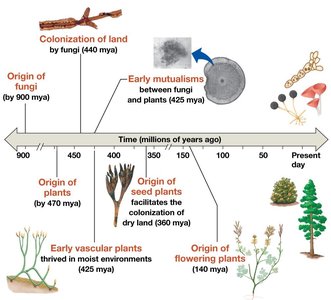
Colonization by Plants, Fungi, and Animals: These groups colonized land within the last 500 million years, with tall plants and forests appearing by 385 million years ago (mya).
Mutualism: Fossil evidence suggests that plants colonized land in partnership with fungi, which helped break down organic material and release nutrients.
Evolutionary Relationships and Origins
Phylogenetic Relationships
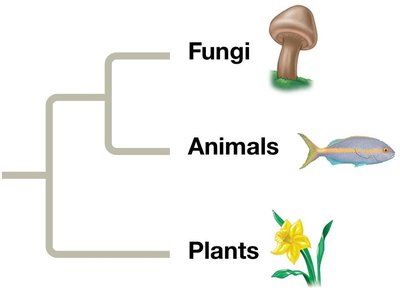
Despite their close ecological interactions, plants and fungi are not closely related. Molecular evidence shows that the plant and fungal lineages diverged over 1.2 billion years ago, while fungi and animals share a more recent common ancestor.
Origin of Land Plants
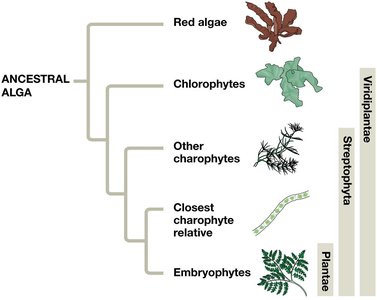
Green algae called charophytes are the closest relatives of land plants. Several lines of evidence support this relationship:
Both are multicellular, eukaryotic, and photosynthetic autotrophs.
Cell walls made of cellulose and chloroplasts with chlorophylls a and b.
Cellulose-synthesizing proteins form rings in the cell membrane.
Similar structure of flagellated sperm.
Similarities in nuclear, chloroplast, and mitochondrial DNA.
Adaptations for Terrestrial Life
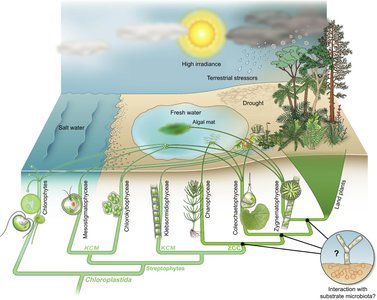
Algae with traits for surviving occasional drying were best suited for colonizing land. In charophytes, a polymer called sporopollenin protects zygotes from desiccation. Plant spores also have tough sporopollenin walls, which was a key adaptation for terrestrial life.
Challenges and Opportunities of Terrestrial Life
Environmental Factors
The terrestrial environment offered unfiltered sunlight, plentiful CO2, and nutrient-rich soil, but also posed challenges such as water scarcity and lack of structural support against gravity.
Derived Traits of Land Plants
Key Innovations
Land plants, also known as embryophytes, are defined by several derived traits not found in their algal ancestors:
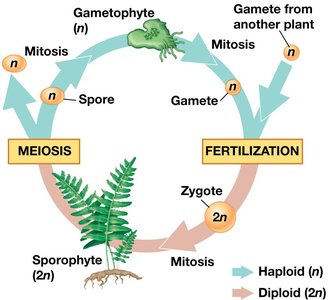
Alternation of Generations: Plant life cycles alternate between multicellular haploid (gametophyte) and diploid (sporophyte) generations.
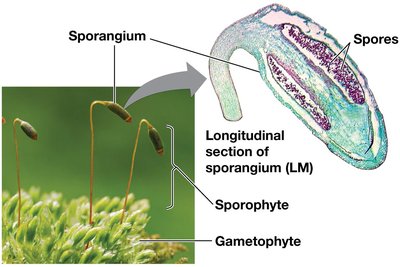
Walled Spores Produced in Sporangia: Sporophytes have multicellular organs called sporangia that produce spores with tough walls containing sporopollenin.
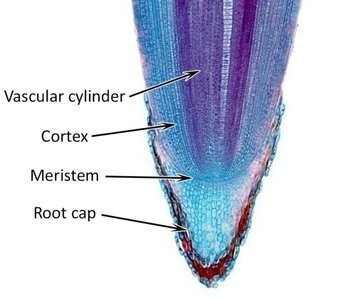
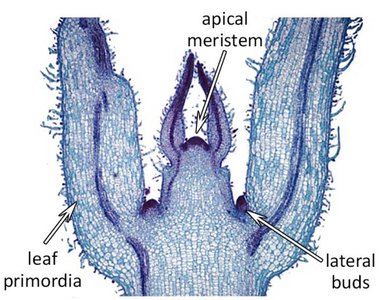
Apical Meristems: Localized regions of cell division at the tips of roots and shoots enable growth throughout the plant’s life.
Additional Adaptations
Cuticle: A waxy coating that prevents water loss and protects against microbial attack.
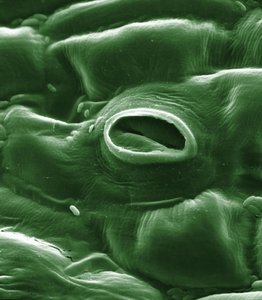
Stomata: Pores that enable gas exchange and can close to reduce water loss.
The Role of Fungi in Colonization
Fungal Adaptations and Symbiosis
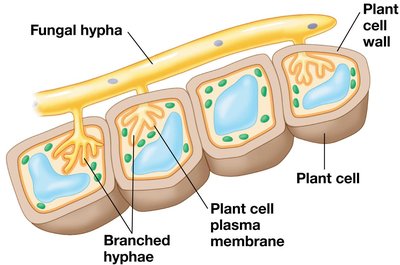
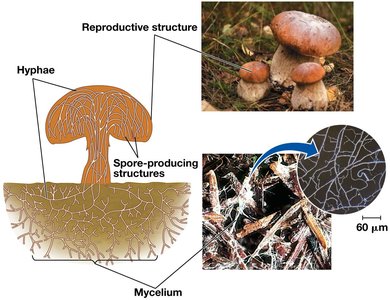
Fungi are heterotrophs that absorb nutrients from their surroundings. Their bodies are composed of networks of branched hyphae, which maximize surface area for absorption. In mycorrhizae, fungal hyphae transfer nutrients from the soil to a symbiotic plant partner, playing a key role in the colonization of land.
Fungal Morphology and Function
Cell Walls: Fungal cell walls are strengthened by chitin, providing rigidity and protection from osmotic pressure.
Mycelium: The interwoven mass of hyphae maximizes surface-to-volume ratio for efficient absorption.
Early Plant Lineages and Adaptations
Bryophytes (Non-Vascular Plants)
Bryophytes are small, herbaceous plants that lack vascular tissue. They include liverworts, mosses, and hornworts. Bryophytes have root-like structures called rhizoids for anchorage, but these do not transport water or nutrients. Their reliance on water for reproduction and lack of vascular tissue limits their size and habitat to moist environments.
Seedless Vascular Plants
Vascular plants possess specialized tissues (xylem and phloem) for transporting water, minerals, and organic products. Seedless vascular plants include lycophytes (club mosses) and monilophytes (ferns and relatives). The evolution of lignified vascular tissue enabled these plants to grow tall and compete for sunlight.
Seeds and Pollen: Key Adaptations
Seed plants originated about 360 mya. The seed, consisting of an embryo and its food supply within a protective coat, was a major evolutionary innovation. Seeds allow plants to survive harsh conditions and disperse over long distances. Seed plants are divided into two major clades:
Gymnosperms: Have "naked" seeds not enclosed in chambers (e.g., conifers).
Angiosperms: Have seeds enclosed within ovaries (fruits); they are the most diverse group of plants.
Flowers and Fruits in Angiosperms
Angiosperms produce flowers and fruits as reproductive structures. Flowers facilitate pollination, often by animals, while fruits protect seeds and aid in their dispersal. Angiosperms are divided into monocots (one cotyledon) and eudicots (two cotyledons).
Summary Table: Major Innovations in Plant Evolution
Innovation | Function | Group |
|---|---|---|
Sporopollenin | Prevents desiccation of spores and zygotes | Charophytes, Land Plants |
Alternation of Generations | Life cycle with multicellular haploid and diploid stages | Land Plants |
Vascular Tissue | Transport of water, minerals, and nutrients | Vascular Plants |
Seeds | Protection and nourishment of embryo; dispersal | Seed Plants |
Flowers and Fruits | Efficient pollination and seed dispersal | Angiosperms |
