 뒤로
The Origin and Evolution of Vertebrates: Chordates, Vertebrates, and Their Major Lineages
스터디 가이드 - 스마트 노트
 자료에 맞춘 맞춤형 노트, 핵심 정의, 예시, 맥락을 확장해 제공합니다.
Chordates
Defining Features of Chordates
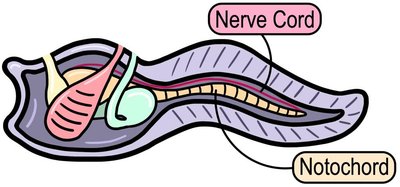
Chordates are bilateral, deuterostome animals characterized by four key features present at some stage in their life cycle. These features are essential for understanding the evolutionary relationships and structural adaptations of this group.
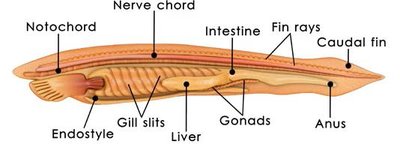
Dorsal hollow nerve cord: A tube formed from ectoderm, which eventually develops into the central nervous system (brain and spinal cord).
Notochord: A flexible rod formed from mesoderm, providing structural support and a site for muscle attachment.
Postanal tail: A muscular tail extending beyond the anus, aiding in locomotion.
Pharyngeal gill slits: Openings between the pharynx and the external environment, used for filter feeding or gas exchange.
Example:
Cephalochordates (lancelets): Fish-like suspension feeders with a notochord running parallel to the dorsal nerve cord.
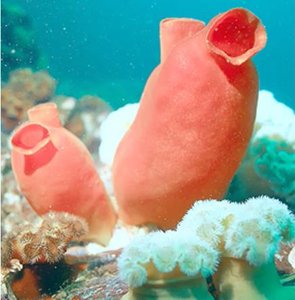
Urochordates (tunicates): Chordate features are most apparent during the larval stage; adults become sessile organisms.

Vertebrates
Characteristics of Vertebrates
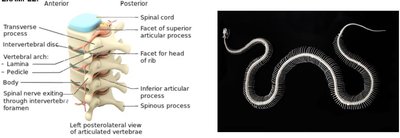
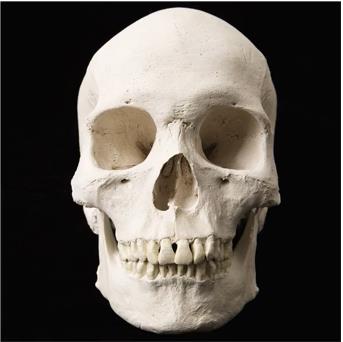
Vertebrates are a subgroup of chordates distinguished by the presence of vertebrae and a cranium. These adaptations provide enhanced protection and structural support for the central nervous system.
Vertebrae: Dorsal column of segmented bone or cartilage, protecting the spinal cord.
Cranium: A case made of bone or cartilage that encloses the brain.
Central nervous system: The dorsal hollow nerve cord forms the brain and spinal cord.
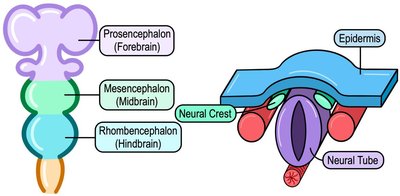
Neural crest cells: Embryonic cells contributing to the development of structures such as jaws.
Brain regions: Most vertebrates have brains divided into forebrain, midbrain, and hindbrain.
Key Evolutionary Changes in Vertebrates
Vertebrate evolution is marked by several major innovations:
Bony exoskeletons: Early vertebrate lineages possessed external skeletons.
Jaws: Gnathostomes (jawed vertebrates) include chondrichthyans (cartilaginous fish).
Bony endoskeleton: Seen in ray-fin and lobe-fin fish.
Limbs for land movement: Tetrapods evolved limbs to support terrestrial locomotion.
Amniotic egg: Amniotes (reptiles, birds, mammals) developed eggs with specialized membranes.
Fish Diversity
Jawless Fish (Cyclostomes)
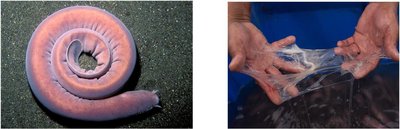
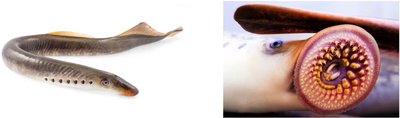
Jawless fish are among the most primitive vertebrates, lacking a backbone and possessing cartilage vertebrae.
Hagfish: Scavengers capable of producing large amounts of slime for defense.
Lampreys: Parasitic fish with a circular, rasp-like mouth; their skeleton is made of cartilage not derived from collagen.
Gnathostomes: Jawed Vertebrates
Gnathostomes include fish, amphibians, reptiles, and mammals. They are characterized by jaws, paired appendages, and a larger forebrain.
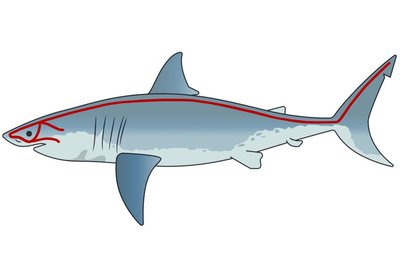
Lateral line system: Sensory organ system for detecting movement and vibrations in water.
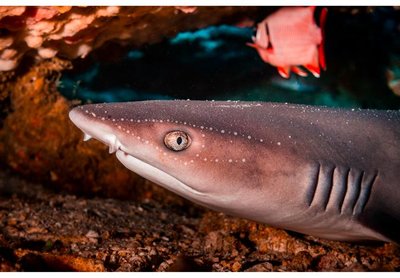
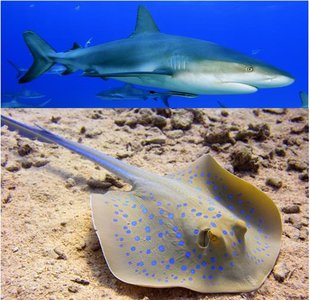
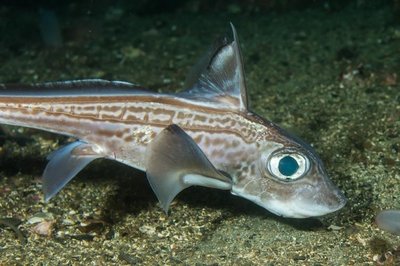
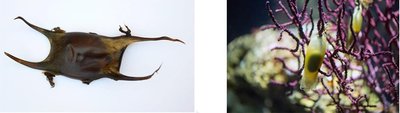
Cartilaginous fish (Chondrichthyans): Sharks, skates, rays, and chimeras with cartilaginous skeletons and paired fins.
Reproductive modes: Sharks use internal fertilization and may be oviparous (egg-laying), ovoviviparous (eggs hatch inside the mother), or viviparous (live birth). Skates are oviparous; rays are viviparous.
Bony Fish (Osteichthyes)
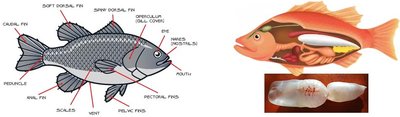
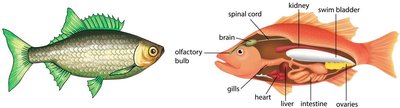
Bony fish possess an internal skeleton made mostly of bone, making them heavier than cartilaginous fish. They have specialized adaptations for aquatic life.
Operculum: A hard, bony flap covering and protecting the gills.
Swim bladder: A gas-filled sac allowing fish to maintain buoyancy at specific depths; evolved from lungs.
Ray-fin fish (Actinopterygii): Fins supported by parallel bones and webs of skin; most diverse vertebrate group.
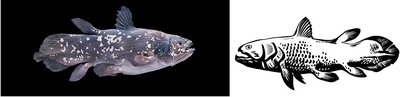
Lobe-fin fish (Sarcopterygii): Muscular fins made of flesh; ancestors of terrestrial vertebrates.
Tetrapods
Adaptations for Terrestrial Life
Tetrapods are four-limbed vertebrates, including amphibians, reptiles, and mammals. Their limbs evolved from fish fins to support weight and facilitate movement on land.
Limbs and digits: Efficiently transfer muscle force for terrestrial locomotion.
Heart and circulatory system: Adapted to deliver sufficient oxygen to limb muscles.
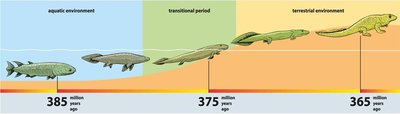
Amphibians
Amphibians are ectothermic tetrapods that live both in water and on land. They include salamanders, frogs, and apodans.
Ectothermic: Body heat is absorbed from the environment.
Endothermic: Body heat is generated internally by metabolism.
Respiration: Most amphibians have lungs and also respire through their moist skin.
Reproduction: Eggs are laid in water; larvae undergo metamorphosis to become terrestrial adults.
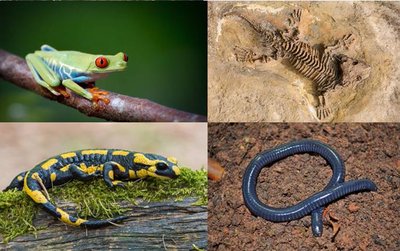
Amniotes
Amniotic Egg and Its Membranes
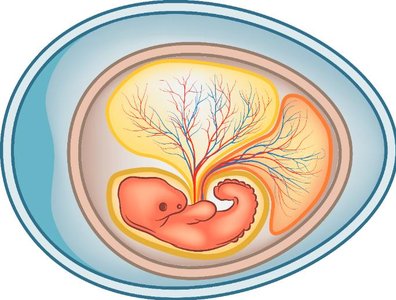
Amniotes are tetrapods with specialized eggs containing a series of membranes, allowing reproduction away from water. This group includes reptiles, birds, and mammals.
Chorion: Outermost membrane beneath the shell.
Amnion: Fluid-filled cavity encasing the embryo.
Yolk sac: Provides food via blood vessels connected to the gut.
Allantois: Surrounds the cavity for waste excretion.
Albumin: Watery, protein-rich solution cushioning the embryo and providing nutrients.
Reptiles
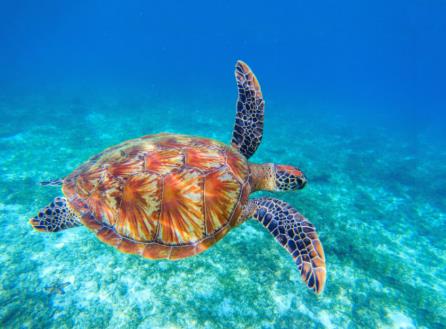
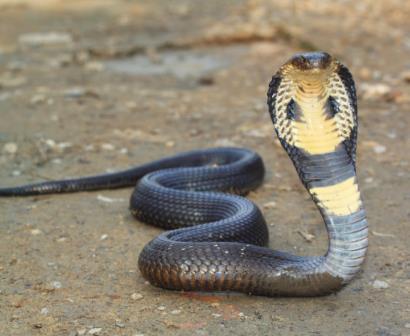
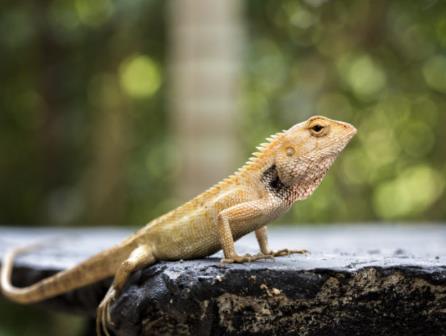
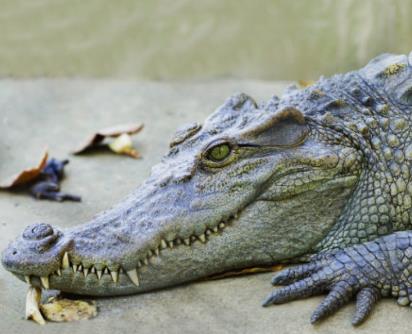
Reptiles are ectothermic tetrapods with scales made of keratin, which help prevent water loss. Fertilization occurs internally before eggshell secretion.
Examples: Turtles, snakes, lizards, crocodiles.
Birds
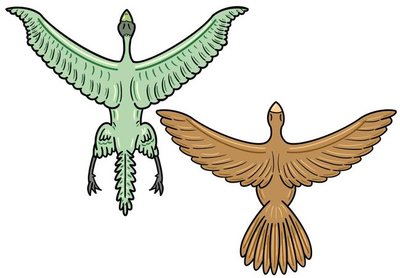
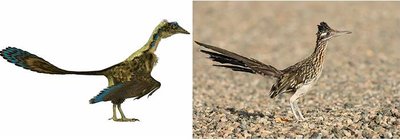
Birds are endothermic vertebrates with feathers, beaks, and lightweight skeletons. They are part of the monophyletic group dinosaurs, which are within reptiles.
Feathers: Aid in flight and insulation.
Beaks: Adapted for various feeding strategies.
Lightweight skeleton: Facilitates flight.
Synapsids and Sauropsids
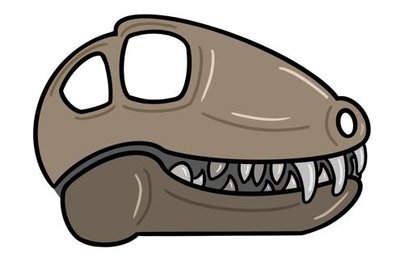
Amniotes are divided into two major groups based on skull features:
Synapsids: Includes mammals.
Sauropsids: Includes reptiles and birds.
Mammals
Characteristics of Mammals
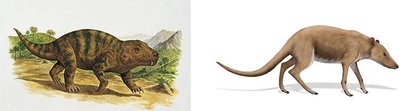
Mammals are endothermic amniotes with mammary glands, hair, three middle-ear bones, and a neocortex.
Mammary gland: Produces milk to feed offspring.
Hair: Provides insulation.
Three middle-ear bones: Aid in hearing.
Neocortex: Region of the brain involved in higher-order functions.

Major Groups of Mammals
Monotremes: Egg-laying mammals (e.g., platypus).
Marsupials: Birth underdeveloped offspring that remain in a pouch with a mammary-gland nipple.
Placental mammals (Eutherians): Give birth to live, developed offspring after a long gestation period; placenta connects fetus to uterine wall for nutrient, waste, and gas exchange.
Primates
Characteristics and Evolution of Primates
Primates are mammals with large brains and sophisticated visual systems. They possess an opposable thumb for grasping.
Prosimians: More similar to early primates; includes lemurs and lorises.
Anthropoids (Simians): Includes monkeys, apes, and humans.
Hominids: Great apes, including gorillas, chimpanzees, bonobos, and humans.
Bipedalism: Walking on two hind limbs; humans are fully bipedal.
Human Evolution
The genus Australopithecus played a key role in human evolution, with Homo evolving from australopithecine ancestors around 2 million years ago.
H. habilis: Known as "handy man" for tool use.
H. erectus and ergaster: Early humans originating in Africa and emigrating from the continent.
Neanderthal: Shares 99.7% of DNA with modern humans.
H. sapiens: Anatomically modern humans; Cro-Magnon refers to early European H. sapiens.
Summary Table: Major Vertebrate Groups
Group | Key Features | Examples |
|---|---|---|
Cephalochordates | Notochord, dorsal nerve cord | Lancelets |
Urochordates | Larval chordate features, sessile adult | Tunicates |
Jawless Fish | No jaws, cartilage skeleton | Hagfish, Lampreys |
Cartilaginous Fish | Jaws, paired fins, cartilage skeleton | Sharks, Rays, Skates, Chimeras |
Bony Fish | Bony skeleton, operculum, swim bladder | Ray-fin, Lobe-fin fish |
Tetrapods | Four limbs, terrestrial adaptations | Amphibians, Reptiles, Mammals |
Amniotes | Amniotic egg, internal fertilization | Reptiles, Birds, Mammals |
Mammals | Mammary glands, hair, neocortex | Monotremes, Marsupials, Placental mammals |
Primates | Large brain, opposable thumb | Lemurs, Monkeys, Apes, Humans |
