 뒤로
Genes and Inheritance: Mendelian and Non-Mendelian Genetics
스터디 가이드 - 스마트 노트
 자료에 맞춘 맞춤형 노트, 핵심 정의, 예시, 맥락을 확장해 제공합니다.
Genes and Inheritance
Introduction to Genetics
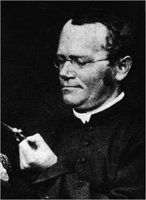
Genetics is the scientific study of genes, heredity, and variation in living organisms. It explores how traits are passed from parents to offspring and how genetic information is expressed. The modern field of genetics began with the experiments of Gregor Mendel, who used pea plants to uncover the basic principles of inheritance.
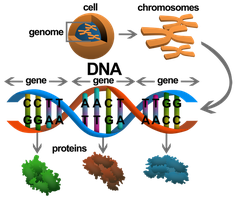
Gene: A segment of DNA that encodes information for a specific trait.
Allele: Different versions of a gene.
Genotype: The genetic makeup of an organism (e.g., PP, Pp, or pp).
Phenotype: The observable characteristics or traits of an organism (e.g., purple or white flowers).
Meiosis and the Chromosome Theory of Inheritance
Meiosis and Gamete Formation
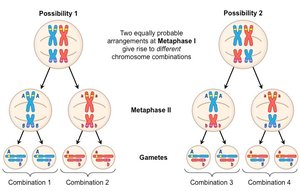
Meiosis is the process by which diploid cells produce haploid gametes (sperm and egg cells). Each gamete contains one set of chromosomes. Fertilization restores the diploid state, combining genetic material from both parents.
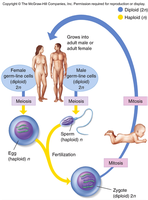
Meiosis supports the Chromosome Theory of Inheritance by explaining how alleles segregate and assort independently.
Homologous chromosomes separate during meiosis, ensuring offspring inherit one allele for each gene from each parent.
Genetics Terminology
Genotype and Phenotype
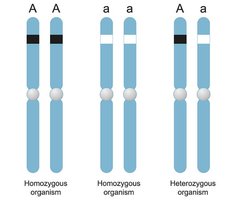
The genotype refers to the combination of alleles for a gene, while the phenotype is the physical expression of those alleles.
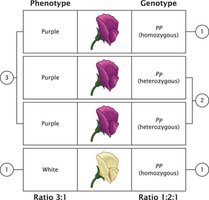
Homozygous: Two identical alleles (e.g., PP or pp).
Heterozygous: Two different alleles (e.g., Pp).
Mendel’s Experiments and Laws
Overview of Mendel’s Experiments
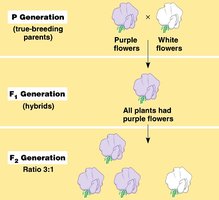
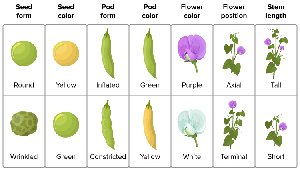
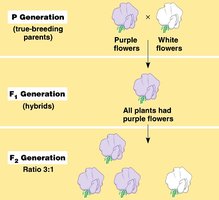
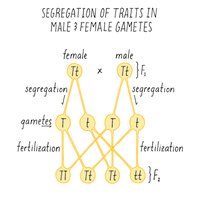
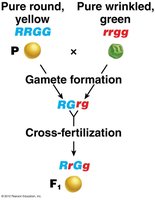
Mendel studied inheritance using pea plants, focusing on traits with two distinct phenotypes. He established true-breeding lines (P generation), crossed them to produce hybrids (F1 generation), and allowed hybrids to self-fertilize to produce the F2 generation.
Mendel’s Laws of Heredity
Law of Dominance: Some alleles are dominant and mask the expression of recessive alleles.
Law of Segregation: Each individual has two alleles for each gene, which segregate during gamete formation so that each gamete receives only one allele.
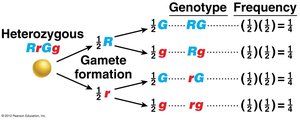
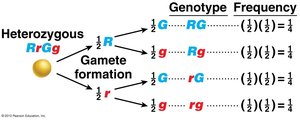
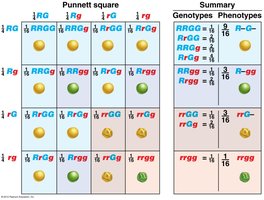
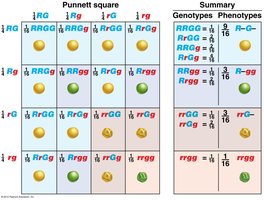
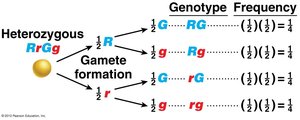
Law of Independent Assortment: Alleles of different genes assort independently during gamete formation if they are on different chromosomes.
Punnett Squares and Probability
Monohybrid and Dihybrid Crosses
Punnett squares are used to predict the probability of offspring genotypes and phenotypes from parental crosses. Monohybrid crosses examine one trait, while dihybrid crosses examine two traits simultaneously.
Autosomes and Sex Chromosomes
Chromosome Types
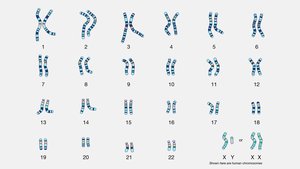
Humans have 22 pairs of autosomes and one pair of sex chromosomes (XX for females, XY for males). Autosomes carry genes for general functions, while sex chromosomes determine sex and carry sex-linked genes.
Chromosome Theory of Inheritance
From Mendel to Morgan
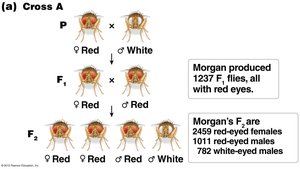
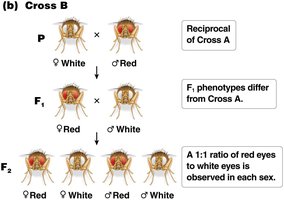
The Chromosome Theory of Inheritance states that genes are located on chromosomes. Thomas Hunt Morgan’s experiments with fruit flies provided evidence for this theory, especially regarding sex-linked traits.
Patterns of Inheritance
Autosomal Dominant and Recessive Inheritance
Autosomal dominant: Trait appears in every generation; affected individuals have at least one affected parent.
Autosomal recessive: Trait may skip generations; affected individuals can be born to unaffected parents who are carriers.
Sex-Linked Inheritance
X-linked recessive: More common in males; females are carriers unless homozygous recessive.
X-linked dominant: Affected fathers pass the trait to all daughters but no sons; affected mothers can pass to both sons and daughters.
Beyond Mendelian Genetics
Incomplete Dominance
In incomplete dominance, heterozygotes have a phenotype intermediate between the two homozygotes. For example, in human hair texture, straight (c) and curly (C) alleles produce wavy hair in heterozygotes (Cc).
Codominance
In codominance, both alleles are fully expressed in heterozygotes. The ABO blood group system is an example, where IA and IB alleles are codominant, resulting in blood type AB when both are present.
Pleiotropy
Pleiotropy occurs when one gene influences multiple, seemingly unrelated phenotypic traits. For example, a mutation in the beta-globin gene causes sickle cell anemia, affecting red blood cells, heart, brain, liver, and kidney function.
Polygenic Inheritance
Polygenic inheritance involves multiple genes contributing to a single trait, resulting in continuous variation (quantitative traits). Human skin color is a classic example, influenced by several genes, each with two alleles.
Linked Genes and Crossing Over
Linked genes are located on the same chromosome and tend to be inherited together. Crossing over during meiosis can separate linked genes, increasing genetic diversity. For example, genes for hair and eye color (OCA2 and HERC2) are linked on chromosome 15.
Pedigrees and Human Inheritance
Pedigree Analysis
Pedigrees are diagrams that trace the inheritance of traits in families. Squares represent males, circles represent females, and filled shapes indicate individuals expressing the trait. Pedigrees help determine genotypes and inheritance patterns.
Summary Table: Mendelian Laws
Law | Description |
|---|---|
Law of Dominance | Dominant alleles mask recessive alleles in heterozygotes. |
Law of Segregation | Alleles separate during gamete formation; each gamete receives one allele. |
Law of Independent Assortment | Alleles of different genes assort independently if on different chromosomes. |
Conclusion
Understanding the principles of inheritance, from Mendelian genetics to more complex patterns, is fundamental to cell biology and the study of heredity. These concepts explain how traits are transmitted, how genetic variation arises, and how genetic disorders are inherited.
