 뒤로
뒤로Transport Across Membranes: Overcoming the Permeability Barrier
스터디 가이드 - 스마트 노트
 자료에 맞춘 맞춤형 노트, 핵심 정의, 예시, 맥락을 확장해 제공합니다.
Ch. 8 – Transport Across Membranes: Overcoming the Permeability Barrier
Overview of Membrane Transport
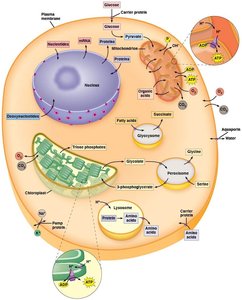
Cell membranes are selectively permeable barriers that regulate the movement of substances into and out of cells and organelles. This selective transport is essential for maintaining cellular homeostasis and proper physiological function.
Selective Permeability: Only certain molecules and ions can cross the membrane freely; others require specific transport mechanisms.
Homeostasis: Cells maintain internal concentrations of ions and molecules that differ from their external environment.
Mechanisms of Solute Movement Across Membranes
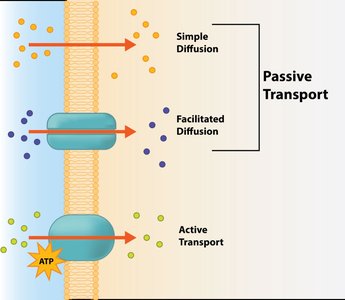
There are three primary mechanisms by which solutes cross biological membranes:
Simple Diffusion: Unassisted movement of small, nonpolar molecules down their concentration gradient.
Facilitated Diffusion: Protein-mediated movement of larger or polar molecules down their concentration gradient.
Active Transport: Protein-mediated movement of molecules against their concentration gradient, requiring energy input.
Transport Proteins
Integral membrane proteins facilitate the movement of solutes across the membrane with high specificity. These proteins are classified based on their mechanism and directionality:
Facilitated Diffusion Proteins: Move solutes down their gradient without energy input.
Active Transport Proteins: Move solutes against their gradient, requiring energy (e.g., ATP hydrolysis).
Thermodynamics of Solute Movement
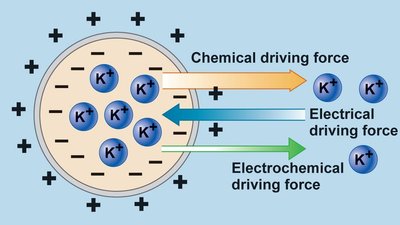
The movement of solutes is governed by their concentration gradients and, for ions, by the electrochemical potential (combination of concentration and charge gradients):
Exergonic Movement: Down the gradient (negative ΔG), as in simple and facilitated diffusion.
Endergonic Movement: Up the gradient (positive ΔG), as in active transport.
Membrane Potential (Vm): Created by differential distribution of ions (e.g., more Na+ outside, more K+ inside).
Simple Diffusion
Unassisted Movement Down the Gradient
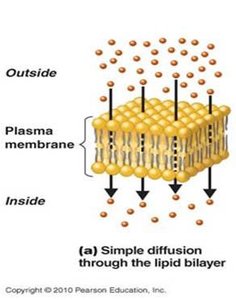
Simple diffusion is the passive movement of molecules from an area of high concentration to an area of low concentration, without the aid of membrane proteins.
Permitted Molecules: Nonpolar molecules (e.g., O2, CO2), small polar molecules (e.g., water, ethanol).
Thermodynamic Equilibrium: Net movement ceases when equilibrium is reached.
Osmosis: Diffusion of Water
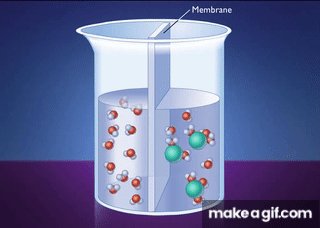
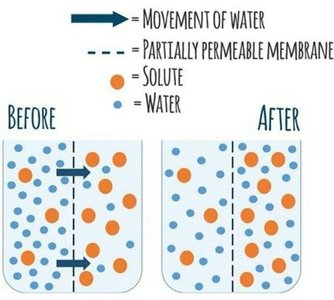
Osmosis is the movement of water across a selectively permeable membrane in response to differences in solute concentration.
Water moves toward the region of higher solute concentration.
Osmolarity and Tonicity
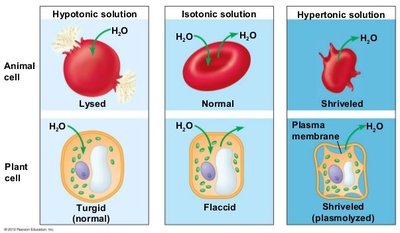
Osmolarity refers to the total solute concentration of a solution, while tonicity describes the effect of extracellular solutions on cell volume via osmosis.
Hypotonic: Lower osmolarity outside; water enters cell.
Isotonic: Equal osmolarity; no net water movement.
Hypertonic: Higher osmolarity outside; water leaves cell.
Factors Affecting Diffusion Rate
Size: Smaller molecules diffuse faster.
Polarity: Nonpolar molecules diffuse faster; polar molecules are slowed by hydration shells.
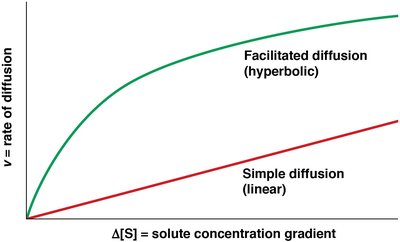
Concentration Gradient: Greater gradients increase diffusion rate.
Mathematical Description of Diffusion
The rate of inward diffusion (vinward) is given by:
where P is the permeability coefficient and Δ[S] is the concentration difference across the membrane.
Facilitated Diffusion
Protein-Mediated Movement Down the Gradient
Facilitated diffusion allows large or polar molecules to cross the membrane with the help of transport proteins, moving down their concentration gradient without energy input.
Transport Proteins: Channel proteins and carrier proteins.
Exergonic Process: Does not require metabolic energy.
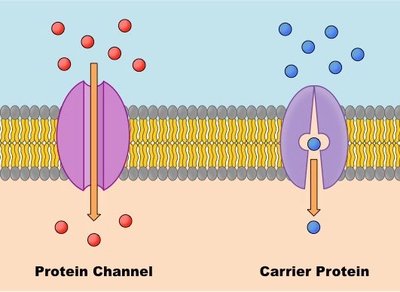
Channel Proteins vs. Carrier Proteins
Channel Proteins: Form hydrophilic pores for specific solutes (e.g., ions, water).
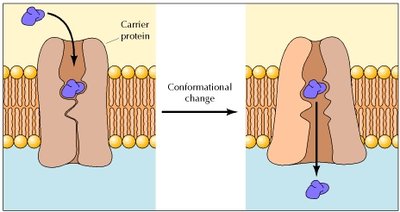
Carrier Proteins: Bind solute, undergo conformational change, and release solute on the other side.
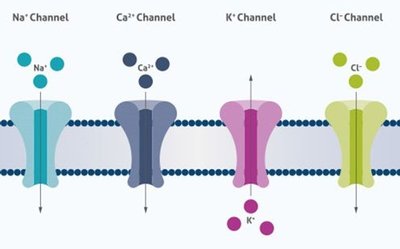
Types of Channel Proteins
Ion Channels: Highly selective for specific ions (e.g., Na+, K+).
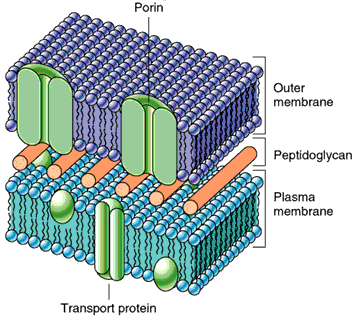
Porins: Larger, less specific channels found in outer membranes of bacteria and organelles.
Aquaporins: Specialized for rapid water transport.
Carrier Proteins: Specificity and Kinetics
Highly specific for their substrates.
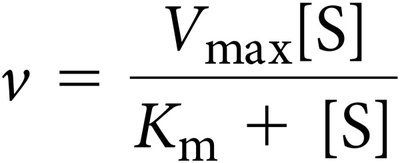
Exhibit saturation kinetics—transport rate plateaus at high substrate concentrations.
Types of Carrier Protein Transport
Uniport: Transports one solute at a time.
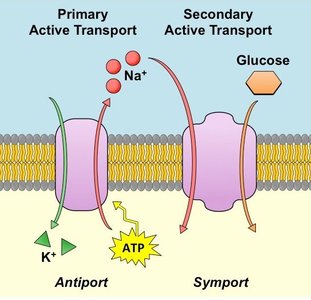
Symport (Cotransport): Transports two solutes in the same direction.
Antiport (Countertransport): Transports two solutes in opposite directions.
Active Transport
Movement Against the Gradient
Active transport moves solutes against their concentration or electrochemical gradients, requiring energy input. This process is essential for nutrient uptake, waste removal, and maintaining ion gradients.
Primary Active Transport: Directly uses ATP hydrolysis (e.g., Na+/K+ ATPase).
Secondary Active Transport: Uses the energy from one solute moving down its gradient to drive another solute up its gradient (e.g., Na+-glucose symporter).
Types of Transport ATPases
P-Type ATPases: Phosphorylated during transport; e.g., Na+/K+ pump.
V-Type ATPases: Pump protons into organelles (vacuoles, lysosomes).
F-Type ATPases: ATP synthases; can use or generate ATP depending on direction of proton flow.
ABC-Type ATPases: Large family; includes multidrug resistance (MDR) transporters and CFTR.
Examples of Active Transport
Na+/K+ ATPase: Maintains high Na+ outside and high K+ inside animal cells by pumping 3 Na+ out and 2 K+ in per ATP hydrolyzed.
Sodium-Glucose Symporter: Uses Na+ gradient to drive glucose uptake in intestinal cells.
Bacteriorhodopsin: Uses light energy to pump protons in archaea, generating a proton gradient for ATP synthesis.
Comparison of Transport Mechanisms
Properties | Simple Diffusion | Facilitated Diffusion | Active Transport |
|---|---|---|---|
Solutes transported | Small polar (H2O, glycerol), small nonpolar (O2, CO2), large nonpolar (oils, steroids) | Small polar (H2O, glycerol), large polar (glucose), ions (Na+, K+, Ca2+) | Large polar (glucose), ions (Na+, K+, Ca2+) |
Direction relative to electrochemical gradient | Down | Down | Up |
Metabolic energy required | No | No | Yes |
Membrane protein required | No | Yes | Yes |
Saturation kinetics | No | Yes | Yes |
Competitive inhibition | No | Yes | Yes |
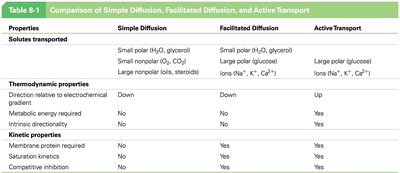
Summary Table: Key Features of Membrane Transport
Simple Diffusion: No protein required, no energy, down gradient.
Facilitated Diffusion: Protein required, no energy, down gradient, saturable, specific.
Active Transport: Protein required, energy required, up gradient, saturable, specific.
Biological Relevance
Transport proteins are essential for nutrient uptake, waste removal, and signal transduction.
Defects in transport proteins can lead to diseases (e.g., cystic fibrosis, multidrug resistance in cancer).
