 뒤로
Types of Functions and Their Properties: College Algebra Study Notes
스터디 가이드 - 스마트 노트
 자료에 맞춘 맞춤형 노트, 핵심 정의, 예시, 맥락을 확장해 제공합니다.
Types of Functions
Basic Function Types
Understanding the basic types of functions is fundamental in College Algebra. Functions can be classified by their algebraic form and graphical behavior.
Linear Functions: Functions of the form where and are constants. Their graphs are straight lines.
Quadratic Functions: Functions of the form . Their graphs are parabolas.
Square Root Functions: Functions of the form or .
Absolute Value Functions: Functions of the form .
Cubic Functions: Functions of the form .
Piecewise Functions: Functions defined by different expressions for different intervals of the domain.
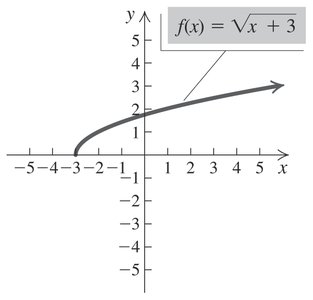
Example: The function is a square root function shifted left by 3 units.
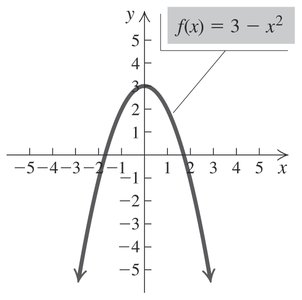
Example: The function is a quadratic function reflected across the x-axis and shifted up by 3 units.
Piecewise Functions
Piecewise functions are defined by different expressions depending on the value of the input variable.
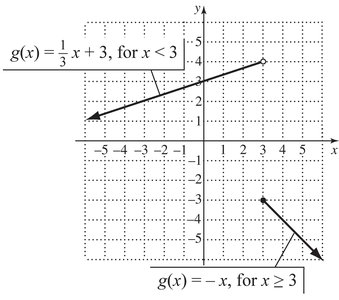
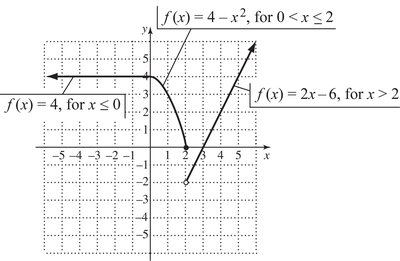
Definition: A piecewise function uses multiple sub-functions, each with its own domain.
Example: for , for .
Example: for , for , for .
Greatest Integer Function
The greatest integer function, also known as the floor function, returns the largest integer less than or equal to a given number.
Notation:
Graph: The graph is a step function, with jumps at integer values.
Domain: All real numbers.
Range: All integers.
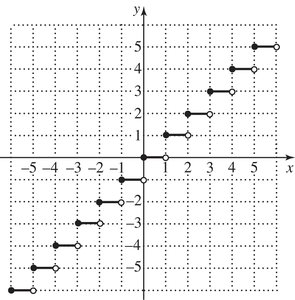
Analyzing Graphs of Functions
Zeros of Functions
The zero of a function is the input value where the output is zero. Graphically, zeros correspond to x-intercepts.
Definition:
Example: For , the zero is .
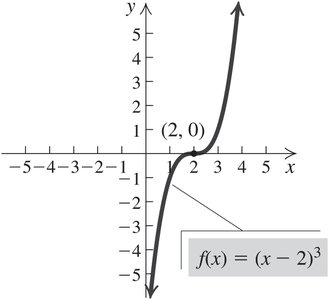
Example: For , the zeros are and .
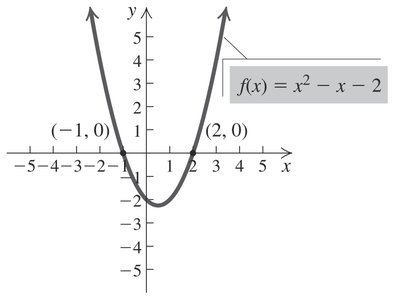
Example: For , the zero is .
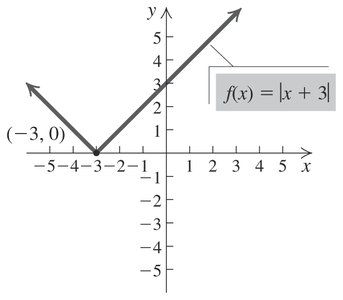
Example: For , there are no real zeros.
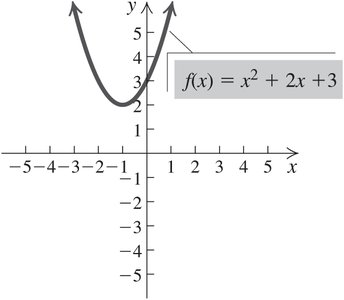
Intervals of Increase, Decrease, and Constancy
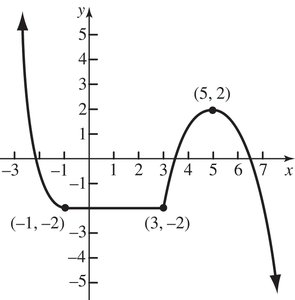
A function may be increasing, decreasing, or constant over different intervals of its domain.
Increasing: The function's output rises as the input increases.
Decreasing: The function's output falls as the input increases.
Constant: The function's output remains unchanged as the input increases.
Example: The graph below shows intervals of increase, decrease, and constancy.
Algebra of Functions
Operations on Functions
Functions can be combined using addition, subtraction, multiplication, and division.
Sum:
Difference:
Product:
Quotient: ,
Domain: The domain of the combined function is the intersection of the domains of and , except for division where .
Composition of Functions
Composite Functions
The composition of two functions and is written as . The domain of the composite function is the set of all in the domain of $g$ for which is in the domain of $f$.
Example: If and , then .
Symmetry of Functions
Algebraic Tests of Symmetry
Symmetry helps classify functions and their graphs.
x-axis Symmetry: Replace with ; if the equation is unchanged, the graph is symmetric about the x-axis.
y-axis Symmetry: Replace with ; if the equation is unchanged, the graph is symmetric about the y-axis.
Origin Symmetry: Replace with and with ; if the equation is unchanged, the graph is symmetric about the origin.
Even Functions: for all in the domain. Graph is symmetric about the y-axis.
Odd Functions: for all in the domain. Graph is symmetric about the origin.
Transformations of Functions
Vertical and Horizontal Translations
Translations shift the graph of a function up, down, left, or right.
Vertical Translation: shifts up by units; shifts down by $b$ units.
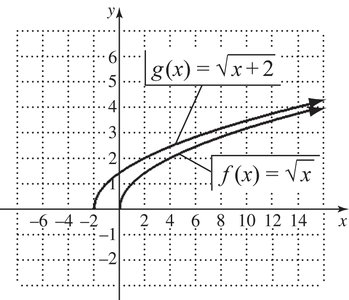
Horizontal Translation: shifts right by units; shifts left by $d$ units.
Example: Comparing and shows a leftward shift by 2 units.
Reflections
Reflections flip the graph across the x-axis or y-axis.
x-axis Reflection:
y-axis Reflection:
Example: The graph of is the reflection of across the x-axis.
Example: The graph of is the reflection of across the y-axis.
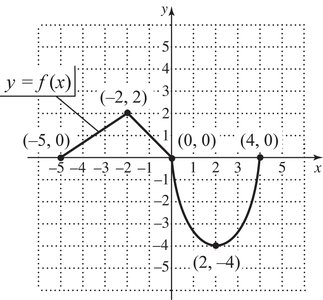
Vertical and Horizontal Stretching/Shrinking
Stretching and shrinking change the shape of the graph by scaling it vertically or horizontally.
Vertical Stretch: , stretches vertically.
Vertical Shrink: , shrinks vertically.
Horizontal Stretch: , stretches horizontally.
Horizontal Shrink: , shrinks horizontally.
Example: The graph below shows vertical stretching and shrinking.
Example: The graph below shows horizontal shrinking.
Example: The graph below shows horizontal stretching.
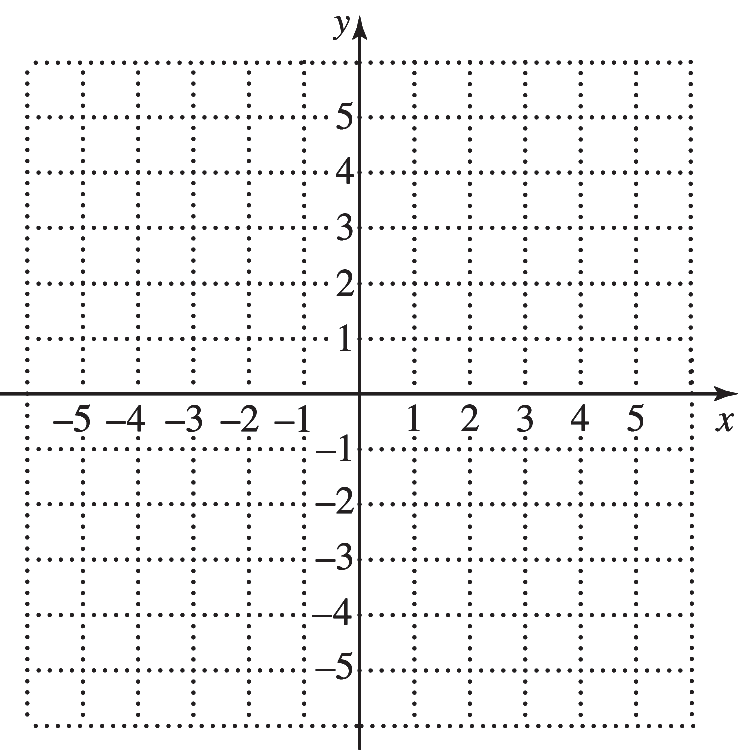
Example: The graph below shows horizontal stretching with reflection across the y-axis.
Applications of Functions
Functions are used to model real-world situations, such as distance, area, and other quantities.
Example: The distance between two cars moving at right angles can be modeled using the Pythagorean Theorem: .
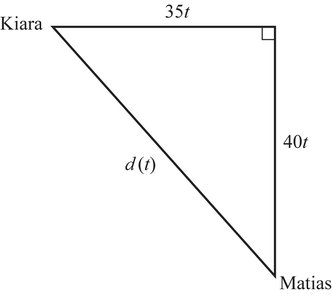
Additional info: The domain of this function is , since time cannot be negative.
