 뒤로
Chapter 11: The Statement of Cash Flows – Comprehensive Study Notes
스터디 가이드 - 스마트 노트
 자료에 맞춘 맞춤형 노트, 핵심 정의, 예시, 맥락을 확장해 제공합니다.
The Statement of Cash Flows
Introduction
The Statement of Cash Flows is a fundamental financial statement that provides information about a company’s cash inflows and outflows over a specific period. It helps users understand how cash is generated and used in operating, investing, and financing activities, and is essential for evaluating a company’s liquidity, solvency, and financial flexibility.
Learning Objective 1: Purposes of the Statement of Cash Flows
Overview
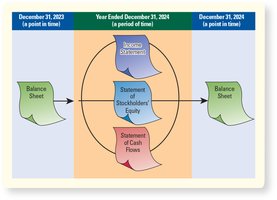
The statement of cash flows reports cash receipts (inflows) and cash payments (outflows) over a span of time (month, quarter, year). It serves several key purposes:
Predicts future cash flows: Helps forecast a company’s ability to generate cash in the future.
Evaluates management decisions: Assesses how management uses cash resources.
Determines ability to pay dividends and interest: Indicates whether the company can meet its obligations to shareholders and creditors.
Shows the relationship of net income to cash flows: Explains differences between accrual net income and actual cash flows.
Learning Objective 2: Types of Business Activities
Operating, Investing, and Financing Activities
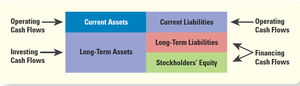
Cash flows are classified into three main categories:
Operating Activities: Transactions that create revenues, expenses, gains, and losses. These affect current assets and current liabilities and are related to net income.
Investing Activities: Transactions that increase or decrease long-term assets, such as purchasing or selling plant assets and investments.
Financing Activities: Transactions related to long-term liabilities and owners’ equity, such as issuing stock, borrowing, repaying debt, and paying dividends.
Classification Examples
Issuance of stock: Financing activity
Borrowing long-term: Financing activity
Sales revenue: Operating activity
Payment of dividends: Financing activity
Purchase of land with cash: Investing activity
Purchase of treasury stock: Financing activity
Paying bonds payable: Financing activity
Interest expense: Operating activity
Sale of equipment: Investing activity
Cost of goods sold: Operating activity
Purchase of another company with cash: Investing activity
Making a loan: Investing activity
Learning Objective 3: Preparing the Statement of Cash Flows (Indirect Method)
Indirect Method Overview
The indirect method starts with net income and adjusts for non-cash items and changes in current assets and liabilities to arrive at net cash provided by operating activities. The investing and financing sections are the same under both methods.
Cash Flows from Operating Activities
Net income: Starting point from the income statement.
Depreciation, depletion, amortization: Non-cash expenses added back to net income.
Gains and losses on sale of long-term assets: Subtract gains, add losses (non-operating items).
Changes in current assets: Increase in noncash current assets decreases cash; decrease increases cash.
Changes in current liabilities: Increase in current liabilities increases cash; decrease decreases cash.
Example: Accounts Receivable Adjustment
If accounts receivable increases, less cash is collected than revenue recorded, so net income is overstated compared to cash income. Adjustment is required to decrease net income to cash basis.
Example: Accounts Payable Adjustment
If accounts payable increases, less cash is paid to suppliers than expenses recorded, so cash is higher than accrual expenses. Adjustment increases cash flow.
Summary Table: Relationship Between Current Asset/Liability Changes and Cash Flow Adjustment
Account Type | Increase | Decrease |
|---|---|---|
Current Asset | Decrease cash | Increase cash |
Current Liability | Increase cash | Decrease cash |
Cash Flows from Investing Activities
Purchases of long-term assets: Decrease cash
Sales of long-term assets: Increase cash
Loans made: Decrease cash
Collections on loans: Increase cash
Cash Flows from Financing Activities
Issuance of debt or stock: Increase cash
Repayment of debt: Decrease cash
Purchase of treasury stock: Decrease cash
Payment of dividends: Decrease cash
Noncash Investing and Financing Activities
Transactions that do not involve cash, such as acquiring assets by issuing stock, are disclosed separately.
Learning Objective 4: Preparing the Statement of Cash Flows (Direct Method)
Direct Method Overview
The direct method reports all cash receipts and payments from operating activities. It is preferred by FASB and IASB for clarity but is less commonly used due to complexity. Investing and financing sections remain unchanged.
Cash Flows from Operating Activities (Direct Method)
Cash collections from customers
Cash receipts of interest and dividends
Payments to suppliers
Payments to employees
Payments of interest and income taxes
Other operating expenses
Depreciation, depletion, and amortization expenses are not included as they do not affect cash.
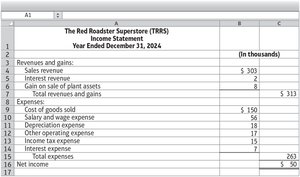
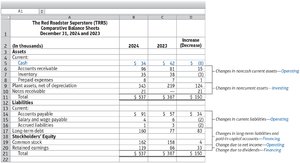
Example: Income Statement and Balance Sheet Data
Learning Objective 5: Excel Quick Analysis Button for Visualizing Data
Operating Cash Flow Ratio
The operating cash flow ratio measures a company’s ability to pay current liabilities with cash generated from operations:
This ratio is useful for comparing liquidity across companies and industries. Excel’s Quick Analysis button can be used to visualize cash flow data with sparklines, data bars, color formatting, and icon sets.
Summary
The statement of cash flows is essential for understanding a company’s cash position.
It categorizes cash flows into operating, investing, and financing activities.
Both indirect and direct methods are used to prepare the statement, with the indirect method being more common.
Noncash activities are disclosed separately.
Ratios and Excel tools help analyze and visualize cash flow data for decision-making.
