 뒤로
Financial Statement Analysis and Reporting Quality: Key Concepts and Examples
스터디 가이드 - 스마트 노트
 자료에 맞춘 맞춤형 노트, 핵심 정의, 예시, 맥락을 확장해 제공합니다.
Introduction to Financial Statement Analysis
Purpose and Importance of Financial Statements
Financial statements are essential tools for assessing a company's financial position and operating performance. They provide critical information for investors, lenders, and other stakeholders to make informed decisions.
Investment Decisions: Help determine if an investment will generate attractive returns.
Risk Assessment: Reveal the degree of risk inherent in investments.
Liquidity and Solvency: Indicate whether cash flows are sufficient to meet obligations.
Competitive Analysis: Show how well a company competes in its environment.
Components of Financial Reports
In addition to the four main financial statements required by GAAP, financial reports include supplementary information:
Notes to the Financial Statements
The Auditor’s Report
Management Discussion and Analysis (MD&A)
Summary of Financial Highlights
Notes to the Financial Statements
Nature and Purpose
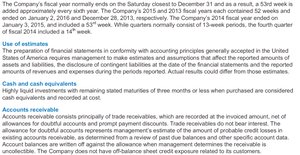
Notes provide supplementary qualitative and quantitative information, explaining accounting policies and details about specific accounts.
Accounting Policies: Describe the principles and estimates used in preparing financial statements.
Details of Accounts: Offer breakdowns and explanations for items such as cash, receivables, and debt.

The Auditor’s Report
Purpose and Types of Audit Opinions
The auditor’s report is issued by an independent party, attesting to the validity of the financial statements. The type of opinion issued affects the credibility of the financial report.
Unqualified Opinion: Financial statements are free from material misstatements and conform to GAAP.
Unqualified Opinion with Explanatory Language: Conforms to GAAP, but highlights material aspects needing clarification (e.g., accounting changes, uncertainties).
Qualified Opinion: Financial statements are fairly presented except for specific deviations or scope limitations.
Disclaimer of Opinion: Auditor cannot express an opinion due to lack of evidence or independence.
Adverse Opinion: Financial statements are not in accordance with GAAP, indicating gross misstatement or fraud.
Management Discussion and Analysis (MD&A)
Key Aspects Covered
MD&A discusses trends, events, and uncertainties affecting the company’s performance.
Liquidity: Ability to meet short-term obligations and plans to remedy deficiencies.
Capital Resources: Sources and uses of long-term funding, changes in financing mix.
Results of Operations: Breakdown of sales, material changes in revenues and costs, unusual occurrences.
Selected Financial Data (Summary of Financial Highlights)
Purpose and Example
Selected financial data summarizes key trends over time, helping analysts identify patterns in performance. 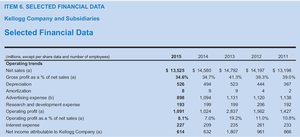
Debt and Long-Term Liabilities
Notes Payable and Long-Term Debt
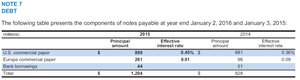
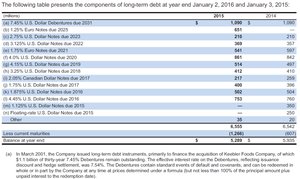
Financial statements include detailed tables of notes payable and long-term debt, showing principal amounts, interest rates, and maturities.
Notes Payable: Short-term borrowings, often listed with principal and effective interest rates.
Long-Term Debt: Includes debentures and notes with various maturities and interest rates.
Quality of Financial Reporting
Factors Affecting Earnings Quality
The quality of financial reporting depends on how accurately the data reflects the true financial position. Management can influence reported earnings through various means:
Accounting Policies and Estimates: Choices such as depreciation methods or changes in inventory valuation.
Timing of Revenue and Expense Recognition: Adherence to revenue recognition and matching principles.
Discretionary Items: Expenses like R&D, advertising, and maintenance.
Non-Recurring and Non-Operating Items: Transactions not expected to recur, such as asset sales.
Techniques to Influence Earnings
Increasing Earnings: Impact on Quality
Management may use various techniques to increase earnings, which can affect the quality of reported earnings.
Lower Quality Techniques:
Switching to straight-line depreciation or lengthening depreciation periods.
Selling necessary assets for a gain.
Postponing loss recognition.
Reducing discretionary expenses (advertising, R&D, maintenance).
Positive Real Impact Techniques:
Increasing revenue through beneficial policies (e.g., special sales, discounts).
Investing in plant and equipment for tax savings.
Cost-cutting measures that do not impair long-term profitability.
Selling unnecessary assets for planned gains.
Summary Table: Types of Audit Opinions
Opinion Type | Description | Example Phrase |
|---|---|---|
Unqualified | Free from misstatements, conforms to GAAP | No reservations |
Unqualified w/ Explanatory | Conforms to GAAP, but highlights material aspect | "As discussed in footnote..." |
Qualified | Fairly presented except for specific deviation | "Except for the effects of..." |
Disclaimer | Unable to express opinion | Scope limitation or lack of independence |
Adverse | Not in accordance with GAAP | Gross misstatement or fraud |
Key Formulas
Basic Financial Ratios
Current Ratio:
Debt-to-Equity Ratio:
Gross Profit Margin:
Conclusion
Understanding the structure, content, and quality of financial statements is fundamental for financial accounting students. Analysts must critically evaluate the information presented, considering both the technical details and the broader context of management decisions and reporting practices.
