 뒤로
뒤로Atoms and Elements: Foundations of Modern Atomic Theory
스터디 가이드 - 스마트 노트
 자료에 맞춘 맞춤형 노트, 핵심 정의, 예시, 맥락을 확장해 제공합니다.
Atoms and Elements
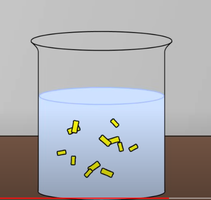
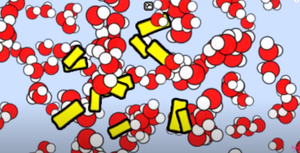
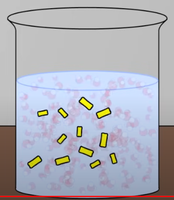
Brownian Motion: Atoms Confirmed
Brownian motion refers to the random, jittery movement of particles suspended in a fluid, first observed by Scottish botanist Robert Brown in 1827. This phenomenon provided crucial evidence for the existence of molecules and atoms, as it was later explained by Einstein and Perrin to result from collisions with invisible molecules. Brownian motion demonstrates how the macroscopic world emerges from the atomic world, bridging observable phenomena with atomic theory.
Definition: Random movement of microscopic particles in a fluid due to collisions with molecules.
Significance: Confirms the existence of atoms and molecules.
Example: Pollen grains suspended in water exhibit Brownian motion.
Early Ideas About the Building Blocks of Matter
Ancient philosophers such as Leucippus and Democritus proposed that matter is composed of small, indestructible particles called atoms. These atoms differ in shape and size and move randomly through empty space, combining in various ways to form all matter. Their ideas laid the groundwork for modern atomic theory, although they were not widely accepted at the time.
Key Points:
Matter can be divided until reaching indivisible atoms.
Atoms differ in shape and size.
Atoms combine to form all matter.
Quote: “Nothing exists except atoms and empty space; everything else is opinion.” – Democritus

Alternative Views: Plato and Aristotle
Plato and Aristotle rejected the atomic theory, instead proposing that all matter was made up of four elements: water, fire, earth, and air. They believed matter was infinitely divisible, without a fundamental indivisible particle. Their views dominated scientific thought until John Dalton revived atomic theory with experimental evidence.
Four Elements: Water, Fire, Earth, Air
Infinite Divisibility: Matter can be divided endlessly
Modern Atomic Theory and the Laws That Led to It
The modern atomic theory was developed from key experimental observations and laws. The three most important laws are:
Law of Conservation of Mass
Law of Definite Proportions
Law of Multiple Proportions
The Law of Conservation of Mass
Formulated by Antoine Lavoisier, this law states that in a chemical reaction, matter is neither created nor destroyed. The mass of reactants equals the mass of products.
Equation:
Example: Burning hydrogen in oxygen produces water, with the total mass unchanged.
The Law of Definite Proportions
Proposed by Joseph Proust, this law states that all samples of a given compound have the same proportions of their constituent elements, regardless of source or preparation. Also known as the law of constant composition.
Example: Water (H2O) always has a mass ratio of hydrogen to oxygen of 1:8.
Equation:
Compound | Sample Mass | Element 1 Mass | Element 2 Mass | Ratio |
|---|---|---|---|---|
Water (H2O) | 18 g | 2 g H | 16 g O | 1:8 |
Water (H2O) | 36 g | 4 g H | 32 g O | 1:8 |
Ammonia (NH3) | 17 g | 14 g N | 3 g H | 14:3 |
Ammonia (NH3) | 34 g | 28 g N | 6 g H | 14:3 |
The Law of Multiple Proportions
Published by John Dalton in 1804, this law states that when two elements form more than one compound, the masses of one element that combine with a fixed mass of the other can be expressed as ratios of small whole numbers.
Example: Carbon monoxide (CO) and carbon dioxide (CO2) both contain carbon and oxygen, but the mass ratios of oxygen to carbon are simple whole numbers.
Equation:
Dalton’s Atomic Theory
Dalton’s atomic theory provided explanations for the above laws:
Each element is composed of tiny, indestructible particles called atoms.
All atoms of a given element have the same mass and properties.
Atoms combine in simple, whole-number ratios to form compounds.
Atoms of one element cannot change into atoms of another element; they only change how they are bound together.
Comparing the Laws: Definite vs. Multiple Proportions
The law of definite proportions applies to different samples of a single compound, ensuring fixed ratios of elements. The law of multiple proportions compares different compounds made from the same elements, showing variable ratios that are simple whole numbers.
Law | Application | Ratio Type |
|---|---|---|
Definite Proportions | Same compound, different samples | Fixed ratio |
Multiple Proportions | Different compounds, same elements | Variable, whole-number ratio |
Example: Water always has a 1:8 ratio of hydrogen to oxygen (definite proportions), while carbon monoxide and carbon dioxide have different ratios of oxygen to carbon (multiple proportions).
Additional info: These foundational concepts are essential for understanding chemical reactions, the nature of matter, and the development of modern chemistry.
