 뒤로
Atoms, Molecules, and Ions – General Chemistry Study Guidance
스터디 가이드 - 스마트 노트
 자료에 맞춘 맞춤형 노트, 핵심 정의, 예시, 맥락을 확장해 제공합니다.
Q1. Describe the main findings of Rutherford’s α-scattering experiment and their significance for atomic structure.
Background
Topic: Atomic Structure and Experimental Evidence
This question tests your understanding of how Rutherford’s experiment led to the modern model of the atom, specifically the discovery of the nucleus.
Key Terms and Concepts:
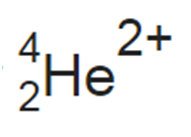
α (alpha) particles: Helium nuclei ()
Gold foil: Thin sheet used to observe scattering of alpha particles
Nucleus: Dense, positively charged center of the atom
Atomic model: Structure of the atom as proposed by Rutherford
Step-by-Step Guidance
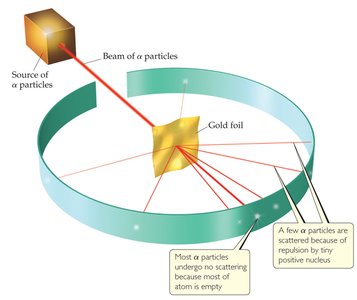
Recall the setup: A beam of alpha particles was directed at a thin gold foil, and their scattering was observed.
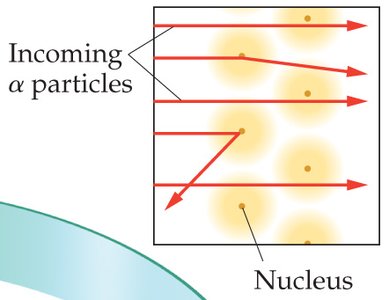
Most alpha particles passed straight through the foil with little or no deflection, suggesting that most of the atom is empty space.
A small fraction of alpha particles were deflected at large angles, and a very few even bounced back, indicating the presence of a dense, positively charged region (the nucleus).
Compare this result to the previous "plum pudding" model, which could not explain the large-angle scattering.
Think about how these observations led to the conclusion that the atom has a tiny, dense nucleus surrounded by electrons.
Try solving on your own before revealing the answer!
Final Answer:
Rutherford’s α-scattering experiment showed that most alpha particles pass through the atom with little deflection, but a few are scattered at large angles. This led to the conclusion that atoms consist mostly of empty space, with a tiny, dense, positively charged nucleus at the center. The experiment disproved the "plum pudding" model and established the nuclear model of the atom.
The nucleus contains most of the atom’s mass and all of its positive charge, while electrons occupy the surrounding space.
Q2. What are the relative sizes and masses of the nucleus and the electron cloud in an atom?
Background
Topic: Atomic Structure – Nucleus vs. Electron Cloud
This question tests your understanding of the spatial and mass distribution within an atom.
Key Terms and Formulas:
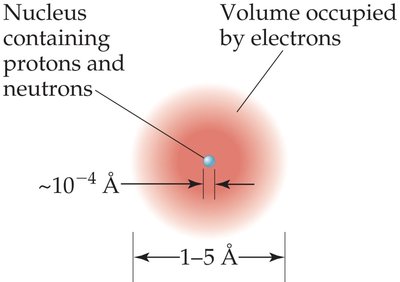
Nucleus: Contains protons and neutrons, very small compared to the atom’s overall size
Electron cloud: Region where electrons are likely to be found, much larger than the nucleus
Typical nucleus radius: Å
Typical atom radius: $1 Å
Step-by-Step Guidance
Identify the nucleus as the central part of the atom, containing protons and neutrons.
Note the size difference: The nucleus is much smaller than the overall atom, with a radius about Å, while the atom’s radius is $1 Å.
Consider the mass distribution: Nearly all the mass of the atom is concentrated in the nucleus.
The electron cloud occupies most of the atom’s volume but contributes very little to its mass.
Try solving on your own before revealing the answer!
Final Answer:
The nucleus is extremely small (about Å in radius) compared to the atom (about $1 Å in radius), but it contains nearly all the atom’s mass. The electron cloud occupies most of the atom’s volume but has very little mass.
Q3. Compare the charge and mass of protons, neutrons, and electrons.
Background
Topic: Subatomic Particles
This question tests your knowledge of the basic properties of protons, neutrons, and electrons.
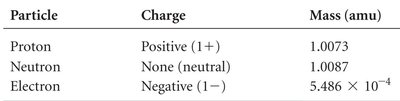
Key Terms and Formulas:
Proton: Positive charge (+1), mass ≈ 1 amu
Neutron: No charge (neutral), mass ≈ 1 amu
Electron: Negative charge (–1), mass ≪ 1 amu
Step-by-Step Guidance
Recall that protons and neutrons have similar masses, both close to 1 atomic mass unit (amu).
Electrons have a much smaller mass, about amu.
Protons carry a positive charge, neutrons are neutral, and electrons carry a negative charge.
Think about how these properties affect the overall charge and mass of an atom.
Try solving on your own before revealing the answer!
Final Answer:
Protons have a positive charge (+1) and a mass of about 1.0073 amu. Neutrons are neutral (no charge) and have a mass of about 1.0087 amu. Electrons have a negative charge (–1) and a much smaller mass, about amu.
Q4. How do you determine the number of protons, neutrons, and electrons in an atom given its atomic number and mass number?
Background
Topic: Atomic Structure – Counting Subatomic Particles
This question tests your ability to use atomic number and mass number to find the numbers of protons, neutrons, and electrons in an atom.

Key Terms and Formulas:
Atomic number (): Number of protons
Mass number (): Number of protons + neutrons
Number of neutrons:
Number of electrons: Equal to number of protons in a neutral atom
Step-by-Step Guidance
Identify the atomic number () from the element’s symbol; this gives the number of protons.
Find the mass number (); this is the sum of protons and neutrons.
Calculate the number of neutrons by subtracting the atomic number from the mass number: .
For a neutral atom, the number of electrons equals the number of protons.
Try solving on your own before revealing the answer!
Final Answer:
For : There are 54 electrons, 54 protons, and 78 neutrons ().
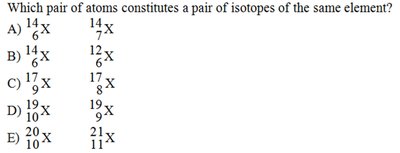
Q5. Which pair of atoms constitutes a pair of isotopes of the same element?
Background
Topic: Isotopes
This question tests your understanding of what makes two atoms isotopes of the same element.
Key Terms and Formulas:
Isotopes: Atoms of the same element (same number of protons) with different numbers of neutrons (different mass numbers)
Atomic number (): Number of protons
Mass number (): Number of protons + neutrons
Step-by-Step Guidance
Look for pairs with the same atomic number (), which means they are the same element.
Check if the mass numbers () are different; this indicates different numbers of neutrons.
Review each answer choice to see which pair meets these criteria.
Remember: Isotopes must have the same but different .
Try solving on your own before revealing the answer!
Final Answer:
The correct answer is B) and , which are isotopes of the same element (same atomic number, different mass number).
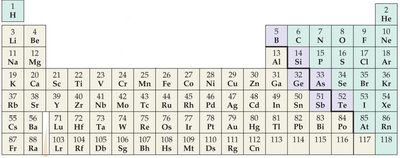
Q6. Aluminum reacts with a certain nonmetallic element to form a compound with the general formula Al2X3. Element X must be from which group of the Periodic Table?
Background
Topic: Ionic Compounds and Periodic Table Groups
This question tests your understanding of how elements combine based on their charges and periodic table groups.
Key Terms and Formulas:
Aluminum ion:
General formula:
Nonmetallic element X: Must form an ion with a charge that balances
Step-by-Step Guidance
Identify the charge of the aluminum ion ().
Determine the charge needed for element X so that the compound is electrically neutral.
Set up the formula: .
Solve for the charge of X and match it to the appropriate group on the periodic table.
Try solving on your own before revealing the answer!
Final Answer:
Element X must be from Group 5A, which forms ions with a charge to balance the charge of aluminum in the formula .
