 뒤로
CH 221z Midterm 1 Review: General Chemistry Study Guide
스터디 가이드 - 스마트 노트
 자료에 맞춘 맞춤형 노트, 핵심 정의, 예시, 맥락을 확장해 제공합니다.
Lesson 1: Significant Figures & Dimensional Analysis
Rules of Significant Figures
Understanding significant figures is essential for accurate scientific measurement and reporting. The rules help determine which digits in a number are meaningful for calculations.
All nonzero digits are significant: For example, in 0.072610, all digits except the leading zeros are significant.
Leading zeros are not significant: For example, in 0.45 or 0.045, the zeros before the first nonzero digit are not counted.
Zeros between nonzero digits are significant ("Sandwiched" zeros): For example, in 0.08206, the zero between 8 and 2 is significant.
Trailing zeros are significant if there is a decimal point: For example, 3.1400 has five significant figures, while 3400.00 has six.

Significant Figures in Mathematical Operations
Different operations require different rules for handling significant figures:
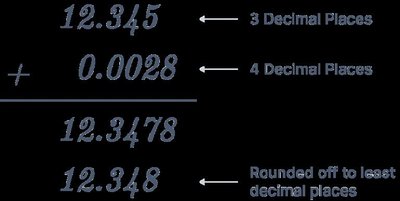
Addition & Subtraction: The result should have the same number of decimal places as the input with the fewest decimal places. Example: 1.7649 + 23.1 = 24.9 (rounded to 1 decimal place).
Multiplication & Division: The result should have the same number of significant figures as the input with the fewest significant figures. Example: 0.08206 × 273.15 = 22.41 (rounded to 4 significant figures).
Multiple Operations: Track significant figure rules through each step and only round at the end.

Scientific Notation
Scientific notation expresses numbers as a value between 1.00 and 9.99 multiplied by 10 raised to a power. This format makes the number of significant figures clear and simplifies calculations with very large or small numbers.
Format: where and is an integer.
Example: 0.00045 =
Dimensional Analysis & SI Prefixes
Dimensional analysis is a method for converting between units using conversion factors. SI prefixes allow scaling measurements up or down.
Simple vs Compound Units: Linear (meters) vs Volumetric (cubic meters).
SI Prefixes Table:
Name | Figure | Base | Decimal |
|---|---|---|---|
kilo | k | 1000 | |
centi | c | 0.01 | |
micro | μ | 0.000001 | |
nano | n | 0.000000001 | |
pico | p | 0.000000000001 | |
... (additional prefixes omitted for brevity) |
Lesson 2: Atoms, Mass, & Moles
Types of Substances
Substances can be classified as pure or compound, and as homogeneous or heterogeneous mixtures.
Pure substances: Elements or compounds with uniform composition.
Mixtures: Homogeneous (uniform) or heterogeneous (non-uniform).
Physical vs. Chemical Properties
Physical properties: Observable without changing the substance (e.g., melting point).
Chemical properties: Describe how a substance reacts (e.g., flammability).
Structure of the Atom
An atom consists of protons, neutrons, and electrons, each with distinct properties.
Protons: Have mass and positive charge; number determines the element.
Neutrons: Have mass and no charge; number determines isotope.
Electrons: Negligible mass, negative charge; number determines ionization state.
Ions and Isotopes
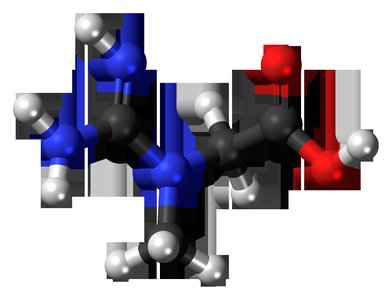
Ions: Atoms with unequal numbers of protons and electrons.
Isotopes: Atoms of the same element with different numbers of neutrons.
Atomic Mass & Isotopic Abundance
Atomic mass is calculated as a weighted average based on isotopic abundance.
Isotope | Relative Abundance (%) | Atomic Mass (amu) |
|---|---|---|
Chlorine-35 | 75.77 | 34.96885 |
Chlorine-37 | 24.23 | 36.96950 |
The Mole & Avogadro’s Number
The mole is a fundamental unit for quantifying particles in chemistry, defined by Avogadro’s number ().
Conversions:
Number of particles to moles: Divide by
Moles to number of particles: Multiply by
Moles to mass: Multiply by molar mass
Mass to moles: Divide by molar mass
Lesson 3: Properties of Light, Wave Nature of Matter
Light as a Wave and Particle
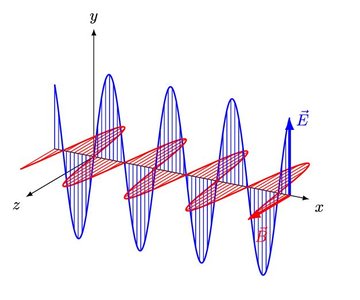
Light exhibits both wave-like and particle-like properties, a concept known as wave-particle duality.
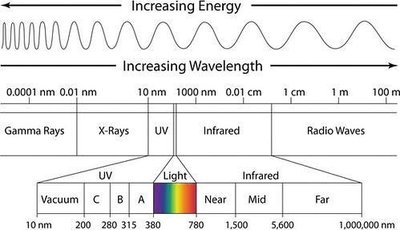
Frequency () and Wavelength (): Related by , where is the speed of light.
Frequency () and Energy (): Related by , where is Planck’s constant.
Photoelectric Effect
The photoelectric effect demonstrates that light can eject electrons from a material if its frequency exceeds a threshold.
Shorter wavelengths (higher frequencies): More likely to cause electron emission.
Longer wavelengths (lower frequencies): May not cause electron emission.
Wave Nature of Matter
Particles such as electrons exhibit wave-like properties, described by the de Broglie equation:
Where is wavelength, is Planck’s constant, is mass, and is velocity.
Lesson 4: Line Spectra & Quantum Numbers
Electron Excitation & Photon Emission
Electrons absorb energy and move to higher energy levels; when they return to lower levels, they emit photons.
Energy change:
Introduction to Orbitals & Quantum Numbers
Quantum numbers describe the "address" of an electron in an atom, specifying its energy level, sublevel, and orientation.
Principal quantum number (): Energy level (1, 2, ...)
Sublevels: s, p, d, f (with different shapes and numbers of orbitals)
Quantum numbers table:
Sublevel | Quantum Numbers |
|---|---|
s | 0 |
p | -1, 0, 1 |
d | -2, -1, 0, 1, 2 |
f | -3, -2, -1, 0, 1, 2, 3 |
Lesson 5: Electron Configurations
Periodic Table & Noble Gas Notation
Electron configurations describe the arrangement of electrons in an atom. Noble gas notation simplifies this by using the symbol of the nearest noble gas as a reference.
Examples:
1s2 = [He]
1s2, 2s2, 2p6 = [Ne]
1s2, 2s2, 2p6, 3s2, 3p6 = [Ar]
Electron Configuration Rules
Hund’s Rule: Electrons fill degenerate orbitals singly first, with parallel spins.
Pauli Exclusion Principle: No two electrons in an atom can have the same set of four quantum numbers.
Electron Configuration Exceptions
Some elements, such as chromium and copper, have electron configurations that differ from the expected pattern due to stability considerations.
Valence Electrons
Valence electrons are the outermost electrons involved in chemical bonding. Their number determines an element’s chemical properties.
Example: Scandium (Sc) has 3 valence electrons, Zinc (Zn) has 2.
Summary Table: SI Prefixes
Name | Symbol | Base | Decimal |
|---|---|---|---|
kilo | k | 1000 | |
centi | c | 0.01 | |
micro | μ | 0.000001 | |
nano | n | 0.000000001 | |
pico | p | 0.000000000001 |
Additional info: Academic context and examples were added to clarify and expand upon brief points in the original material.
