 뒤로
Chapter 1: Chemistry in Our Lives – Foundations and Key Math Skills
스터디 가이드 - 스마트 노트
 자료에 맞춘 맞춤형 노트, 핵심 정의, 예시, 맥락을 확장해 제공합니다.
Chapter 1: Chemistry in Our Lives
Section 1.1: Chemistry and Chemicals
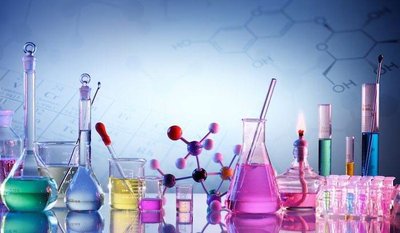
Chemistry is a fundamental science that explores the composition, structure, properties, and reactions of matter. Chemicals are substances with consistent composition and properties, regardless of their source. Many everyday products are made by chemists and are examples of chemicals.
Chemicals: Substances with uniform composition and properties, found in nature and manufactured products.
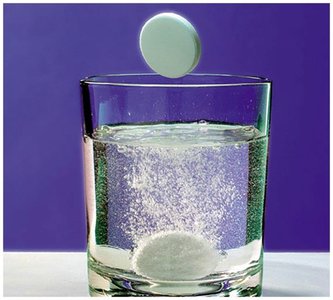
Examples: Toothpaste, sunscreen, antacid tablets, and medicines are all composed of chemicals.
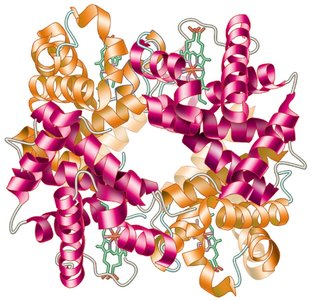
Applications: Chemistry is involved in processes such as oxygen transport in blood, chemical reactions in antacid tablets, and forensic analysis in crime laboratories.
Section 1.3: Studying and Learning Chemistry
Success in chemistry requires active engagement and problem-solving. Effective learning strategies include regular practice, collaboration, and self-assessment. Passive behaviors, such as procrastination and cramming, hinder understanding.
Active Learning: Participate in lectures, discussions, and group work. Use practice tools and quizzes to reinforce concepts.
Collaboration: Work with classmates to explain concepts and solve problems together.
Self-Assessment: Regularly review material and test your understanding.
Unhelpful Behaviors: Avoid procrastination, cramming, and relying solely on memorization.

Section 1.4: Key Math Skills
Mathematical skills are essential for understanding and solving chemistry problems. These include interpreting graphs, working with positive and negative numbers, calculating percentages, solving equations, and using scientific notation.
Interpreting Graphs: Understanding slope and equations of lines is crucial for analyzing data.
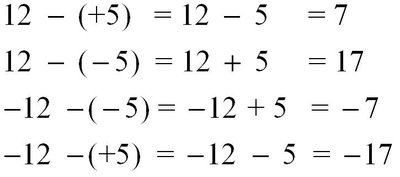
Positive and Negative Numbers: Chemistry calculations often involve both positive and negative values.


Percentages: To find a percentage, divide the part by the whole and multiply by 100%. Formula: Example: If 8 out of 32 students wear an Iowa shirt, the percentage is .
Solving Equations: Rearranging equations to isolate variables is a common skill. Example: Given , solve for when :
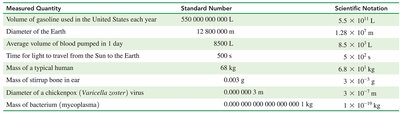
Scientific Notation: Used to express very large or small numbers concisely. Format: Example: ;

Scientific Notation in Practice
Scientific notation simplifies calculations and data entry in chemistry. Calculators use the EXP or EE key to input numbers in scientific notation.
Calculator Entry: is entered as 4 EE 6 or 4 EXP 6.
Examples:
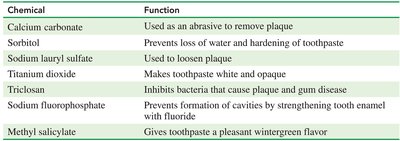
Summary Table: Chemicals in Toothpaste
This table summarizes the functions of common chemicals found in toothpaste, illustrating the practical application of chemistry in everyday products.
Chemical | Function |
|---|---|
Calcium carbonate | Used as an abrasive to remove plaque |
Sorbitol | Prevents loss of water and hardening of toothpaste |
Sodium lauryl sulfate | Used to loosen plaque |
Titanium dioxide | Makes toothpaste white and opaque |
Triclosan | Inhibits bacteria that cause plaque and gum disease |
Sodium fluorophosphate | Prevents formation of cavities by strengthening tooth enamel with fluoride |
Methyl salicylate | Gives toothpaste a pleasant wintergreen flavor |
Summary Table: Scientific Notation Examples
This table provides examples of measured quantities and their representation in scientific notation, highlighting the importance of this skill in chemistry.
Measured Quantity | Standard Number | Scientific Notation |
|---|---|---|
Volume of gasoline used in the US each year | 590,000,000,000 L | |
Diameter of the Earth | 12,800,000 m | |
Average volume of blood pumped in 1 day | 8500 L | |
Time for light to travel from Sun to Earth | 500 s | |
Mass of a typical human | 68 kg | |
Mass of stirrup bone in ear | 0.003 g | |
Diameter of a virus | 0.000000003 m | |
Mass of bacterium | 0.000000000000001 kg |
Conclusion
Chemistry is an essential science that impacts daily life, from the products we use to the biological processes within our bodies. Mastery of key math skills, such as interpreting graphs, working with numbers, percentages, equations, and scientific notation, is fundamental for success in chemistry.
