 뒤로
Chapter 1: Matter, Energy, and Measurement – Essential Study Notes
스터디 가이드 - 스마트 노트
 자료에 맞춘 맞춤형 노트, 핵심 정의, 예시, 맥락을 확장해 제공합니다.
Chapter 1: Matter, Energy, and Measurement
1. Measurement and SI Prefixes
Measurement is fundamental in chemistry, allowing scientists to quantify properties of matter. The International System of Units (SI) uses prefixes to denote multiples or fractions of base units, making it easier to express very large or very small quantities.
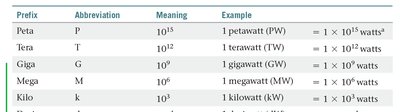
SI Prefixes: Prefixes such as kilo-, mega-, milli-, micro-, and nano- are used to scale units by powers of ten.
Example: 1 kilogram (kg) = grams (g).
Conversion: To convert between units, multiply or divide by the appropriate power of ten.
Prefix | Abbreviation | Meaning | Example |
|---|---|---|---|
Peta | P | 1 petawatt (PW) = watts | |
Tera | T | 1 terawatt (TW) = watts | |
Giga | G | 1 gigawatt (GW) = watts | |
Mega | M | 1 megawatt (MW) = watts | |
Kilo | k | 1 kilowatt (kW) = watts | |
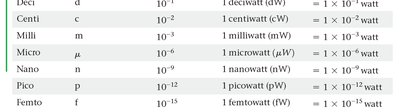
Deci | d | 1 deciwatt (dW) = watt | |
Centi | c | 1 centiwatt (cW) = watt | |
Milli | m | 1 milliwatt (mW) = watt | |
Micro | μ | 1 microwatt (μW) = watt | |
Nano | n | 1 nanowatt (nW) = watt | |
Pico | p | 1 picowatt (pW) = watt | |
Femto | f | 1 femtowatt (fW) = watt |
2. Temperature Scales and Conversion
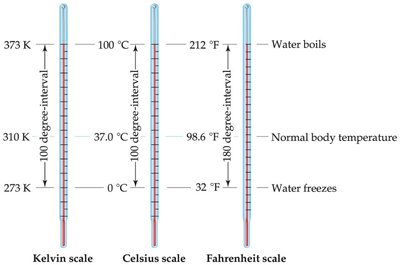
Temperature is a measure of the average kinetic energy of particles in a substance. Chemistry uses three main temperature scales: Kelvin, Celsius, and Fahrenheit.
Kelvin (K): The SI unit for temperature; absolute zero is 0 K.
Celsius (°C): Water freezes at 0 °C and boils at 100 °C.
Fahrenheit (°F): Water freezes at 32 °F and boils at 212 °F.
Conversion:
3. Atoms, Molecules, Elements, and Compounds
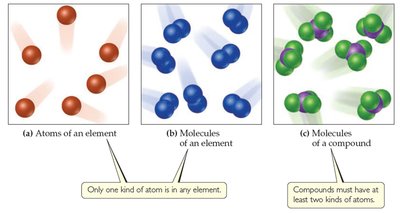
Chemistry distinguishes between atoms, molecules, elements, and compounds. Understanding these differences is essential for classifying matter.
Atom: The smallest unit of an element, consisting of protons, neutrons, and electrons.
Molecule: A group of two or more atoms bonded together.
Element: A pure substance made of only one kind of atom.
Compound: A substance composed of two or more different elements chemically bonded.
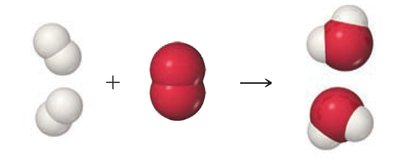
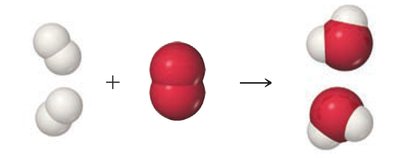
Example: Oxygen (O2) is an element; water (H2O) is a compound.
4. Chemical Change vs. Physical Change
Changes in matter are classified as either chemical or physical. Chemical changes result in new substances, while physical changes alter the form or appearance without changing the substance's identity.
Chemical Change: Produces different molecules; examples include burning, corrosion, and decomposition.
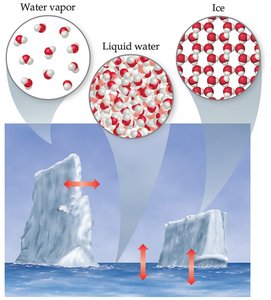
Physical Change: Changes in state, density, mass, or volume; the substance remains the same.
Example: Rusting of a nail is a chemical change; freezing of water is a physical change.
5. Classification of Changes: Examples
Identifying whether a process is a chemical or physical change is a key skill in chemistry.
Rusting of a nail: Chemical change (formation of iron oxide).
Freezing of water: Physical change (change of state).
Decomposition of water into hydrogen and oxygen gases: Chemical change (breaking chemical bonds).
Compression of oxygen gas: Physical change (change in volume).

6. Additional Info: The Angstrom Unit
The angstrom (symbol: Å) is a unit of length commonly used to express atomic and molecular dimensions. 1 Å = meters.
Example: The diameter of a hydrogen atom is about 1 Å.
Additional info: The first 20 elements in the periodic table are often memorized for their names and symbols, which is foundational for understanding chemical formulas and reactions.
