 뒤로
Chapter 1: Matter, Measurement, and Problem Solving – Comprehensive Study Notes
스터디 가이드 - 스마트 노트
 자료에 맞춘 맞춤형 노트, 핵심 정의, 예시, 맥락을 확장해 제공합니다.
Chemistry: Understanding Matter
Atoms and Molecules
Chemistry is the science that seeks to understand the behavior of matter by studying the behavior of atoms and molecules. Atoms are the fundamental building blocks of ordinary matter, and they often bond together in specific geometrical arrangements to form molecules. The arrangement and bonding of atoms and molecules determine the properties and behavior of substances.
Atom: Submicroscopic particle constituting matter.
Molecule: Two or more atoms bonded in a specific arrangement.
Example: Water molecule (H2O) consists of two hydrogen atoms and one oxygen atom.
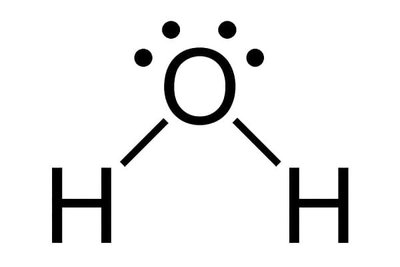
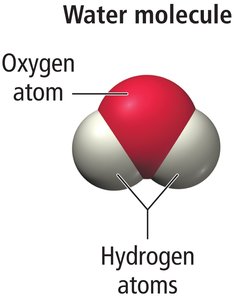
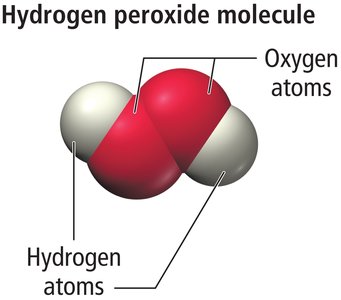
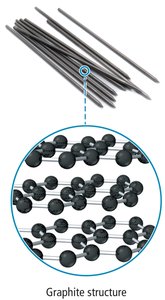
Additional info: Small differences in atom arrangement (e.g., graphite vs. diamond) result in vastly different properties.
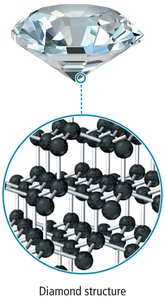
The Scientific Approach to Knowledge
Scientific Method: Observations, Hypotheses, Laws, and Theories
The scientific approach is empirical, relying on observation and experiment. Observations (data) are recorded using senses or instruments. Hypotheses are tentative explanations, which must be falsifiable and are tested by experimentation. Scientific laws summarize observations and predict future events, while theories provide models explaining why phenomena occur.
Observation: Gathering data via senses or instruments.
Hypothesis: Tentative, testable explanation.
Law: Summarizes related observations (e.g., Law of Conservation of Mass).
Theory: Explains underlying reasons for laws and observations (e.g., Atomic Theory).
Practice Question: A law summarizes a series of related observations; a theory gives the underlying reasons for them.
Classification of Matter
States of Matter
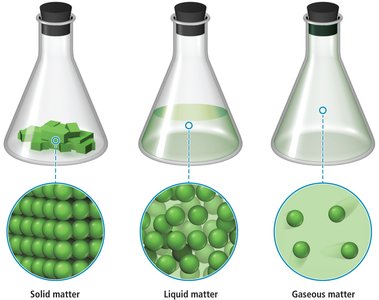
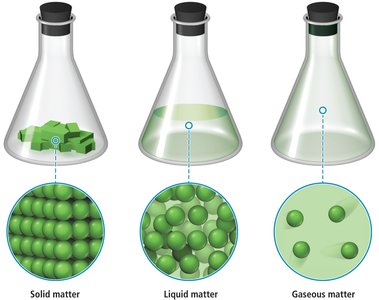
Matter is anything that occupies space and has mass. It can exist as a solid, liquid, or gas, depending on temperature. The arrangement and movement of atoms or molecules differ in each state.
Solid: Fixed volume and shape; atoms/molecules closely packed and vibrate in place.
Liquid: Fixed volume, variable shape; atoms/molecules closely packed but free to move.
Gas: Variable volume and shape; atoms/molecules far apart and move freely.
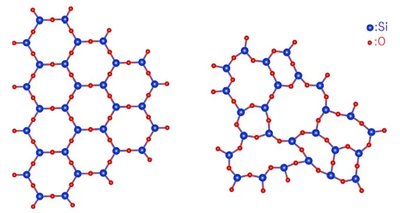
Additional info: Solids can be crystalline (long-range order) or amorphous (no long-range order).
Composition of Matter
Matter can also be classified by its composition: pure substances or mixtures.
Pure Substance: Only one component; composition does not vary.
Element: Cannot be chemically broken down; e.g., helium, carbon.
Compound: Composed of multiple elements in a fixed ratio; e.g., water (H2O), carbon dioxide (CO2).
Mixture: Two or more components; proportions can vary.
Heterogeneous Mixture: Composition varies; distinct regions (e.g., wet sand).
Homogeneous Mixture: Uniform composition (e.g., tea with sugar, air).
Physical and Chemical Changes and Properties
Physical vs. Chemical Changes
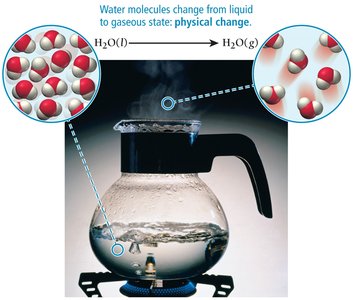
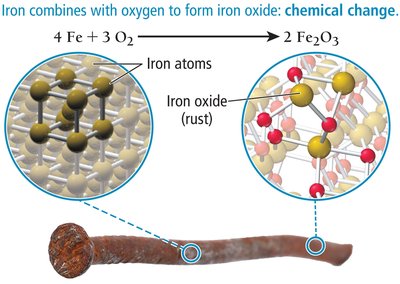
Changes in matter can be physical or chemical. Physical changes alter only the state or appearance, not the chemical composition. Chemical changes transform the original substance into a new one.
Physical Change: No change in chemical composition (e.g., melting, evaporation).
Chemical Change: Alters chemical composition (e.g., rusting, burning).
Physical and Chemical Properties
Properties of matter can be physical or chemical. Physical properties are observed without changing composition, while chemical properties are observed only during a chemical change.
Physical Properties: Odor, taste, color, boiling point, melting point, density.
Chemical Properties: Corrosiveness, flammability, acidity, toxicity.
Energy
Types of Energy and Conservation
Physical and chemical changes are often accompanied by energy changes. Energy is the capacity to do work, and it exists as kinetic (motion), potential (position/composition), and thermal (temperature-related) energy. The law of conservation of energy states that energy is neither created nor destroyed, only transformed.
Kinetic Energy: Energy of motion.
Potential Energy: Energy due to position or composition.
Thermal Energy: Energy associated with temperature.
Law of Conservation of Energy: Total energy remains constant.
Formula:
Units of Measurement
SI Units and Prefix Multipliers
Measurements in chemistry use standard units from the International System of Units (SI). Prefix multipliers change the value of a unit by powers of ten.
Length: meter (m)
Mass: kilogram (kg)
Time: second (s)
Temperature: kelvin (K)
Amount: mole (mol)
Prefix examples: kilo (103), milli (10-3)
Temperature Conversions:
Derived Units
Derived units combine base units, such as speed (m/s) and density (kg/m3). Volume is a derived unit, commonly measured in liters (L) and milliliters (mL).
Density
Density is the ratio of mass to volume and is an intensive property (independent of amount).
Formula:
Units: g/mL, g/cm3, kg/m3
Intensive property: Density does not depend on sample size.
Extensive property: Mass depends on sample size.
The Reliability of a Measurement
Precision, Accuracy, and Significant Figures
Scientific measurements include certain digits and one estimated digit. The number of digits reported indicates the certainty. Precision refers to reproducibility, while accuracy refers to closeness to the true value. Significant figures reflect the precision of a measurement.
Precision: Consistency among measurements.
Accuracy: Closeness to actual value.
Significant Figures: All nonzero digits, interior zeros, trailing zeros after decimal, and zeros before decimal after a nonzero digit are significant.
Rules: Leading zeros are not significant; ambiguous zeros should be avoided by scientific notation.
Additional info: Multiplication/division: answer has same number of sig figs as the least precise value. Addition/subtraction: answer has same number of decimal places as the least precise value.
Solving Chemical Problems
Dimensional Analysis and Unit Conversion
Dimensional analysis is a systematic method for converting between units using conversion factors. Always set up conversion factors so units cancel appropriately, and raise conversion factors to powers when converting units raised to a power.
Example: Convert 12.5 inches to centimeters using .
Formula:
Derived units: Use density, speed, etc., as conversion factors.
Example: To convert 2554 mg to kg:
Additional info: For multistep calculations, only round the final answer to avoid rounding errors.
Practice Problems and Worksheets
Significant Figures and Dimensional Analysis
Practice problems reinforce the application of significant figures and dimensional analysis in calculations and unit conversions.
Example: 0.2431 × 245 × 0.004 = 0.2 (rounded to 1 significant figure)
Example: 19.6 + 58.33 − 4.974 = 73.0 (rounded to 1 decimal place)
Example: 2554 mg to kg = 0.002554 kg
Example: 6.4 L to m3 = 0.0064 m3
Summary Table: Classification of Matter
Type | Description | Examples |
|---|---|---|
Element | Cannot be broken down chemically | Helium, Carbon |
Compound | Multiple elements in fixed ratio | Water (H2O), Carbon dioxide (CO2) |
Heterogeneous Mixture | Composition varies, distinct regions | Wet sand, blood |
Homogeneous Mixture | Uniform composition | Tea with sugar, air |
