 뒤로
Chapter 1: Matter, Measurement, and Problem Solving – General Chemistry Study Notes
스터디 가이드 - 스마트 노트
 자료에 맞춘 맞춤형 노트, 핵심 정의, 예시, 맥락을 확장해 제공합니다.
Chemistry: The Central Science
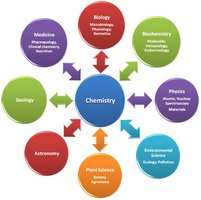
Importance and Applications of Chemistry
Chemistry is a foundational science that connects and supports many other scientific disciplines, from biology and medicine to environmental science and engineering. Understanding chemistry enables the development of new materials, medicines, and technologies, and helps address global challenges such as health, food production, and environmental protection.
Material Science: Development of synthetic fibers (e.g., nylon) and plastics (e.g., polystyrene).
Medicine: Creation of vaccines and drugs, understanding body chemistry for disease prevention and treatment.
Environmental Science: Cleaning up pollution, finding substitutes for scarce resources.
Everyday Life: Chemistry is involved in processes such as breathing, eating, and thinking.
What is Chemistry?
Definitions and Scope
Chemistry is the science that studies the composition, structure, and properties of matter, as well as the changes it undergoes. Matter is anything that has mass and occupies space.
Atoms and Molecules
Basic Building Blocks of Matter
All matter is composed of atoms, which are submicroscopic particles and the fundamental units of matter. Molecules are groups of two or more atoms bonded together in specific arrangements.
Atoms: The smallest unit of an element that retains its chemical properties.
Molecules: Combinations of atoms bonded in fixed ratios and geometries.
Examples:
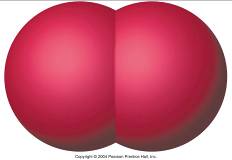
Oxygen molecule (O2): Two oxygen atoms bonded together.
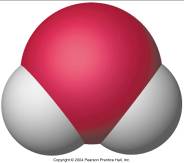
Water molecule (H2O): Two hydrogen atoms and one oxygen atom bonded together.
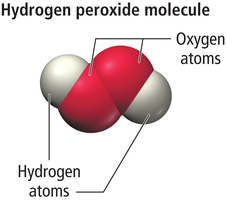
Hydrogen peroxide molecule (H2O2): Two hydrogen atoms and two oxygen atoms bonded together.
The Scientific Method
Approach to Scientific Inquiry
The scientific method is a systematic approach to understanding the natural world. It involves making observations, forming hypotheses, conducting experiments, and developing theories and laws.
Observation: Careful noting and recording of natural phenomena.
Hypothesis: A tentative explanation for an observation.
Experiment: Controlled procedure to test a hypothesis.
Theory: A model that explains why nature behaves as it does.
Law: A summary of a series of related observations.
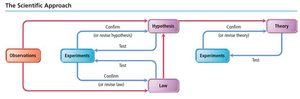
Example: A law summarizes observations (what happens), while a theory explains the underlying reasons (why it happens).
Measurement and Units
Quantitative Observations and Standards
Measurements in chemistry involve comparing a quantity to a standard unit. Each measurement consists of a number and a unit. The two main systems of units are the metric system and the imperial system, with the metric system being standard in science.
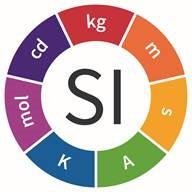
SI Units: The International System of Units (Système International, SI) is the standard for scientific measurements.
Temperature Scales
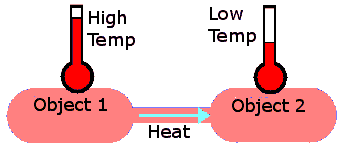
Temperature is a measure of the average kinetic energy of particles in a substance. Common temperature scales include Celsius (°C), Kelvin (K), and Fahrenheit (°F).
Celsius (°C): Water freezes at 0°C and boils at 100°C.
Kelvin (K): Absolute temperature scale; 0 K is absolute zero.
Fahrenheit (°F): Used mainly in the United States.
Conversion formulas:
SI Prefix Multipliers
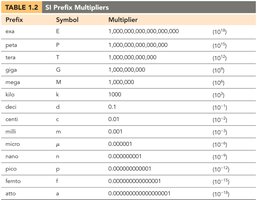
SI prefixes are used to express multiples or fractions of base units. They are essential for expressing very large or very small quantities.
Prefix | Symbol | Multiplier |
|---|---|---|
kilo | k | 1,000 (103) |
centi | c | 0.01 (10-2) |
milli | m | 0.001 (10-3) |
micro | μ | 0.000001 (10-6) |
nano | n | 0.000000001 (10-9) |
Dimensional Analysis (Unit Conversion)
Dimensional analysis is a method for converting between units using conversion factors. A conversion factor is a ratio of equivalent values (e.g., 1 m = 100 cm, so ).
Set up the problem so that units cancel appropriately.
Check that the final unit matches the desired quantity.
Volume and Density
Volume
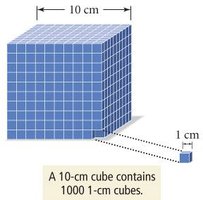
Volume is the amount of space occupied by a substance. It is a derived unit (length cubed).
SI unit: cubic meter (m3)
Common units: liter (L), milliliter (mL), cubic centimeter (cm3)
1 L = 1 dm3 = 1000 mL; 1 mL = 1 cm3
Density
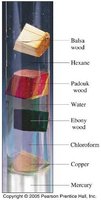
Density (d) is the mass per unit volume of a substance. It is an intensive property (does not depend on the amount of substance).
Formula:
Units: g/cm3 (solids), g/mL (liquids), g/L (gases)
Density can be used as a conversion factor between mass and volume.
Classification of Matter
By Physical State
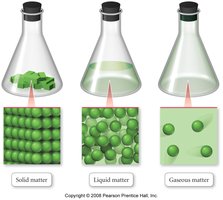
Matter exists in three primary states: solid, liquid, and gas. Each state has distinct characteristics based on particle arrangement and energy.
Solid: Fixed shape and volume; particles are closely packed and vibrate in place.
Liquid: Indefinite shape (takes the shape of the container), fixed volume; particles are close but can move past each other.
Gas: Indefinite shape and volume; particles are far apart and move freely.
By Composition
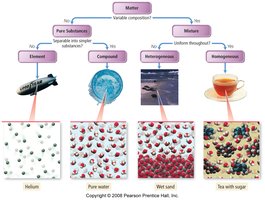
Matter can also be classified by its composition as pure substances or mixtures.
Pure Substance: Has a fixed composition and distinct properties. Includes elements (cannot be broken down further) and compounds (can be broken down into elements by chemical means).
Mixture: Contains two or more substances physically combined. Can be homogeneous (uniform throughout) or heterogeneous (non-uniform composition).
Physical and Chemical Properties and Changes
Types of Properties
Properties are characteristics that give each substance a unique identity.
Physical Property: Can be observed without changing the substance's composition (e.g., color, melting point, density).
Chemical Property: Can only be observed by changing the substance's composition (e.g., flammability, reactivity).
Physical and Chemical Changes
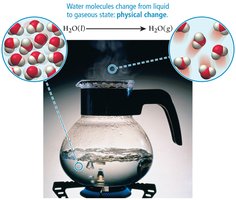
Physical Change: Alters the form or appearance of matter but does not change its composition (e.g., melting, boiling, dissolving).
Chemical Change: Alters the composition of matter, resulting in new substances with different properties (e.g., burning, rusting).
Separation of Mixtures
Physical Separation Techniques
Mixtures can be separated into their components by exploiting differences in physical properties.
Decantation & Centrifugation: Separate solids from liquids based on density.
Distillation: Separates liquids based on differences in boiling points.
Filtration: Separates solids from liquids using a porous barrier.
Chromatography: Separates substances based on their adherence to a surface.
Energy in Chemistry
Energy Types and Conservation
Energy is the capacity to do work. In chemistry, energy changes accompany physical and chemical changes.
Kinetic Energy: Energy of motion (e.g., thermal energy).
Potential Energy: Stored energy due to position or composition (e.g., chemical bonds).
Law of Conservation of Energy: Energy cannot be created or destroyed, only transformed.
Measurement Reliability: Significant Figures, Precision, and Accuracy
Significant Figures
Significant figures reflect the precision of a measured quantity. All nonzero digits are significant; zeros may or may not be, depending on their position.
Rules:
All nonzero digits are significant.
Zeros between nonzero digits are significant.
Leading zeros are not significant.
Trailing zeros are significant only if there is a decimal point.
Scientific Notation: Used to avoid ambiguity in the number of significant figures.
Calculations with Significant Figures
Multiplication/Division: The result has the same number of significant figures as the measurement with the fewest significant figures.
Addition/Subtraction: The result has the same number of decimal places as the measurement with the fewest decimal places.
Precision and Accuracy
Precision refers to how closely repeated measurements agree with each other. Accuracy refers to how close a measurement is to the true or accepted value.
High precision: Measurements are close to each other.
High accuracy: Measurements are close to the true value.
Example: If the accepted value is 10.00 g, and measurements are 9.98 g, 10.01 g, and 10.02 g, the results are both precise and accurate.
