 뒤로
Chapter 1: Matter, Measurement, and Problem Solving – Study Notes
스터디 가이드 - 스마트 노트
 자료에 맞춘 맞춤형 노트, 핵심 정의, 예시, 맥락을 확장해 제공합니다.
Matter, Measurement, and Problem Solving
Introduction to Chemistry
Chemistry is the science that seeks to understand the behavior of matter by studying the properties and interactions of atoms and molecules. Atoms are the smallest units of matter that retain the properties of an element, and they can combine to form molecules, which are groups of atoms bonded together.
Classification of Matter
By Composition
Matter can be classified based on its composition and physical state. The main categories are elements, compounds, and mixtures.
Element: A pure substance made up of only one kind of atom (e.g., copper metal, Cu).
Compound: A pure substance composed of two or more different elements chemically bonded (e.g., water, H2O).
Mixture: A combination of two or more substances that are not chemically bonded. Mixtures can be homogeneous (uniform throughout, also called solutions) or heterogeneous (not uniform).
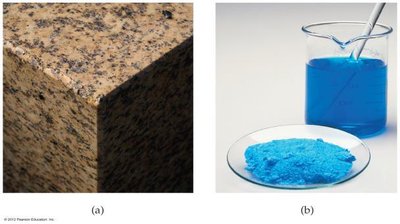
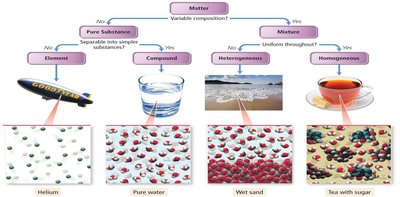
By State
Matter exists in three primary physical states: solid, liquid, and gas. Each state is characterized by the arrangement and movement of its molecules.
Solid: Definite shape and volume; particles are closely packed in a fixed arrangement.
Liquid: Definite volume but no definite shape; particles are close but can move past one another.
Gas: No definite shape or volume; particles are far apart and move freely.
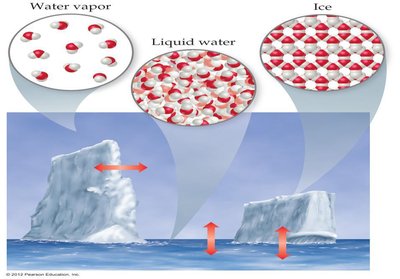
Physical and Chemical Changes
Physical Changes
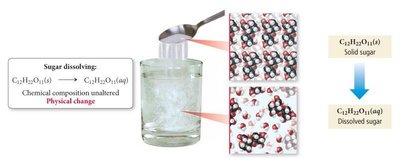
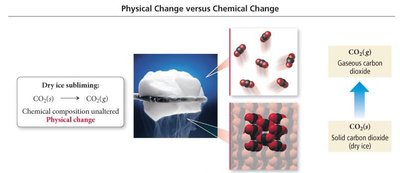
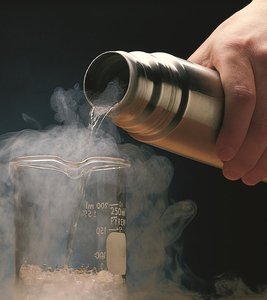
Physical changes alter the state or appearance of matter without changing its composition. Examples include changes of state (melting, boiling, freezing, condensation, sublimation, deposition) and dissolving substances in water.
Phase changes are physical changes, not chemical reactions. For example, boiling water involves the transition from liquid to gas, but the molecules remain H2O.
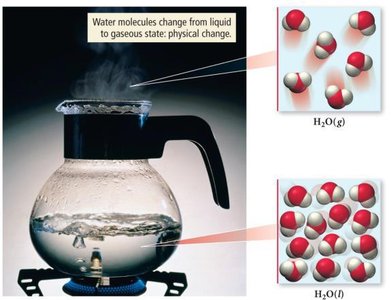
Chemical Changes
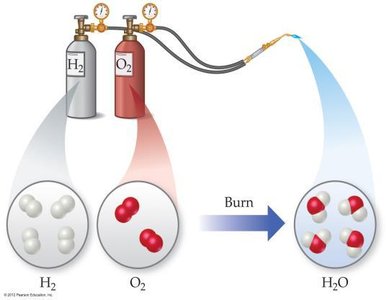
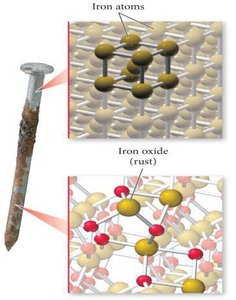
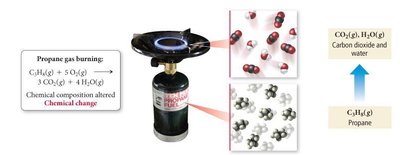
Chemical changes (chemical reactions) result in the formation of new substances with different compositions and properties. Atoms are rearranged during these processes.
Examples: Rusting of iron, combustion of hydrogen gas, burning of propane.
Physical vs. Chemical Change Example
For instance, the sublimation of dry ice (solid CO2) to gaseous CO2 is a physical change because the chemical composition remains the same.
Units of Measurement and the Metric System
Base and Derived Units
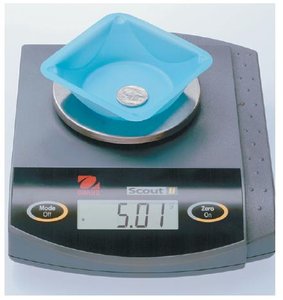
The International System of Units (SI) uses base units such as the meter (m) for length, kilogram (kg) for mass, and liter (L) for volume. Derived units are combinations of base units, such as density (g/cm3 or kg/m3).

Metric Prefixes
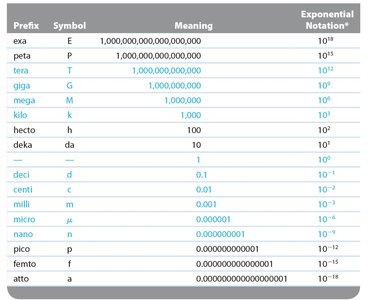
Metric prefixes indicate powers of ten and are used to express very large or very small quantities conveniently.
Prefix | Symbol | Meaning | Exponential Notation |
|---|---|---|---|
kilo | k | 1,000 | 103 |
centi | c | 0.01 | 10-2 |
milli | m | 0.001 | 10-3 |
micro | μ | 0.000001 | 10-6 |
nano | n | 0.000000001 | 10-9 |
mega | M | 1,000,000 | 106 |
Volume and Its Relationship to Length
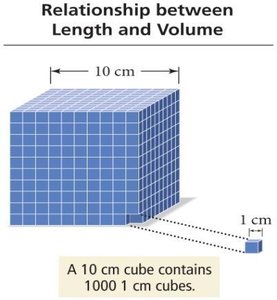
Volume is a derived unit, often measured in liters (L) or cubic centimeters (cm3). 1 mL = 1 cm3.
Temperature Scales
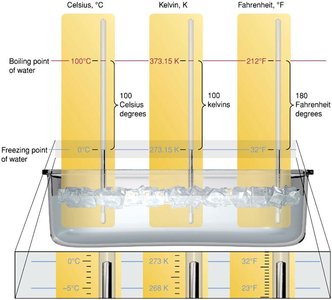
Temperature is measured using the Celsius (°C), Kelvin (K), and Fahrenheit (°F) scales. The Kelvin scale is the SI unit for temperature and is used in scientific contexts.
Conversion formulas:
Significant Figures and Measurement Precision
Significant Figures
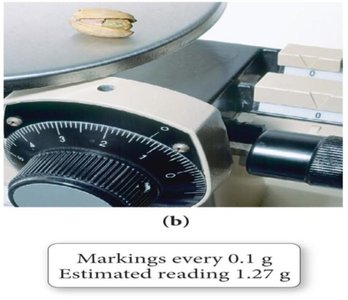
Significant figures (sig figs) reflect the precision of a measured quantity. The rules for determining significant figures are essential for reporting scientific data accurately.
All nonzero digits are significant.
Zeros between nonzero digits are significant.
Leading zeros are not significant.
Trailing zeros are significant only if a decimal point is present.
Significant Figures in Calculations
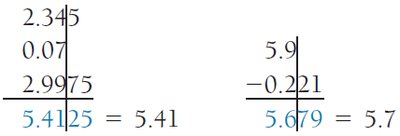
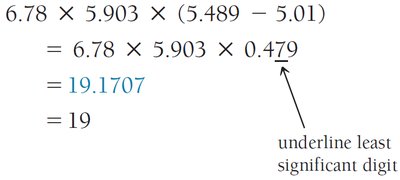
Multiplication/Division: The result has the same number of significant figures as the factor with the fewest significant figures.
Addition/Subtraction: The result has the same number of decimal places as the quantity with the fewest decimal places.

Accuracy vs. Precision
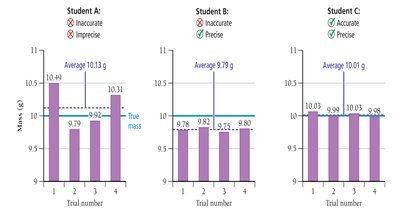
Accuracy refers to how close a measured value is to the true value. Precision refers to how close repeated measurements are to each other.
Dimensional Analysis (Unit Factor Method)
Dimensional analysis is a systematic approach to problem solving that uses conversion factors to move from one unit to another. Units are treated algebraically and can be canceled or converted as needed.
Identify the starting and ending units.
Set up conversion factors so that units cancel appropriately.
Carry out the calculation, ensuring the final answer has the correct units and significant figures.

Density and Derived Units
Density
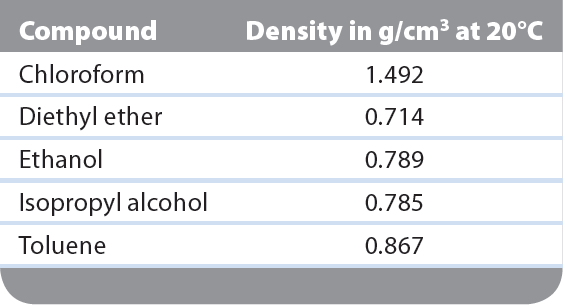
Density is a physical property defined as mass per unit volume. It is an intensive property, meaning it does not depend on the amount of substance.
Common units: g/cm3, kg/m3, g/mL
Density can be used as a conversion factor between mass and volume.
Compound | Density in g/cm3 at 20°C |
|---|---|
Chloroform | 1.492 |
Diethyl ether | 0.714 |
Ethanol | 0.789 |
Isopropyl alcohol | 0.785 |
Toluene | 0.867 |
Interpreting Graphs and Data
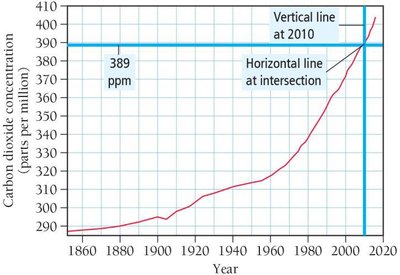
Analyzing data and interpreting graphs are essential scientific skills. For example, the concentration of atmospheric CO2 has increased over time due to human activities, as shown in the graph below.
Summary Table: Classification of Matter
Type | Description | Example |
|---|---|---|
Element | Made of identical atoms | Helium (He) |
Compound | Atoms of different elements bonded | Water (H2O) |
Homogeneous Mixture | Uniform composition | Tea with sugar |
Heterogeneous Mixture | Non-uniform composition | Wet sand |
Additional info: This guide covers the foundational concepts of matter, measurement, and problem solving in chemistry, including classification of matter, physical and chemical changes, units and conversions, significant figures, and density. These concepts are essential for success in all areas of general chemistry.
