 뒤로
Chapter 3: Electron Configurations and Periodic Trends
스터디 가이드 - 스마트 노트
 자료에 맞춘 맞춤형 노트, 핵심 정의, 예시, 맥락을 확장해 제공합니다.
Electron Configurations and Periodic Trends
Quantum Mechanical Model and Energy Levels
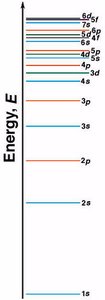
The quantum mechanical (QM) model explains the arrangement of electrons in atoms and their energy levels. The energy of an electron in an atom depends on the principal quantum number (n) and the angular momentum quantum number (l), especially in multi-electron atoms.
Degenerate Orbitals: In one-electron atoms (e.g., H, He+), orbitals with the same n are degenerate (same energy).
Multi-electron Atoms: Energy depends on both n and l (s < p < d < f), leading to differences between subshells.
Penetration and Shielding: Orbitals with greater electron density near the nucleus are lower in energy due to increased penetration.
Electron Repulsion: Adding electrons increases repulsion, affecting orbital energies.
Aufbau Principle and Electron Filling Rules
The Aufbau principle guides the order in which electrons fill atomic orbitals, resulting in the ground-state electron configuration.
Order of Filling: Lower-energy orbitals fill before higher-energy ones. The typical order is: 1s, 2s, 2p, 3s, 3p, 4s, 3d, 4p, 5s, 4d, 5p, 6s, 4f, 5d, 6p, 7s, 5f.
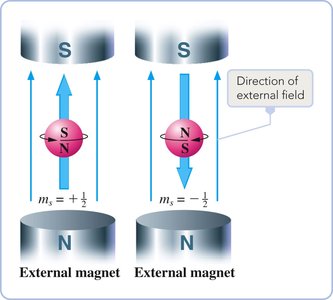
Pauli Exclusion Principle: Each orbital can hold two electrons with opposite spins.
Hund’s Rule: Electrons fill degenerate orbitals singly before pairing, minimizing repulsion.
Writing Electron Configurations
Electron configurations describe the distribution of electrons among orbitals. They can be written in full or abbreviated forms, and represented as orbital diagrams.
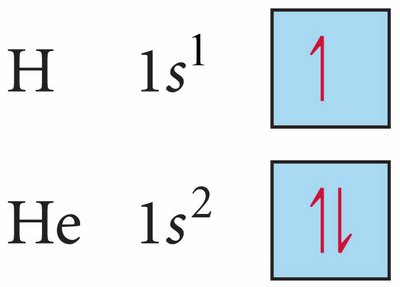
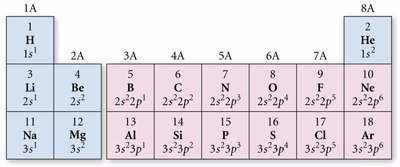
Notation: Orbitals are listed with superscripts indicating the number of electrons (e.g., H: 1s1, He: 1s2).
Orbital Diagrams: Use arrows to show electron spins in each orbital.
Abbreviated Configurations: Use the nearest noble gas as a core (e.g., Ba: [Xe] 6s2).
Periodic Table and Electron Configurations
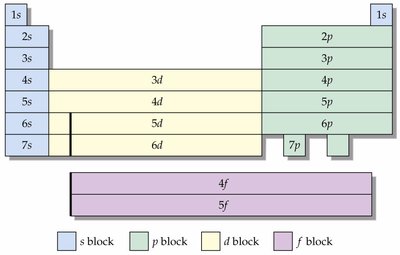
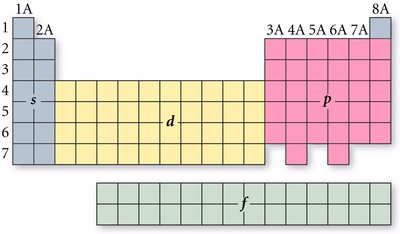
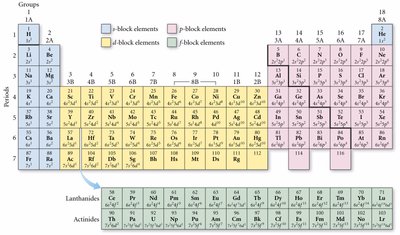
The periodic table reflects the order of orbital filling and helps predict electron configurations for elements.
Blocks: The table is divided into s, p, d, and f blocks, corresponding to the type of orbital being filled.
Valence Electrons: Main group elements have valence electrons in the highest n shell; transition metals may include d electrons.
Anomalous Electron Configurations
Some elements, especially transition metals, have electron configurations that differ from the expected order due to the stability of half-filled and fully-filled subshells.
Examples: Cr: [Ar] 3d5 4s1 (not [Ar] 3d4 4s2), Cu: [Ar] 3d10 4s1.
Reason: Electron transfer between subshells lowers total energy by reducing electron-electron repulsion.
Electron Configurations of Ions
Formation of ions involves the loss or gain of electrons, usually from the valence shell. The resulting electron configuration often matches that of a noble gas.
Cations: Formed by losing valence electrons (e.g., Na+ has the same configuration as Ne).
Anions: Formed by gaining electrons to fill the valence shell (e.g., Cl- has the same configuration as Ar).
Octet Rule: Main-group elements tend to achieve eight valence electrons for stability.



Periodic Trends
Atomic Radius and Effective Nuclear Charge
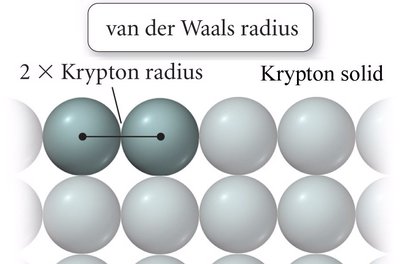
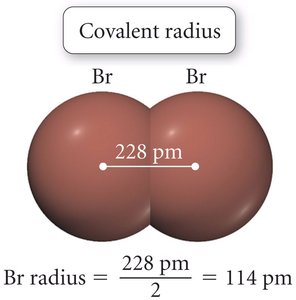
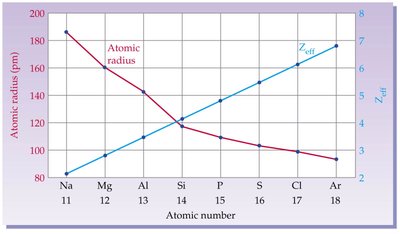
The atomic radius is the size of an atom, measured as half the distance between nuclei in a solid or molecule. Effective nuclear charge (Zeff) is the net positive charge felt by valence electrons, accounting for shielding by inner electrons.
Types of Atomic Radius: Van der Waals radius (nonbonding), covalent radius (bonding).
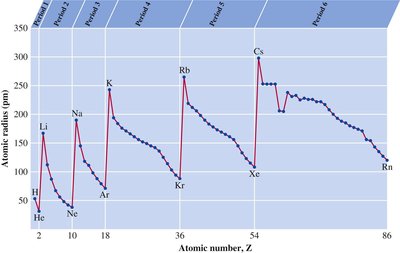
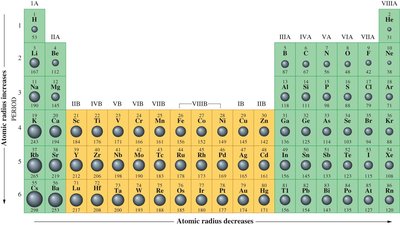
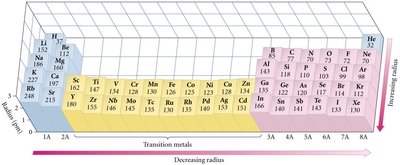
Trends: Atomic radius increases down a group (larger n), decreases across a period (increasing Zeff).
Zeff: Increases across a period, causing electrons to be pulled closer to the nucleus.
Properties of Ions and Ionic Radii
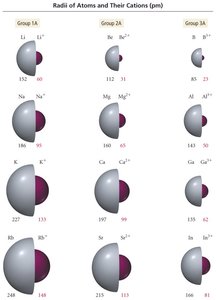
Ions have different radii compared to their parent atoms. Cations are smaller due to loss of electrons, while anions are larger due to increased electron-electron repulsion.
Cations: Smaller than parent atoms; higher charge means smaller radius.
Anions: Larger than parent atoms; size increases with more negative charge.
Trends: Ionic size increases down a group, decreases across a period for both cations and anions.

Ionization Energy
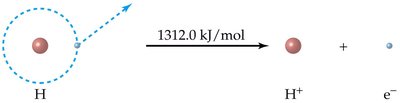
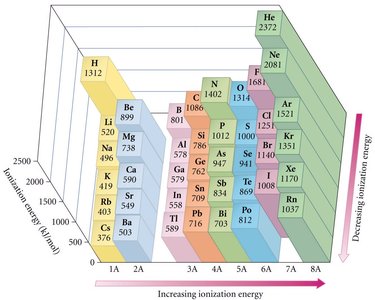
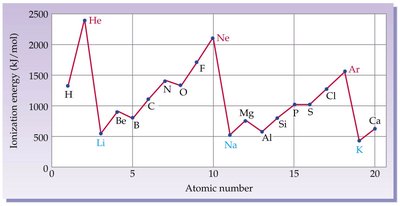
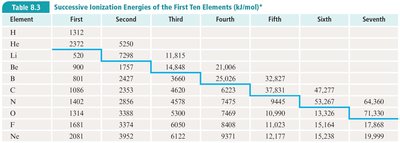
Ionization energy (IE) is the energy required to remove an electron from a neutral atom in the gas phase. It is always positive (endothermic).
First Ionization Energy (IE1): Energy to remove the first electron.
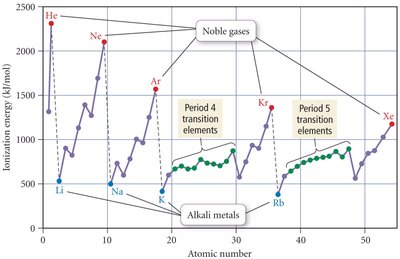
Trends: IE decreases down a group (electrons farther from nucleus), increases across a period (higher Zeff).
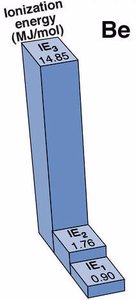
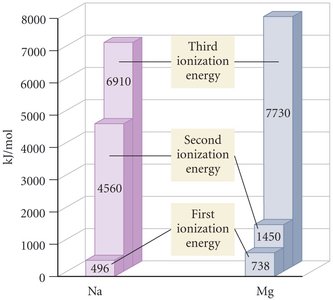
Successive Ionization Energies: Each subsequent electron requires more energy to remove.
Exceptions: Some elements deviate from trends due to subshell stability.




Electron Affinity
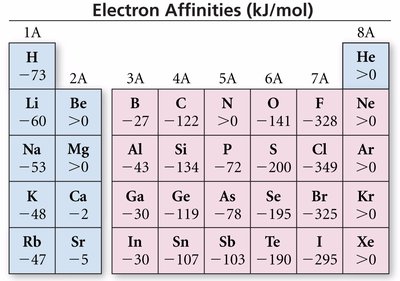
Electron affinity (Eea) is the energy change when an electron is added to a neutral atom in the gas phase. It is usually negative (exothermic), indicating energy release.
Trends: Eea becomes more negative across a period, less negative down a group.
Exceptions: Trends are not as smooth as for ionization energy.
Metallic Character
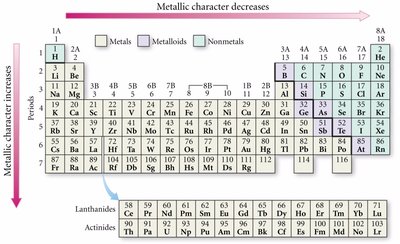
Metallic character describes how easily an element loses electrons. Metals are good conductors and tend to lose electrons, while nonmetals gain electrons.
Trends: Metallic character decreases across a period, increases down a group.
Classification: Elements are classified as metals, metalloids, or nonmetals based on their properties.
Summary of Periodic Trends
Atomic Radius: Increases down a group, decreases across a period.
Ionization Energy: Decreases down a group, increases across a period.
Electron Affinity: Becomes more negative across a period, less negative down a group.
Metallic Character: Increases down a group, decreases across a period.
